 |
Composers:
AfriClassical Blog
William J. Zick, Webmaster,
wzick@ameritech.net
©
Copyright 2006-2022
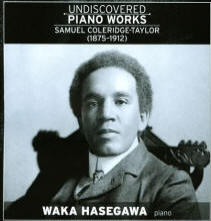
Samuel Coleridge-Taylor: Undiscovered Piano Works;
Waka Hasegawa, Piano;
Metropolis Group 1301
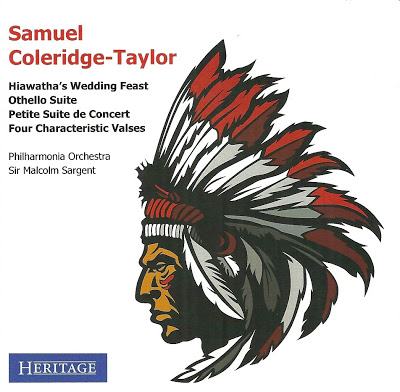
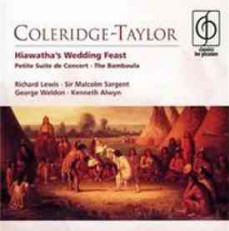
Samuel Coleridge-Taylor: Hiawatha's
Wedding Feast,
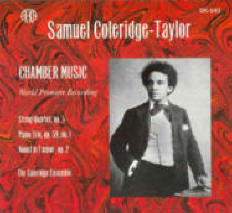
Fantasiestucke for String Quartet, Op. 5 (20:55)
Hiawatha's Wedding Feast
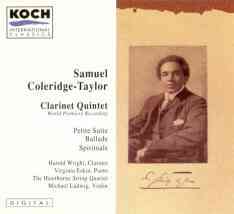
Samuel Coleridge-Taylor Clarinet Quintet (35:39)
|
Home -> Composers -> Coleridge-Taylor, Samuel
The Bamboula Rhapsodic Dance, 1910, and the
Overture to The Song of Hiawatha, 1899, were performed
by The Orchestra of the Longfellow Chorus on March 16, 2013
during the Hiawatha Festival in Portland, Maine and can be heard
at:
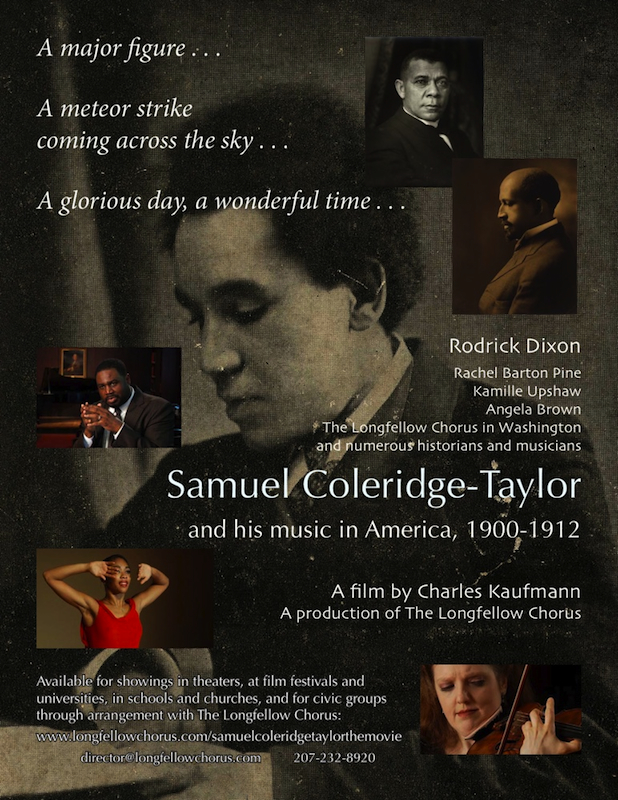
Movie Synopsis Audio
Samples:
Another useful
resource for this page is the book Samuel
Coleridge-Taylor: Anglo-Black Composer, 1875-1912, Second
Edition, by William Tortolano. It was published by The
Scarecrow Press, Inc. (2002).
3 Father in England
4 Father Back in Africa
The author identifies Dr. Taylor's daughter as Rachel Taylor.
5 Mother
6 Birth
Coleridge-Taylor was raised at 67 Waddon New Road, Croydon. The author says the block faced railroad tracks busy with coal-powered steam engines, and was downwind of a slaughter house.
7 Youth
Census records confirm the makeup of the household of young Samuel, known to his family as Coleridge:
8 British School
On P. 16 we are told that a biographer interviewed men who had been classmates of Samuel Coleridge-Taylor, and learned he had no close friends and did not play games.
9 Violin Lessons
The author continues:
10 Joseph Beckwith
11 Musician Uncle
12 Herbert Walters
13 Piano
14 Church Choir
15 Music in Croydon
16 Stepfather
17 Grandfather Dies
18 Royal College of Music
Jeffrey Green quotes from a statement by Herbert Walters which was published in the Musical Times in 1909:
Samuel Coleridge-Taylor began his studies at the Royal College of Music in September 1890 at age 15. In fact he had just turned 15 on August 15, 1890.
19
Composition
#1893 Concert
Coleridge-Taylor wrote his Symphony in A Minor in 1896, we are told by Lewis Foreman in the liner notes of the world premiere recording, Classico 684 (2006). Foreman notes that the composer produced four versions of the final movement, but none of them satisfied Stanford. He also tells us:
Critic Jonathon Woolf of Music Web International observes of the Symphony in A Minor:
20 Pan-Africanism
Sandrine Thomas writes in BeyondVictoriana.com on May 23, 2010 that Samuel Coleridge-Taylor was one of 37 delegates to the world's first Pan-Africanist Conference, held in London during the Summer of 1900.
21 Ballade in A Minor
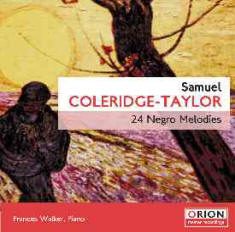
A 2-CD version of the work has been recorded by pianist David Schaffer-Gottschalk. The recording is 24 Negro Melodies, Troy930-31 (2007).
25 Conductor
26 Teaching
30 1910 Tour
31 Death
32 Legacy
33 Biographies
35 Chamber Music
37 Four Novelletas
38 Artsong Collective
39
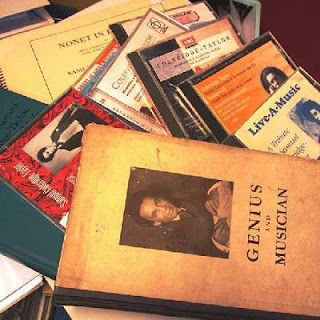
Live-A-Music
40 Magnolias
The Violin Concerto in G Minor, Op. 80 has since been released
on Hyperion CDA67420 (2005) by violinist Anthony Marwood and the
BBC Scottish Symphony Orchestra conducted by Martyn Brabbins.
Another performance can be found on Lyrita SRCD.317 (2007), on
which Lorraine McAslan, violin, is accompanied by the London
Philharmonic Orchestra under the direction of Nicholas
Braithwaite.
43 Additional CDs
44 Sheet Music A birthday, for high voice & piano (1909). London: Metzler, 1909. Text: Christina Georgina Rossetti.2 Library: Schomburg, Spingarn. -- for high voice & orchestra. London: Metzler. Library: Spingarn. A corn song, for medium voice & piano (1897). London: Boosey, 1897. Text: Paul Laurence Dunbar*. Library: Schomburg, Spingarn; University of Oregon. -- 1904/IV/12; Washington; Metropolitan A. M. E. Church; J. Arthur Freeman*, tenor; Mary Europe*, piano. -- 1906/XI/16; New York; Mendelssohn Hall; Harry T. Burleigh [?], baritone; Samuel Coleridge-Taylor, piano. -- for medium voice & orchestra. London: Boosey. Library: Schomburg, Spingarn. A dance of bygone days, for medium voice & piano. Text: Thomas Hood.3 A June rose bloomed, for SSA & piano (1906). London: Augener, 1911, 1906. 5p. (Augener's edition, 4249; 4249a in tonic sol-fa notation) Text: Louise Alston Burleigh.4 Library: Yale. A lament, for medium voice & piano. London: Ricordi, 1910. 6p. Text: Christina Georgina Rossetti. Duration: 2m45s. Library: North East of Scotland Music School; Schomburg, Yale. --AT: Avril Coleridge-Taylor*, soprano; N. Turner, piano. Library: National Sound Archive, London, 1393. A lovely little dream, for medium voice & piano (1909). New York: Schirmer; London: Metzler, 1909. Text: Sarojini Naidu5, from Cradle song. Library: Schomburg, Spingarn; University of Oregon. -- 1910/IV/66; Croydon; Public Hall; Effie Martyn, contralto7; Myrtle Meggy8, piano. -- for string orchestra & organ (harmonium). London: Metzler. (De Groot and the Picadilly orchestra series, vol. 2). Library: Schomburg, Spingarn. A summer idyll, for high voice & piano (1906). London: Boosey9, 1906. 7p. (#E.S. 3551). Text: Hilda C. Hammond-Spencer. Library: Library of Congress, Spingarn. -- for low voice & piano. London: Boosey, 1906. Library: Library of Congress. -- for medium voice & piano. London: Boosey, 1906. Library: Library of Congress. A tale of old Japan, op. 76, cantata for soprano, contralto, tenor, bass, SATB & orchestra (1911). London: Novello, 1912. v, 99p. Text: Flowers of old Japan (1903) by Alfred Noyes10. Dedication: Mr. and Mrs. Carl Stoeckel "with happiest remembrances of the White House, Norfolk, Conn., U.S.A., and the people I met there." Duration: 48m. Library: Library of Congress (orchestral parts, #13531 with 1912 imprint); Peabody. 1 Green 2011 (p42) makes reference to Beggar's dance from about 1897/VI/5. The title does not appear in any other source thus far consulted. 2 Christina Georgina Rossetti (1830-1894), well-known British poet of Italian parentage. 3 British poet, 1799-1845. 4 Poet and actress==, she married Harry T. Burleigh* in 1898. She was the mother of Alston Burleigh, their only child, born in 1899. 5 Poet and non-violent activist allied from 1916 with with Mahatma Ghandi in India's liberation movement, Naidu (1879-1949; née Chattopadhyaya), was the first woman to become president of the Indian National Congress. 6 Première. 7 She was also engaged in the première of A tale of old Japan. 8 At this concert, she also played Zuleika, Feuillet de myrtle, and Scène de ballet. 9 Published by Enoch, according to Tortolano 1992. 10 1880-1958. -- 1911/XII/611; London; Queen's Hall; Kathleen Easmon12 (soprano); Effie Martyn (contralto); London Choral Society; Arthur Fagge,13 conductor. -- 1912/I/25; Birmingham; Samuel Coleridge-Taylor, conductor. -- 1912/II/6; Liverpool. -- 1912/II/10; London; Crystal Palace. -- 1912; Shanghai. -- 1913/IV/17; London; Royal Choral Society. --1913 /XII/10; Woking UK; Town Hall. -- piano-vocal score. London: Novello; New York: H. W. Gray, 1911. vi, 99p. (#13425; Novello's original octavo edition). Library: Schomburg. A vengeance, for medium voice & piano.14 A vision, for medium voice & piano (1905). New York: William Maxwell; Philadelphia: Theodore Presser, 1905. 6p. Text: Louise Alston Burleigh. Library: Library of Congress; Schomburg. -- for low voice & piano. Library: Library of Congress. African dances (4), op. 58, for violin & piano (1902). London: Augener, 1904. 1. Allegro; 2. Andantino molto sostenuto e dolce15; 3. Allegro con brio. 4. Allegro energico. London: Augener, 1908. 23, 7p. (Augener's edition, 11342). Dedication: Goldie Baker.16 Library: British Library; Library of Congress; Spingarn. -- London: Augener, 1911. 11p. (#15076). Library: Library of Congress, Peabody. -- London: Augener, 1917, published in two volumes with bowing & fingering by William H. Henley (11342; 12837). Library: Library of Congress. -- 190217; Rochester Choral Society; Goldie Baker, violin; Samuel Coleridge-Taylor, piano. -- 1904; Chicago; Theodore Spiering,18 violin; Samuel Coleridge-Taylor, piano. -- 1906/XI/16; New York; Mendelssohn Hall; Felix Weir*19, violin; Samuel Coleridge-Taylor, piano. -- 78rpm: Arthur Beckwith,20 violin; with piano. His Masters Voice C-974. -- 78rpm: Peggy Cochrane, violin; with piano. ACO G-15662. -- CD: John Padial, violin; Andrew Harley, piano. Centaur == (2004). -- 2. Andantino molto sostenuto e dolce. London: Augener, 1905. 11 Première. The other two works performed at this concert, The soul of Perceval by Charleton Speer and Kiplings'Recessional by Margaret Meredith, were unequivocally condemned by the Times. 12 Accepting Coleridge-Taylor's wager, she was dressed in elaborate West African garb for the concert. 13 The composer had not been invited to conduct and had to pay for four admissions (he and his wife had two guests). 14 Publication refused by publisher because of the text. 15 Based on a traditional African melody. 16 Young violinist of partly African ancestry, who also performed Coleridge-Taylor's Gipsy suite. Dedicated to John Saunders in Tortolano 2002. 17 Première. 18 Theodore Bernays Spiering (1871-1925) was born in St. Louis, where his father was concertmaster (he was not born in Germany, as stated in Green 2011, p133, although he was a student of Joseph Joachim from 1888-1892). He was in Chicago from 1892 to 1905, initially with the Chicago Symphony Orchestra and, from 1902, with the Chicago Musical College. Remaining a friend of Coleridge-Taylor, he was later concertmaster of the New York Philharmonic, conductor of the Oregon Symphony and Berlin Philharmonic. 19 Born in Chicago (1884-1978), he had studied in Leipzig before being engaged in Washington as a teacher. 20 Arthur Robert C. Beckwith (1887-1928) was to become first violinist of the Philharmonic Quaret, founded in 1915. Other original members were violinist Eugene Goossens (1893-1962), violist Raymond Jeremy (1891-1969), and cellist Cedric Sharpe (1891-1978). Beckwith was concertmaster of the Clevelsnd Orchestra from 1923 to 1926. -- London: Augener, 1908. 23, 7p. (Augener's edition, 11342) Library: Library of Congress. -- for orchestra, arr. by L. Artok as Afrikanische Suite; Negro Suite. Mainz: B. Schott’s Söhne, 1928. parts. (Domesticum Salon-Orchester, No. 270, 271) Library: British Library. -- for piano,21 ed. by Alex Roloff. London: Augener, 1904, 1917. 2 vols. (published as 2 African idylls22). 11, 5p. (#W15074). Library: British Library; Library of Congress. -- for violin & piano. London: Augener, 1911. 11p. (#15076). Library: Library of Congress, Peabody. -- 1902 ca.23; Rochester Choral Society; Goldie Baker, violin; Samuel Coleridge-Taylor, piano. -- 4. Allegro energico. -- 78rpm: Arthur Beckwith, violin; with piano. His Masters Voice HMV C 974. African idylls (2), for piano. London: Augener, 1904. African romances (7), op. 17, for medium voice & piano (1897). London: Augener, 1897. 21p. (Augener’s edition 8817; #11114). 1. An African love song; 2. A prayer; 3. A starry night; 4. Dawn. 5. Ballad; 6. Over the hills; 7. How shall I woo thee? Text: Paul Laurence Dunbar*. Dedication: Helen Jaxon24. Library: British Library; Library of Congress; Spingarn; Yale. -- 1904/XII/825; Philadelphia; Witherspoon Hall; Marie Louise Githens,26 sopano; Sameul Coleridge-Taylor, piano. -- 1. An African love song. -- 1899/XI; Eton; unidentified soprano; Sameul Coleridge-Taylor, piano. -- 4. Dawn. -- 78rpm: Alma Gluck,27 soprano. His Masters Voice -3392; HMV C 974; Victor B200091 (1917). -- LP: Alma Gluck, soprano. Rococo 5291. -- 6. Over the hills. London: Augener, 1902. Library: British Library. -- for medium voice & orchestra. London: Augener, 1897. 3p. Library: Library of Congress; London: Augener, 1902. Library: British Library. -- 7. How shall I woo thee? London: Augener, 1902. 4p. Library: British Library; Library of Congress. -- for low voice & orchestra. London: Augener, 1897. Library: British Library. -- for medium voice & piano. African suite, op. 35, for piano (1898). London: Augener, 1902, 1898. 31p. in 4 vols. (Augener's edition 6103; 11368, #11287). 1. Introduction; Allegro alla marcia; 2. A 21 Tortolano 2002 cites as 2 African idylls, op. 58n1. ( 2) Allegro energico ed. by Alex Roloff. London: Augener, 1911. 11p. (#15076). Library: Library of Congress; Peabody. 22 The work is entered by this title in Thompson 1999. 23 Première. 24 In 1900 she moved with her parents to 4, Ashwoth Mansions, Elgin Avenue W., one of the first appartment stuctures. Her neigbors included Rosa Bird (soprano), Felix Mansfield (Shakespearean actor), Leonard Smithers (Oscar Wilde's publisher), Arthur Paine Garrett (portrait painter), and Charles Schuppisser (piano salesman, especially of instruments he did not own). 25 Three of the songs were performed. 26 Githens (1882-1969) graduated in 1906 from the University of Pennsylvania, having periously studied in New York with John Dennis Meehan. 27 Born in Romania as Reba Feinsohn (1882/4-1938), she grew up in New York and became a leading soprano with the Metropolitan Opera. She was the mother of the Mozart biographer, Marcia Davenport, by her first marriage, and of the actor Efrem Zimbalist, Jr. by her second marriage. Negro love song; Larghetto28; 3. Valse; Allegro con brio; 4. Danse nègre; Allegro assai29. Instrumentation: 3-2-2-2; 4-2-3-0; timp. perc, hrp; strings. Duration: 20m. Library: British Library; Lucks (5300); Schomburg; Spingarn; Yale. -- ca.189830; Croydon; Croydon Conservatoire. -- 2. A Negro love song. London: Augener, 1901. -- for piano. London: Augener. -- for violin & piano. London: Augener, 1898, 1908. 9p. (Augener's edition, 6100d; 7359b31; #11395). Library: British Library; Schomburg. -- London: Augener, 190832. 9, 3p. (Augener's edition, 7359b). (bowing and fingering by William H. Henley33). Library: British Library. -- 4. Danse négre, for orchestra. London: Augener, 1898. (Augener's edition, 6100a [score]; 6100b [parts]; #L.M.L.) Instrumentation: 2-2-2-2, p; 4-2-3-1; timp, perc; strings. Duration: 5m30s. Library: Fleisher (3540); Lerma; Fleisher (3540); Lerma; Library of Congress; Luck's (05382); Schomburg; Spingarn, Yale. -- London: Augener, 1901. 9p. (Augener's edition, 6100c; #11368). Library: British Library; Spingarn. -- 1899/IV/20; Bridlington; Bournemouth Symphony Orchestra; Samuel Coleridge-Taylor, conductor. -- AC: Indianapolis Symphony Orchestra; Everett Lee*, conductor (1976). Library: Lerma. -- AT: Buffalo Philharmonic Orchestra; Julius Rudel, conductor; Dominique-René de Lerma, host (NPR, 1981). Library: Lerma. -- CD: Chicago Sinfonietta; Paul Freeman*, conductor. Cedille CDR 90000-055 (African heritage symphonic series, vol. 1). Liner notes: Dominique-René de Lerma. -- LP: London Symphony Orchestra; Paul Freeman*, conductor. Columbia M-32782 (1974, Black composers series, vol. ==). Liner notes: Dominique-René de Lerma. Library: CBMR (Lerma). == -- On line: GSO (rehearsal). http://www.youtube.com/watch?v=p97uChMkvLA&feature=related (2009). -- for piano. London: Augener, 1901. 9p. (Augener’s edtion 6100; #11368). Library: Spingarn. --- 1898/II/4; Croydon; Croydon Conservatoire; Sameul Coleridge-Taylor, piano. -- for 2 saxophones, trombone & bass trombone; arr.by Charles M. Murrell, 2011, on line. -- for string quartet & piano [original version]. -- for violin & piano. London: Augener, 1898. 9p. (Augener's edition, 6100d; 7359b; #11395). Includes A Negro love song. Library: British Library; Schomburg. -- London: Augener, 190834. 9p. (Augener's edition, 6100d; 7359b35; #11395). With bowing and fingering by William H. Henley. Library: British Library; Schomburg. 28 Thompson cites the first two movements as one. 29 Based on Danse nègre by Paul Laurence Dunbar. 30 Première. 31 Tortolano 2002: 73598. 32 Tortolano 2002: 1898. 33 Henley (1882-1957), a faculty member of the Royal Academy of Music, is known for his less than reliable Universal dictionary of violin and bow makers (London: Cyril Woodcock, 1959). 34 Tortolano 2002: 1898. 35 Tortolano 2002: 73598. Ah sweet, thou little knowest, for high voice & piano (1904). London: Ricordi, 1904. 6p. (10952). Text: Thomas Hood.36 Library: Library of Congress, Schomburg, Spingarn. Ah37 tell me, gentle zephyr, for medium voice & piano. Poet unidentified. -- for violin & piano. -- 78rpm: Albert Sammons38, violin; William. Murdoch39, piano. Columbia L-1396/7. Album, organ. London: Augener. 2 vols. (Album series, 108a/b). Album of melodies40, for piano, arr. by Alex Roloff. London: Augener, 1915. 25p. (Album series, no. 28; 14908, 14834). 1. Idyll; 2. From the East; Oasis41; 3. Serenade; 4. Cameo42; 5. Minguillo43; 6. Zarifa44; 7. In the sierras45; 8. Reflection. Library: British Library. -- London: Augener, 1938. Library: British Library, as Piano album, 8 Favorite pieces. -- 1. Idyll. London. Library: British Library; Library of Congress [as Melodies for piano], Schomburg, Spingarn. -- 2. From the east. Library: Spingarn. -- for piano, arr. by Alex Roloff. Library: Spingarn. -- 4. Cameo. Library: Library of Congress; Spingarn. --7. In the sierras. Library: Spingarn. -- for organ. London: Augener. All are sleeping, weary heart, for TTBB with piano reduction. London: J. Curwen, 1910. 3p. (Apollo club, 460). Text: Henry Wadsworth Longfellow, from Todos duermen, corazón, by an unidentified poet, included in Cancionero general (1511) and used in actII/4of The Spanish student (1843) by unidentified playwright.46 Library: British Library; Library of Congress. All my stars forsake me, for SATB. London:Augener, 1905. 8p. (Augener's edition, 4658). Text: Alice Meynell.47 Library: British Library; Library of Congress. Allegretto grazioso, violin & piano.48 London: Novello, 1896. 15p. & pt. (#10264) Library: Library of Congress. American lyrics (6), op. 45, for low voice & piano (1901). London: Novello, 1903. 1. O thou, mine other, stronger part (text: Ella Wheeler Wilcox49); 2. O praise me not (text: 36 The poem by Hood (1799-1845) was possibly found by Coleridge-Taylor within The poetical works of Thomas Hood, under the title Serenade, published in Boston by Crosby, Nichols, Lee & Co. (1861). Hood's father, a book dealer, had initiated British contact with American publishers. 37 Title cited in Tortolano 2002 as Oh tell me, gentle zephyr. 38 British violinist (1886-1947). highly supportive of English composers, 39 Born in Australia, Murdock (1888-1942) was particularly active as accompanist (Austrian tour with Louise Kirkby Lunn, 1912), and with Sammons from 1919. 40 Partially made after the composer's death from larger works and arrangements of vocal and choral music. 41 From We strew these opiate flowers. 42 A simplification of op. 56, no. 3 (Cameos). 43 See also Southern love songs, op. 12, no. 3. 44 See also Moorish tone pictures (2), op. 19. 45 See also Part songs, op. 67. 46 The text was also set by William Noel Johnson (1863-1916) in Four songs, for voice & piano, and by Henry Bickford Pasmore (1857-1944) in 1881 for voice & piano, and included in his Song album (1890). 47 Alice Christiana Gertrude Thompson Meynell (1847-1922), poet and suffragist, was opposed to British colonialism in South Africa, Sudan, and India. The text is taken from Songs of the night at daybreak, published in an 1895 anthology. 48 Based on the third movement of the symphony, op. 88, by Antonín Dvořák. 49 Wisconsin born (1850-1919), she turned to spiritualism and the Rosicrucian Order following the 1916 death of her husband. Best known are the lines from her poem, Solitude -- " Laugh, and the world laughs with you;Weep, and you weep alone", written following an experience on her train trip to Madison to attend the Ella Wheeler Wilcox); 3. Her love (text: Ella Wheeler Wilcox); 4. The dark eye has left us (text: John Greenleaf Whittier50); 5. O ship that sailest slowly on (text: Ella Wheeler Wilcox); 6. Beat, beat, drums (text: Walt Whitman51). Library: British Library; Library of Congress; Spingarn. -- for low voice & orchestra. London: Novello. -- 1. O thou, mine other stronger part, for voice & orchestra. London: Novello, 1903. 5p. (#11557). Library: Library of Congress. -- 2. O praise me not, for voice & orchestra. London: Novello: 1903. 5p. (#11558). Library: Library of Congress. -- 3. Her love, for voice & orchestra. London: Novello, 1903. 9p. (#11559). Library: Library of Congress; Yale. -- 4. The dark eye has left us, for voice & orchestra. London: Novello, 1903. 6p. (#11560). Library: Library of Congress; Spingarn. -- 5. O ship that sailest slowly on, for voice & orchestra. London: Novello, 1903. 5p. (#11561). Library: British Library; Library of Congress. -- 6. Beat, beat, drums,for voice & orchestra. London: Novello, 1903. 7p. (#11562). Library: Library of Congress. -- 1904/2nd concert; Washington; Harry Burleigh*, baritone; Samuel Coleridge-Taylor, piano. --1905/III/7; York; Exhibition Buildings; J. Coleman, baritone; York Symphony Orchestra; Samuel Coleridge-Taylor, conductor. An explanation, for high voice & piano. London: Augener, 1914. Text: Walter Learned52. Library: Lerma; Schomberg; Spingarn; University of Oregon. -- AT: George Shirley*, tenor; Wayne Sanders*, piano (1976, Westminster Choir School). Library: Lerma. -- for medium voice & piano. Boston: Arthur P. Schmidt, 1914. 5p. (10304). Library: Spingarn. Arietta, organ, F major (1898). London: Novello, 1898. (The village organist, v16). -- 2012/I/22; Rocky Mount NC; Church of the Good Shepherd; Lawrence Goering, organ. Ballade, orchestra, op. 33, A minor (1898). London: Novello, 1899. 63p. Instrumentation: 3-2-2-2; 4-2-3-1; timp, cym; strings. Commission: Three Choirs Festival53. Dedication: August J. Jaeger.54 Duration: 12m. Library: British Library (also string parts with 1898 imprint); Fleisher; Kalmus; Library of Congress (parts, with 1898 imprint); Luck's (932); Schomburg. inauguration of (probably) Julius Fairchild in 1866. Her popularity in England was such that she was invited, as reporter for the New York American, to the funeral of Queen Victoria (1901). 50 A Massachusetts Quaker, Whittier (1807-1892) lost all hopes of a political career in 1833 when he published his abolitionist stance calling for immediate freedom for all slaves. Even in the "liberal" North, he endured stoning, expulsion, and the burning of his business for his views, thought to be very radical. He founded the Liberty Party in 1839 (later known as the Free Soil Party), encouraging membership of Henry Wadsworth Longfellow and Ralph Waldo Emerson. The dark eye has left us appears within Song of Indian women, part of The bridal of Penacook 51 Whitman (1819-1892) was ambivalent in his moderate views toward slavery, but seemingly not in his same sex behavior. Beat, beat, drums, an anti-war statement was written as the Civil War began. He volunteered as an army hospital nurse. 52 The poem by Walter Learned (1847-1915) appears as In explanation in various sources, including The little book of American poets, 1787-1900, ed. by Jessie B. Rittenhouse (Cambridge MA: Riverside Press.. 53 An alliance of Catholic choral groups from Goucester, Hereford, and Worcester. 54 Born in Germany, August Johannes Jaeger (1860-1909) was a music publisher supportive of Coleridge-Taylor and Elgar (who remembered him in the 9th ("Nimrod") of the Enigma variations. He joined the firm of Novello in 1890. -- IMSLP/Petrucci Music Library at http://imslp.org/index.php?search=samuel+coleridgetaylor&ns0=1&title=Special%3ASearch&fulltext=Search&fulltext=Search. --1898/IX/1455; Gloucester; Shire Hall; Three Choirs Festival; Samuel Coleridge-Taylor, conductor. -- 1899/II/13; Cheltenham Musical Festival; Samuel Coleridge-Taylor, conductor.56 -- 1899/III; London; Philharmonic Society of London; Alexander Mackenzie, conductor. --1905/III/7; York; Exhibition Buildings; York Symphony Orchestra; Samuel Coleridge-Taylor, conductor. -- 1905/IX; Sheffield. -- 1908/III; Dan Godfrey's Orchestra; Samuel Coleridge-Taylor, conductor. -- 1910/I/24; London; Queen's Hall; Samuel Coleridge-Taylor, conductor.57 -- 1910/II/14; Brighton; John Philip Sousa and his Band. -- 1911/VI/27; London; Crystal Palace; Samuel Coleridge-Taylor, conductor. -- 1912/IX/16; Brighton; Lyell Taylor, conductor.58 -- CD: Royal Liverpool Philharmonic Orchestra; Grant Llewellyn, conductor. Argo 436401-2 (2010). -- for piano. London: Novello, 1898. 20p. (#10675). Library: British Library; Library of Congress; Spingarn. Ballade, violin & orchestra, op. 4, D minor (1895). London: Novello, 1895. Dedication: Ruth Howell.59 Library: British Library (string parts with 1901 or 3== Tortolano 2002 imprint). --1899/IV/1760; Bournemouth; Isabella Jaeger61, violin; Dan Godfrey62, conductor. --1903/II/1363; Chicago; Chicago Symphony Orchestra; Frederick Stock64, conductor. -- for violin & piano. London: Novello, Ewer, 1895. 16p. Library: British Library; Library of Congress. -- London: Schott. -- 1895/XI; Kensington; Town Hall; Isabelle Donkerley, violin; Samuel Coleridge- Taylor, piano. -- CD: Michael Ludwig, violin; Virginia Eskin, piano. Koch 3-7056 2H1. Ballade, violin & piano, op. 73, C minor65 (1907), ed. by Michael Zacharewitsch. 66 London: Augener, 1909. 25p. & part. (#11343). 1. Molto moderato; 2. Allegro; 3. Più 55 Première. 56 The chorus and orchestral totaled almost 250. 57 Memorial concert for August Jager who died n 1906. 58 Memorial concert for Coleridge-Taylor. 59 Violinist and friend of the composer. 60 Premiere. 61 She was a violin student, 1884-1890, of Henry Holmes. In 1891 she caught the attention of George Bernard Shaw, then a music critic. She married August Jager on 22 December 1898. 62 There were three generations of conductors with this name: bandmaster Daniel S. Godfrey (1831-1903). Sir Dan Godfreyy (1868-1939), classmate and supporter of Coleridge-Taylor, founder and conductor at Bournemouth from 1893 to 1934, and his son Dan, BBC station manager and conductor of the BBC Wireless Orchetsra from 1924 to 1926. 63 American première. 64 German-born conductor (1872-1942). he followed Theodore Thomas i 1905 as conductor of the Chicago Symphony Orchestra, a post he held until his death. 65 Tortolano: G minor. 66 William H. Henley is also credited with editing the violin part. Zacharewitsch (1879-1953) had performed the Chaikovskii concerto with the composer conducting in 1894. He made his London debut recital in 1903. Coleridge-Taylor introduced him to Clarence Cameron White, who was then invited to the Zacaherwitsch wedding, 30 March 1909. andante e tranquillo; 4. Allegro vivace; 5. L'istesso tempo. Dedication: Michael Zacharewitsch. Library: British Library; Luck's (9132). --1907/X/2967; Leeds; Michael Zacharewitsch, violin; Samuel Coleridge-Taylor, piano. -- 1910/IV/6; Croydon; violin?; Samuel Coleridge-Taylor, piano. -- AT: Anthony Saltmarsh,68 violin; Avril Coleridge-Taylor*, piano. Library: National Sound Archive, London, 1363. -- On line: Nash Ensemble. http://www.youtube.com/watxh?v=vKj_hAvTddY Beauty and truth, for SA & piano (1911). London: J. Curwen, 1912. Text: Sonnet 54, by William Shakespeare. See also Othello==. Bon-bon suite, op. 68, cantata for baritone, SATB & orchestra (1908). London: Novello, 1908. 79p. 1. The magic mirror; 2. The fairy boat; 3. To Rosa; 4. Love and Hymen; 5. The watchman; 6. Say, what shall we dance? Text: Thomas Moore69. Dedication: Doris Sunshine70. Library: British Library (also tonic sol-fa edition, and string parts); Schomburg. -- Boston: Oliver Ditson, 1906. 7p. (#5-19-65712). -- Boston [?]: Summy, 1910. Library: Spingarn. -- 1909/I/1471; Brighton Musical Festival; Henry Julien, baritone; Samuel Coleridge-Taylor, conductor. -- piano-vocal score. London: Novello, 1908. 79p. Library: Library of Congress, Yale. Break forth into joy, Christmas anthem, for tenor & SATB. London: Novello, 1892. (Novello’s collection of anthems, 415). Dedication: Herbert A. Walters72. Library:British Library. -- New York: Broude Brothers, ed. by William Tortolano. By the lone seashore, for SATB (1901). London: Novello, 1910. Text: Charles MacKay==. Duration: 3m10s. Library: British Library (1901 imprints for Novello’s tonic sol-fa series, 1230, and for issue within The musical times, 699). By the waters of Babylon, for soprano, contralto, tenor, bass, SATB & organ. London: Novello: 1899. 8p. (Novello’s anthems, 644; #28.0644.04; also in Novello’s tonic sol-fa series, 1216) Text: Psalm 137===or 138. Library: British Library; Library of Congress. -- New York: Broude Brothers, ed. by William Tortolano. -- 1980/VI/ 14; 73 New Clef Club Orchestra; Maurice Peress, conductor; Wynton Marsalis, Reed Badger, commentators (NPR, radio broadcast). Cameos (3), op. 56, for piano (1904).74 London: Augener, 1904. 17p. (Augener's edition, 6099; #12705). 1. Allegro ma non troppo; 2. Allegro moderato; 3. Andante. Library: British Library; Peabody; Schomburg; Spingarn. See also: Album of melodies and Papillons. -- IMSLP/Petrucci Music Library at http://imslp.org/index.php?search=samuel+coleridgetaylor&ns0=1&title=Special%3ASearch&fulltext=Search&fulltext=Search. -- 2. Allegro moderato. London: Augener, 1916. Library: British Library. 67 Première. 68 He was an exceptionally successful violin teacher. 69 Irish poet (1779-1852), author of song texts (including The last rose of summer), some set by Charles Ives, William Bolcom, Hector Berlioz, and Robert Schumann. 70 A seven-year-old child the composer had met one summer in Worthing. 71 Première. Also performing at this event were Edith Evans (soprano), Charles Barré (violin), and F. W. Holloway (piano). Julien, with other Covent Garden members, appeared with Liza Lehmann in Tampa, December 1910. 72 Silk merchant, colonel of volunteer army, choirmaster at St. George's Presbyterian Church in Croydon (-1934), arranged for Coleridge-Taylor to be considered at the Royal College of Music in 1909. 73 Recreation of the Carnegie Hall concert ==. 74 Thompson lists this work both as Cameos and Three cameos. -- 3. Andante, simplified ed. by Alex Roloff. London: [Augener?]. (Melodies for piano). Library: Library of Congress; Spingarn. -- for chamber orchestra. London: Augener. -- for orchestra, arr. by H. E. Geehl. London: Augener, 1913. Library: British Library. -- for organ. See Organ album. Candle lightin' time, for high voice & piano (1901). Cincinnati: John Church, 1911. 7p. (#30520-6). Text (both English and dialect): Paul Laurence Dunbar*. Library: British Library; Schomburg; Yale. -- for low voice & piano. Cincinnati: John Church, 1911; Philadelphia: Theodore Presser, 1930, 1911. 7p. (#16499). Library: Peabody; Schomburg; Spingarn. Characteristic waltzes (4), op. 22, for orchestra (1898). London: Novello, 1899, 1903. 51p. (#10560). 1. Valse bohèmienne; Allegro ma non troppo; 2. Valse rustique; Tempo di valse; 3. Valse de la reine; Andante con sentimento; 4. Valse mauresque; Furioso. Instrumentation: 3-2-2-2; 4-2-3-1; timp, perc; strings. Duration: 13m. Library: Fleisher(1274); Library of Congress (includes parts); Luck's (9133); Schomburg (1903 imprint). -- 1898/XII/1675; Croydon; Public Hall. -- Opa Locka FL: Edwin F. Kalmus. -- Cincinnati: Willis Music, 1910. -- IMSLP/Petrucci Music Library at http://imslp.org/index.php?search=samuel+coleridgetaylor&ns0=1&title=Special%3ASearch&fulltext=Search&fulltext=Search. -- 78rpm: New Light Symphony Orchestra; Ainslie Murray76, conductor. His Masters Voice B-8378/9; RCA Victor 27225/6; RCA Victor B.8378/9. -- CD: New Light Symphony Orchestra; Ainslie Murray, conductor. Pearl GEMM 9965. -- CD: RTE Concert Orchestra, Dublin; Adrian Leaper, conductor. Marco Polo 8.223516 (1995, British light music). -- for band, arr. by Dan Godfrey. -- for chamber orchestra. London: Novello. Instrumentation: 1-1-2-1; 2-2-0-0; timp; strings. Library: Fleisher. -- for piano quintet. London: Novello, 1899. (#410662a). -- 78rpm: Victor Olof Sextet. His Masters Voice 2346. -- for piano. London: Novello, Ewer, 1903. 4p. (#10560). Library: Library of Congress. -- Cincinnati: Willis; London: Chappell, 1963 as Popular salon waltzes. 32p. Library: British Library. -- for violin & piano. London: Novello, Ewer, 1903, 1898. 21p. (#10560) Library: Spingarn. -- 1. Valse bohèmienne; Allegro ma non troppo. -- for piano. London: Novello, Ewer, 1903. 4p. (#10560). Library: Library of Congress. -- for piano quintet. London: Novello, 1899. (#410662a). -- 78rpm: Victor Olof Sextet. His Masters Voice 2346. -- LP: Victor Olof Sextet. RRE 185.== -- for violin & piano. London: Novello, 1903. 4p. & pt. (#10560). Library: Library of Congress. -- 2. Valse rustique; Tempo di valse, for piano. London: Novello, 1903. 9p. (#10560). Library: Library of Congress. -- for violin & piano. London: Novello, 1903. 9p. & pt. Library: Library of Congress. -- 3. Valse de la reine; Andante con sentimento. Library: Luck's. 75 Première. 76 James Ainslie Murray was born in 1884. -- On line; Gorge Youth Orchestra, Hood OR (2011). http://www.youtube.com/watch?v=x7LyFM8nM. -- for piano. London: Novello, Ewer, 1898. 14p. (#10560). Library: Library of Congress; Schomburg; Spingarn; Yale. -- for piano quintet. -- 78rpm: Victor Olof Sextet. His Masters Voice 2346. -- CD: Victor Olof Sextet. Rare Recorded Edition 185. -- 4. Valse mauresque; Furioso, for piano. London: Novello, 1903. 19p. (#10560) Library: Library of Congress. -- for violin & piano. Cincinnati: Willis; London: Novello, 1903. 21p. & pt. (10560). Library: Library of Congress; Spingarn. Choral ballads (5), op. 54, for baritone, SATB & orchestra (1904). London: Breitkopf und Härtel, 1904. 51p. (#L.65). 1. Beside the ungathered rice he lay; 2. She dwells by great Kenhawa's side; 3. Loud he sang the Psalm of David; 4. The quadroon girl, for baritone, SSA & orchestra; 5. In dark fens of the Dismal Swamp. Text: Poems of slavery, by Henry Wadsworth Longfellow. Dedication: The Samuel Coleridge-Taylor Choral Society, Washington. Library: British Library (1905 imprint, 95p.); Yale (vol. 1 of 2v set). -- 1904/XI/1677; Washington, Convention Hall; Harry T. Burleigh*, baritone; Samuel Coleridge-Taylor, conductor. --1905/X/25; Norwich Musical Festival. -- piano-vocal score. London: Breitkopf und Härtel, 1905. 31p. (Breitkopf and Härtel's edition of vocal scores, v1 (L.75). Library: British Library; Library of Congress. -- 2. She dwells by great Kenhawa's side, for women's voices & piano. Leipzig: Breitkopf und Härtel, 1905. 15p. Library: Library of Congress. Clown and Columbine, for narrator & piano trio. Text: after Hans Christian Andersen==. -- 191278; Keats-Shelley Matinée. Coleridge-Taylor selection, for orchestra, arr. by J. O. Turner. London: Novello, 1939. Library: British Library (score & parts). Concerto, violin, op. 23, F sharp minor, Pathètique, by Heinrich Wilhelm Ernest79, orchestrated by Samuel Coleridge-Taylor (1986). Not extant. Concerto, violin, op. 80, G minor80 (1911). London: Metzler, 1912 (parts on hire). 1. Allegro maestoso; vivace; allegro molto81; 2. Andante semplice; moderato; 3. Allegro molto; moderato82. The second movement quoted Many thousand gone, and the third quoted Yankee Doodle). Duration: 25m. Commission: Mr. and Mrs. Carl Stoeckl. Dedication: Maud Powell. Library: Spingarn. -- IMSLP/Petrucci Music Library at http://imslp.org/index.php?search=samuel+coleridgetaylor& ns0=1&title=Special%3ASearch&fulltext=Search&fulltext=Search. -- 1911; Berkshire Festival; Norfolk Musical Festival, Connecticut; -- 1912/VI/483; Lenox MA; Maud Powell, violin;Norfolk Festival. 77 Première. 78 Première. 79 Ernst (1912?-1865), was greatly influenced by Paganini. The work in question is evidently not his concertino, op. 12, D major, published by Schirmer in 1921, edited by Leopold Auer. Tortolano 2002 lists the concerto in F minor. 80 It was originally thought that Coleridge-Taylor shipped the performance materials in two packages to the U.S. from Southampton on the Titanic, but it was confirmed they were sent from Liverpool. Nonetheless, the music never arrived, so Coleridge-Taylor spent the summer preparing new copies. 81 The original version quoted Many thousand gone, as suggested by Carl Stoeckel, but was rejected by commissioners. 82 Quoted Yankee doodle. 83 Première. The score for violin & piano indicates perforamnces on this date also in Croydon. -- 1912/X/8; London; Queen's Hall; Arthur Catterall; Proms; Henry Wood, conductor. -- 1913; Bournemouth -- 1998/Fall; Cambridge MA; Harvard University; Sanders Theatre; John McLaughlin Williams, violin; William Thomas, conductor.84 -- AT: Sergiu Schwartz, violin; BBC Symphony Orchestra (radio, ca. 1975). Library: Lerma. -- CD: Anthony Marwood, violin; Glasgow BBC Scottish Symphony Orchestra; Martyn Brabbins, conductor. Hyperion CDA 67420 (2005, The romantic violin concertio, 5). -- CD: Lorraine McAslan, violin; London Philharmonic Orchestra; Nicholas Braithwaite, conductor. Lyrita (ca. 1995).85 -- CD: Phillippe Graffin, violin; Johannesburg Philharmonic Orchestra; Michael Hankinson, conductor. Avie Records AV 0044 (2003). -- for violin & piano, ed. by W. J. Reed.86 London: Metzler & Co., 1912. 65p. (M & Co [1909] Ltd. 221). Library: British Library; Lerma; Newberry. -- 1911; Croydon; Small Public Hall, William J. Reed==, violin, Samuel Coleridge-Taylor, piano (informal reading as proof reading). -- AT: Anthony Saltmarsh, violin; Avril Coleridge-Taylor*, piano [excerpts]. Library: National Sound Archives, London, M-5995. -- 2. Andante. -- for organ, arr. by J. Stuart Archer. London: Metzler & Co., 1915. Library: British Library. Dimple-chin, for medium voice & piano. Do not weep.87 AT: George Shirley*, tenor; Wayne Saunders*, piano (Westminster Choir School). Drake's drum, for SA & piano (1906). London: J. B. Cramer; Boston: Oliver Ditson, 1906, 1906. 8p. Text: Henry Newbolt88. Duration: 2m45s. "Original version." Library: Library of Congress, Spingarn. -- for SATB & piano, arr. by Thomas Lewis Le Cras. London: J. Curwen, 1923. 8p. (#61169). Library: Library of Congress. -- for TTBB, arr. by Percy E. Fletcher89. London: J. Curwen, 1906. Dream lovers, op. 2590, operatic romance in one act, for soprano, mezzo-soprano, tenor, baritone & orchestra91 (1898). London: Boosey, 1898. 4, 37p. (piano-vocal score, 2242). 1. Prelude; 2. Duet: Is the red rose?; 3. Trio: You may go from bleak Alaska; 4. Song: Long years ago; 5. Song: Pray tell me; 6. Solo & chorus: I'm a wealthy wand'ring wight; 7. Quartet: Long, long the labour. Text: Paul Laurence Dunbar*. Library: Detroit Public Library; Lerma; Library of Congress; Sydney Conservatorium. -- 1898/XII/16 92; Croydon; Public Hall; Brahms Choir; Samuel Coleridge-Taylor, conductor. 84 Part of the 100th anniversary commemorating Hiawatha's wedding feast. 85 This might never have been issued. 86 Born in France in 1876, he became concertmaster of the London Symphony in 1912. He served as consultant to Elgar with repect to the latter's violin concerto. 87 Title is not further identified and may not be by Coleridge-Taylor. 88 Henry John Newbolt (1862-1938) was married to Margaret Edina Duckworth (and to her lesbian lover). Drake's drum, a poem from 1897, also set by Charles Villiers Stanford. refers to the legend that the drum of Sir Francis Drake will sound before the return of Drake during a national crisis. 89 Percy Eastman Fletcher (1879-1932) was a composer. particularly active with the theaters of London. 90 Op. 11 in Sayers, who says op. 25 is missing. 91 Tortolano 2002 errs by including a chorus, 92 Première. Date given by Tortolano and Horns as 1898/XII/18. -- AT: 93Baltimore; Peabody Conservatory of Music; Luvada Harrison*, soprano; Yvette Matthews*, mezzo-soprano; Garymichael Murphy, tenor; Kevin Short*, baritone; Peabody Chamber Orchestra; Edward Polochick, conductor (1984/II; Peabody-Morgan Symposium). Lerma. Easy pieces (6), for violin & piano, arr. by B. C. Hull. London: Augener, 1920. Library: British Library. Elegy, organ, G minor94 (1898). London: Novello, 1898. (The village organist, v15). -- 2012/I/22; Rocky Mount NC; Church of the Good Shepherd; Lawrence Goering, organ. Encinctured with a twine of leaves, for SSA (1908). London: Novello, 1908. (Novello's 8vo edition of trios, quartets, 382) Text: Samuel Taylor Coleridge.95 Library: Library of Congress. -- for SA & piano, arr. by Herbert Arthur Chambers96. London: Novello, 1933. 7p. (#15867; Novello's 8vo edition of 2-part songs for female voices, 278). Library: Library of Congress. Endymion's dream, op. 65, opera-cantata in 1 act for soprano, tenor, SATB97 & orchestra. (1909). Text: Charles Raymond Booth Barrett98, after John Keats99. --1910/II/04100; Brighton Musical Festival. Library: Schomburg. -- Who calls?, for tenor & orchestra. London: Novello, 1910. -- for tenor & piano. London: Novello, 1913. 12p. (#13908). Library: Schomburg, Spingarn. Ethiopia saluting the colours, op. 51, concert march, for orchestra (1902). London: Augener, 1902.101 (Augener's edition, 6106c [string parts]; other parts on rent). Dedication: Treble Clef Club, Washington==. Library: Schomburg. -- 19??102 London; Albert Hall; Croydon Orchestral Society; Samuel Coleridge-Taylor, conductor; Albani Commemoration Concert. --1905/III/7; York; Exhibition Buildings; York Symphony Orchestra; Samuel Coleridge- Taylor, conductor. -- for organ, arr. by William Edmondstoune Duncan==. London: Augener, 1903. 16p. (Augener's edition, 6106d). Library: Library of Congress. -- for piano. London: Augener, 1902. (#12307; Augener's edition, 6106a). Library: Library of Congress; Peabody; Spingarn; Yale. -- for piano (4 hands). London: Augener, 1902. 19p. (#12309; Augener's edition, 6106b). Library: Library of Congress. Eulalie, for medium voice & piano (1904). London: Boosey, 1904. 9p. Text: Alice Parsons103. Library: Library of Congress. Fairy ballads (5), for high voice & piano. London: Boosey, 1909. 26p. (6428). 1. Sweet baby butterfly; 2. Alone with mother; 3. Big lady moon (text: Kathleen Easmon104); 4. The stars; 5. Fairy roses (text: Kathleen Easmon). Library: Schomburg; Spingarn;Yale. 93 Orchestration by unidentified students of the Peabody Conservatory of Music. 94 Based on material from first movement of the Nonet, op. 2. 95 Tortolano 2002 indicates Samuel Coleridge-Taylor as text author. 96 In the 1901 census, Chambers (1880-1967) and his wife of two years resided at 42a Vaughan Road, Harrow, Middlesex. 97 Originally for women's voices. 98 Born in 1850. 99 Keats (1795-1821) based the epic poem (1818), which begins "A thing of beauti is a joy forever", on Greek mythology. 100 Première. 101 Bears quotation from Walt Whitman, 102 Première. 103 Member of Three Choirs, wife of editor with Cheltenham Journal. -- for high voice & orchestra. London: Boosey, 1910. (#6556-6560). Library: Library of Congress (parts). -- 1. Sweet baby butterfly, for low voice & piano. London: Boosey, 1909 (#6428). -- 3. Big lady moon, for low voice & orchestra. London: Boosey, 1909. 5p. (#6428). Library: Schomburg; Spingarn; Yale. -- for low voice & piano. Library: North East of Scotland Music School. -- 78rpm: Violet Openshaw, contralto, with piano. His Masters Voice D-688. -- Marian Anderson, contralto.== -- for high voice & piano. -- LP: Robert Tear, tenor; Philip Ledger, piano. Argo ZK-76. -- LP: N. Proctor, singer; P. Hamburger, piano. PRS 250-S. -- 4. The stars, for low voice & piano. London: Boosey, 1909. Library: Spingarn. -- 5. Fairy roses, for medium voice & piano. London: Boosey, 1909. 7p. (#6428). Library: Schomburg; Spingarn. -- for low voice & piano. London: Boosey. Library: Yale. -- for high voice & orchestra. London: Boosey, 1910. (#6556-6560). Library: Library of Congress (parts). Fall on me like a silent dew, for SA & piano (1911). London: J. Curwen, 1912. 4p. (#71376). Text: Robert Herrick (1647).105 Library: Library of Congress. Fantasiestück, violoncello & orchestra, A major (1906). Manuscript not extant. --1907/VII/7106; New Brighton; Tower, Mary McCullagh107, cello. Fantasiestücke, string quartet, op. 5 (1895). London: Augener, 1921. (#10555; Augener's edition, 7207). 1. Prelude in E minor; Allegro ma non troppo; 2. Serenade in G; Andante molto; 3. Humoresque in A minor; presto; 4. Minuet and trio; Allegro moderato, in G; 5. Dance in G; Vivace. Dedication: Sir Charles Stanford. Library: Library of Congress (parts). --1895/III/13108; Royal College of Music. -- 2012/II/7; Burlington VT; Saint Michael's College; Tortolano String Quartet [William Tortolamo II, Allegra Tortolano Havens, violins; Maryann Estabrok Tortolano, viola; William Tortolano IV, cello]. -- CD: Coleridge Ensemble. Afka Records SH-543 (1998). -- for piano, arr. by Alex Roloff. Faust, op. 70, for piano (1908). London: Boosey, 1908. 23p. (#6050). 1. Dance of the witches; Brocken scene; 2. The four visions: Helen, Cleopatra, Messlina, Margaret; 3. Dance and chant; Devil's kitchen scene.109; 4. A king there lived in Thule. Text: Stephen Phillips110 and Joseph Comyns Carr, after Goethe. Duration: 15m. Library: Library of Congress; Yale. -- 1908/XI/7111; His Majesty's Theatre, London. -- for band. 104 Sierra Leonean from Nova Scotia? Brother was M. C. F. Easmon. 105 Tortolano 2002, p151, indicates this is from the composer's music for Otello. 106 Première. 107 She was a member of the McCullough String Quartet, whose other members in 1913 were violinists Edith Robinson and Isabel McCullagh and Lillie Sims, violist. Membership varied. 108 Première. 109 Interpolations included Menuet des folles and Ballet des sylphes by Berlioz. 110 Philips, whose Herod and Ulysses were also set by Coleridge-Taylor, lived modestly in Brighton or in Asford. A prankster, he posed as as one from Scotland Yard who was escorting a lunatic (actually Beerbaum Tree) who thought himself Beerbaum Tree and had him arrested at the Brighton station. Philips died 1915 111 Première. -- for orchestra (1909). London: Boosey, 1909. 23p. (#6106) -- 1. Dance of the witches and chant, Brocken scene. -- 78rpm: Regent Concert Orchestra; William Hodgson, conductor. Boosey & Hawkes BH-1922. -- 2. The four visions: Helen, Cleopatra, Messalina, and Margaret. -- 78rpm: Regent Concert Orchestra. Boosey & Hawkes BH-1922. -- 4. A king there lived in Thule, for high voice & piano. London: Boosey, 1908. 7p. (#6021). Library: Library of Congress; Schomburg; Spingarn. -- for medium voice & piano. New York: Boosey, 1908. Library: Schomburg. Five and twenty sailormen, for medium voice & piano (1911). New York: John Church, 1910. Text: Greville E. Matheson112. Duration: 3m. Library: Lerma; Schomburg; Spingarn. -- 1910/VIII/24; London; Julien Henry113, baritone; F. W. Kiddle, piano; Proms. Forest of wild thyme, op. 74, for orchestra (1911). London: Boosey, 1911. 1. Scenes from an imaginary ballet: Molto vivace; Allegretto; Tempo di minuetto; Andantino; Vivacissimo; 2. Three dream dances, D, F, G; 3. Intermezzo; 4. Songs: Your heart's desire; Little boy blue; Come in; Dreams, dreams; 5. Christmas overture. Text: Alfred Noyes114. Commission: Beerbohn Tree. Library; Library of Congress; Luck's (5301); Peabody; Schaumberg; Spingarn; Yale. -- 1. Scenes from an imaginary ballet. New York: G. Schirmer, 1911. Library: Luck’s (5301). -- IMSLP/Petrucci Music Library at http://imslp.org/index.php?search=samuel+coleridgetaylor&ns0=1&title=Special%3ASearch&fulltext=Search&fulltext=Search. -- for orchestra, arr. by Elliott Schenck. London: Lafleur. -- for piano. New York: Schirmer; London: Winthrop Rogers, 1911. 17p. (#2764). Library: Peabody; Schomburg; Spingarn; Yale. -- 78rpm: Alec Rowley115, piano. Anglo-French 2053. -- CD: Alec Rowley, piano. Pearl GEMM-9965. -- LP: Lou Hooper116, piano. Radio Canada International RCI-380. -- 1a. Scenes from an imaginary ballet; Molto vivace. London: Winthrop Rogers, 1911. 5p. (#22671). Library: Library of Congress. -- 1b. Scenes from an imaginary ballet; Allegretto. London: Winthrop Rogers, 1911. 5p. (#22672). Library: Library of Congress. -- 1c. Scenes from an imaginary ballet; Tempo di minuetto. London: Winthrop Rogers, 1911. 5p. (#22673). Library: Library of Congress. -- 1d. Scenes from an imaginary ballet; Andantino. London: Winthrop Rogers, 1911. 5p. (#22674). Library: Library of Congress. -- 1e. Scenes from an imaginary ballet; Vivacissimo. London: Winthrop Rogers, 1911. 5p. (#22675). Library: Library of Congress. 112 "With permission of the Pall Mall gazzette." 113 After Harry Burleigh, this was Coleridge-Taylor's favorite baritone. 114 Texts by Noyes (1880-1958) set by Coleridge-Taylor include Flower of old Japan (1903) and Othello. Noyes made a stage version of his Forest of wild thyme (1905) on the request of Tree, but it was not produced. Folowing his wedding to an American, Noyes spent time in the U.S. lecturing on pacificism, which belief he had to qualify following England's entry into World War I and the1915 sinking of the RMS Lusitania.. 115 Pianist and composer, particularly of works for the amateur, born in 1892, and avid tennis player (he died on the court in 1958). 116 Louis Stanley Hooper, Canadian born jazz pianist (1894-1977), active in New York with Elmer Snowden, Ethel Waters and others, pianist for Blackbirds of 1928. -- 1f. Scenes from an imaginary ballet;== [?]. London: Winthrop Rogers, 1911. 5p. (#22676). Library: Library of Congress. -- 2. Three dream dances, in D, F & G. London: Ascherberg, Hopwood and Crew, 1911, 1921. (#10610-7) Library: Library of Congress. --78rpm: Hastings Municipal Orchestra; Basil Cameron117, conductor. Decca M11, 16. -- 78rpm: London Palladium Orchestra; Clifford Greenwood, conductor. His Masters Voice 8876/7. -- 78rpm: Mayfair Orchestra; George W. Byng, conductor. His Masters Voice HMV C-1120. -- 78rpm: Victor 27230/1. -- CD: London Palladium Orchestra; Clifford Greenwood, conductor. Pearl GEMM-9965. -- CD: Mayfair Orchestra; George W. Byng, conductor. Rare Recorded Edition RRE-185. -- for band. -- for chamber orchestra. -- for piano. London: Ascherberg, Hopwood and Crew, 1914. 18p. (#A.H. & C. 5368a). Library: Peabody, Schomburg, Spingarn, Yale. --78rpm: [Basil?] Cameron. Decca M-11, M-16. -- for piano (4 hands). -- for violin & piano, arr. by Alfred Moffat118. London: Ascherberg, Hopwood & Crew, 1924. 18p. & pt. (#10803). Library: Library of Congress. -- for violoncello & piano, arr. by Alfred Moffat. London: Ascherberg, Hopwood & Crew. 18p. (#A.H&C. 10945). Library: Library of Congress. -- 3. Intermezzo. London: Ascherberg, 1911. -- 78rpm: Cedric Sharp Sextet. His Masters Voice HMV C-1894. -- 78rpm: Symphony Orchestra; Malcolm Sargent, conductor. His Master Voice HMV B-8113. -- LP: New Light Symphony Orchestra; Ainsley Murray, conductor. Pearl GEMM 9965. -- LP: Symphony Orchestra; Malcolm Sargent, conductor. Pearl GEMM 9965. -- for band, arr. by T. Conway Brown. London: Boosey & Hawkes. Library: Library of Congress. -- for organ, arr. by Purcell J. Mansfield. London: Ascherberg, Hopwood & Crew, 1946. Library: Library of Congress. -- 78rpm: W. Staff-Langston, organ (Elite Cinema, Wimbleton). Columbia 4319. -- for piano. London: Ascherberg, Hopwood & Crew, 1911. Library: Spingarn. -- 78rpm: JB-8113. -- 4. Songs. a. Your heart's desire. London: Boosey, 1920. -- 4. Songs. b. Little boy blue. -- for SA & piano. London: Boosey, 1923. Library: Library of Congress. -- 4. Songs. c. Come in. London: Boosey, 1920. -- 4. Songs. d. Dreams, dreams, for high voice & piano. London: Boosey & Hawkes, 1923. -- for SA & piano. London: Boosey, 1923. Library: Library of Congress. -- 5. Christmas overture, for orchestra. London: Boosey & Hawkes, 1925. 11p. (#H11744). Duration: 5m. Instrumentation: 1-1-2-1; 4-2-3-0; perc; strings. Library: Luck's (#5300). 117 Basil Cameron (1884-1975), born in Reading UK as Basil George Cameron Hindenberg, studied violin with Leopodl Auer and Joseph Joachim. He was conductor of the Seattle Symphony from 1930, returning to England in 1938 where he was a conductor at the Proms concert. 118 Scottish violinist, composer, editor for Schott and Simrock (1866-1950) -- 78rpm: BBC Wireless Symphony Orchestra; Percy Pitt, conductor. Columbia 9137. -- 78rpm: New Light Symphony Orchestra; Ainsley Murray, conductor. His Masters Voice B-8378/9; Victor 27225/6. -- 78rpm: Symphony Orchestra; Malcolm Sargent, conductor. His Masters Voice C-2485. -- CD: Albert Coates, conductor. Pristine PAM X0005 (ca. 2008). -- CD: BBC Wireless Symphony Orchestra; Percy Pitt, conductor. Rare Recorded Edition RRE-185. -- CD: Symphony Orchestra; Malcolm Sargent, conductor. Pearl GEMM-9965. -- for orchestra, arr. by Syndey Barnes. London: Boosey, 1925. (#H.11699; Boosey's orchestral journal, 263). Duration: 5m53s .Library: Library of Congress (parts). -- CD: Naxos 8.570331 (ca. 2008; The night before Christmas). -- for piano. London: Novello, 1925. 11p. (#11744). Library: Peabody. Forest scenes, op. 66, 5 characteristic pieces, for piano (1907). London: Augener, 1907. 25p. (Augener's edition, 6097; #13552). 1. The lone forest maiden; 2. The phantom lover arrives; 3. The phantom tells his late of longing; 4. Erstwhile they ride, the forest maiden acknowledges her love; 5. Now proudly they journey toward the great city. Dedicated: Frances Taylor. Library: Library of Congress, Peabody, Schomburg, Yale. -- London: Augener, 1915. Library: Yale. -- IMSLP/Petrucci Music Library at http://imslp.org/index.php?search=samuel+coleridgetaylor&ns0=1&title=Special%3ASearch&fulltext=Search&fulltext=Search. -- 1. The lone forest maiden. London: Augener, 1915. 4p. Library: Library of Congress; Yale. See also Coleridge-Taylor, Avril*. Forest scenes. -- 3. The phantom tells his late of longing. London: Augener. From the prairie, rhapsody, for orchestra. London: Boosey, 1914. --1911119; Norfolk Musical Festival, Connecticut. -- for piano. Genevieve, for high voice & piano. New York: William Maxwell, 1905. 9p. (#736). Text: Samuel Taylor Coleridge120. Library: Library of Congress, Spingarn; University of Oregon. -- for medium voice & piano. Library: Library of Congress. Gipsy suite, op. 20, for violin & piano (1898). London: Augener, 1904.121 28p. (Augener's edition, 11340; #12680). 1. Lament and tambourine; 2. A Gipsy song; 3. A Gipsy dance; 4. Waltz. Library: Schomburg, Spingarn, Yale (44p.). -- 1903/I/15122; Croydon; West Croydon Hall; Goldie Baker, violin; Samuel Coleridge-Taylor, piano. -- AT: Detroit Museum of Art; Joseph Striplin123, violin, with piano (1976). Library: Lerma. -- for orchestra. -- CD: RTE Concert Orchestra, Dublin; Adrian Leaper, conductor. Marco Polo R.223516 (1993, British light music). -- 3. A Gipsy dance. London: Augener, 1908, 1897. 16p. (Augener's edition, 7357; 11163). 119 Première. Tortolano cites 1914 date. 120 Poet (1772-1834) of the early Romantic, for whom Coleridge-Taylor was named. 121 Thompson 1999 cites publication in 1900. 122 Première. 123 He joined the Detroit Symphony Orchestra in 1972, following four seasons with the St. Louis Symphony. He was Associate of the Detroit Civic Orchestra to 1996 and has been guest conductor of the Savanna Symphony. -- for violoncello & piano. London: Augener. -- 4. Waltz. -- CD: RTE Concert Orchestra, Dublin; Adrian Leaper, conductor. Marco Polo 8.223516 (1993, British light music). Haytian dances,for string orchestra, tambourine & triangle.124 1. in A; 2. in C; 3. in A minor; 4. in D; 5. Hemo dance, scherzo, op. 47, no. 2, for orchestra (1900). London: Novello, 1900. Duration: 7m. Instrumentation: 3-2-2-2; 4-2-3-0; timp perc; strings. Library: Fleisher (1765). -- London: Novello, 1902. (#11293) Library: Library of Congress (string parts). -- New York: Arthur P. Schmidt. Library: Spingarn. -- for violin & piano. Herod, op. 47, no. 1, for medium voice & orchestra, incidental music (1900). London: Augener, 1901. Text: Stephen Phillips. 1. Processional; 2. Breeze scene 3. Dance; 4. Finale.125 Instrumentation: 3-2-2-2; 4-2-3-0; timp; perc,strings. Commission: Beerbohm Tree. Duration: 12m45s. -- for piano. London: Augener, 1901. 17p. (Augener's edition, 6105; #11986). Library: Library of Congress, Peabody, Schomburg, Spingarn. -- for piano (4 hands). London: Augener, 1901. 27p. (#11996; Augener's edition, 6880). Library: Library of Congress. -- 1. Processional, for organ. See Organ album. -- Sleep, sleep, O king, for medium voice & orchestra.126 London: Enoch, 1900. -- for medium voice & piano. New York: Boosey, 1900. 7p. (#E. & S. 2781). Library: Spingarn. Hiawatha ballet, op. 82, no. 1, for orchestra, unfinished, orchestrated by Percy E. Fletcher (1912). London: Boosey, 1919 (as Hiawatha suite). 25p. (#H&S 5706). 1. Hiawatha's wooing; The wooing; 2. The wedding feast; The marriage feast; 3a. The famine; 3b. Bird scene and conjurer's dance; 4. The departure; 5. The reunion in the last of thehereafter. Duration: 18m. Library: Library of Congress. -- 78rpm: New Queen’s Hall Orchestra; Alick Maclean127, conductor. Columbia L-1540/1. -- CD: New Queen’s Hall Orchestra; Alick Maclean, conductor. Rare Recorded Edition RRE 185. -- for piano. London: Boosey, 1922. -- 3b. Bird scene and conjurer's dance. London: Boosey, 1922. -- 78rpm: Regent Concert Orchestra; William Hodgson, conductor. Boosey & Hawkes BH-1922 (Conjurer’s dance only). -- 4. The departure. -- 78rpm: CBS Concert Orchestra; Bernard Herrman, conductor. Library: Lerma. -- 78rpm: Lutetia Wagram Orchestra128; Fernand Heuteur, conductor. Columbia D-1067. -- 78rpm: New Queen’s Hall Orchestra; Alick Maclean, conductor. Columbia L-1540/1. -- for band, arr. by Frank Winterbottom. London: Boosey & Hawkes. --78rpm: Band of H. M. Coldstrem Guards; Lt. R. G. Evans, conductor [excerpts]. His Masters Voice C-1057. -- 5. The reunion in the last of the hereafter. 124 An earlier version of Noveletten, with a fifth movement added, ed. by Patrick Meadows 125 Other titles appear in the manuscript for the incidental music. 126 Not included in the published orchestral music (which is actually items extracted from the full work). 127 Alexander Morvaren Maclean (1872-1936) was also an opera composer. 128 The Lutetia-Wagram was an early cinema hall located in Paris. -- CD: New Queen’s Hall Orchestra; Alick Maclean, conductor. Rare Recorded Edition 185. Hiawathan sketches, op. 16, for violin & piano (1896). London: Augener, 1897129. 17p. (Augener's edition, 7356; #11074). 1. A tale; 2. A song; 3. A dance. Library: Spingarn. -- 1896130; London; Salle Erard, in recital with Paul Laurence Dunbar. -- 3. A dance, for organ. London: Augener, 1908. Hiawatha's departure, op. 30, no. 4, for soprano, tenor, baritone, SATB & orchestra (1900).London: Novello, 1900. 1. Spring had come, for soprano; 2. From his wand'rings; 3. At each other look'd the warriors; 4. True is all Iagoo tells us; 5. By the shore of Gitche Gumee; 6. All the air was full of freshness; 7. From the brow of Hiawatha, for soprano; 8. Beautiful is the sun, for baritone. 9. Then the generous Hiawatha; 10. Still the guests. 11. And they said farewell; 12. Hiawatha's vision. Instrumentation: 3-2-3-2; 4-2-3-1; timp, perc, hrp (optional organ); strings. Text: Henry Wadsworth Longfellow. Duration: 40m. Library: Library of Congress (564); Luck's (7618). -- Opa Locka FL: Edwin F. Kalmus (#5368). --1900/II/11131; London; Royal Albert Hall; Royal Choral Society. -- 1900/XII/5; Boston; Cecilia Society. -- 1901/IV; Washington; Metropolutan African Methodist Church; 2 pianos and SATB; John T. Layton, conductor -- 1902/XII/2 (with The death of Minnehaha). -- 1903/V/5; Easton PA; Orpheus Oratorio Society; Charles Knauss, conductor. -- 78rpm: Elsie Suddaby, soprano, with orchestra. His Masters Voice D-3476. -- AC: Helen Field, soprano; Arthur Davies, tenor; Bryn Terfel, baritone; Welsh National Opera; Kenneth Alwyn, conductor. Argo MC-430356-4. -- CD: Helen Field, soprano; Arthur Davies, tenor; Bryn Terfel, baritone; Welsh National Opera; Kenneth Alwyn, conductor. Argo CD-430356-2. -- piano-vocal score. London: Novello, 1900. 199p. Also available in German text.Library: Yale. -- 1. Spring had come, for soprano & orchestra. London: Novello, 1900. 16p. (#1151). Also available with German text. Library: Library of Congress; University of Oregon. -- 78rpm: Elsie Suddaby, soprano, with orchestra. His Masters Voice D-3476. -- AC: Jacqueline Faulcon*, soprano; Baltimore Symphony Orchestra; Paul Freeman* (1973). Library: Lerma. -- for soprano & piano. London: Novello, 1900. Hiawatha's wedding feast, op. 30, no. 1, for tenor, SATB & orchestra (1898). London: Novello132, 1898. 127p. (#10723). 1. You shall hear how Pau-Puk-Keewis; 2. Then the handsome Pau-Puk-Keewis; 3. He was dress'd in shirt of doe-skin; 4. First he danc'd a solemn measure; 5. Then said they to Chibiabos; 6. Onaway, awake beloved, for tenor; 7. Thus the gentle Chibiabos; 8. Very boastful was Iagoo; 9. Such was Hiawatha's wedding. Text: Henry Wadsworth Longfellow. Instrumentation: 2-2-2-2 p; 4-2-3-1; timp perc hrp; strings. Duration: 32m. Dedication: Sir George Grove. Library: Kalmus; Library of Congress (563); Luck's (2823), Spingarn, Yale (manuscript, fragment of incipit). -- London: Novello, 1900. 127p. Library: Kalmus; Library of Congress; Luck's (7616). 129 1908 in Tortolano 2002. 130 Première. 131 Première. Horne cites 1900/II/22. 132 Coleridge-Taylor sold the work to the publisher for just over== £25, without royalties. For the two sequels, he was paid £100 annually for five years. -- London: Novello, 1902, as Hiawathas Hochzeit, trans. by Ferdinand Freiligrath and August J. Jager. 74p. (Novello's original octavo edition). Library: Library of Congress. -- for orchestra, arr. by W. G. Ross. London: Novello, 1921. (#14797). Contains selections. Duration: 37m. Instrumentation: 2-1-2-2; 2-2-1-0; timp perc hrp; strings. Library: Fleisher. -- 1898/XI/11133; London; Royal College of Music. -- 189?; Hawaii. -- 1900/II//12 or 14; Boston; Cecilia Society. 1903/I/22; Carlisle Choral Society; Henry Brearley, tenor; C. H. Doeg, conductor. -- 1903/X/26; Wellington; Amy Murphy; James Searle; M. Hamilton Hodges. -- 1909/IV/13; Auckland; Choral Hall, Symonds Street; Mrs. M. Hamilton Hodges, soprano; M. Hamilton Hodges, baritone; William Aspinall; Auckland Choral Society; R. Leslie Hunt, organ; Mrs. S. Jackson, piano; William Edwin Thomas, conductor. -- 1909/VII/19; Auckland; Choral Hall, Symonds Street; Haydn Beck,134 violin; Mrs. M. Hamilton Hodges, soprano; Mrs. Abel Rowe; Hal Gilmore; Oliver E. Farrow; Unique Quartette [Mrs. Abel and Rowe; Karl Atkinson; Alfred G. Fogarty; James Lonergan]; G. E. Poore, flute. -- 1945; Royal Choral Society; Geoffrey Tiye, conductor.135 -- 1961; Lancashire Youth Choir. -- 1998/Spring; Cambridge MA; Harvard University; Sanders Theatre; Cambridge Community Chorus; William Thomas, conductor.136 -- 78rpm: Royal Choral Society; Sir Malcolm Sargent, conductor. His Masters Voice HQM-1115. -- 78rpm; Walter Glynne, tenor; Royal Choral Society; Royal Albert Hall Orchestra; Sir Malcolm Sargent, conductor. His Masters Voice C-1931/4. -- 78rpm: Royal Choral Society; Sir Malcolm Sargent, conductor. His Masters Voice HQM-1115. -- AC: Arthur Davies, tenor; Welsh National Opera; Kenneth Alwyn, conductor Argo MC-430356-4. -- AC: Helen Field, soprano; Bryn Terfel, baritone; Welsh National Opera; Kenneth Alwyn, conductor. Argo MC-430356-4. -- CD: Arthur Davies, tenor; Welsh National Opera; Kenneth Alwyn, conductor. Argo CD-430356-2; His Masters Voice ESD-7161. -- CD: Helen Field, soprano; Andrew Davies, tenor; Bryn Terfel, baritone; Welsh National Opera; Kenneth Alwyn, conductor. Argo CD-430 356-XH2. -- CD: Anthony Rolfe Johnson==; Bournemouth Symphony Orchestra and Chorus; Kenneth Alwyn, conductor. EMI Eminence CD-EMX 2276 (1984). -- LP: His Masters Voice ALP-1899. -- LP: Anthony Rolfe-Johnson, tenor; Bournemouth Symphony Orchestra & Chorus; Kenneth Alwyn, conductor. His Masters Voice EL-2701451. 133 Première. The audience included Arthur Sullivan (1842-1900) for whom a front-row seat was added. 134 The concert was a focus on this violinist, then 9 years old. He studied with César Thomson at the Brussels Conservatory and was later on the faculty of the Conservatorium in Sydney, where he taught Gerald Werstheimer who was appointed professor at the University of California (Los Angeles?) in 1963. Beack was also conductor of the Royal Wintergarden Theater Orchestra in Brisbane. 135 Staged, with 1,000 performers. 136 Part of the 100th anniversary commemorating Hiawatha's wedding feast. -- LP: Richard Lewis, tenor; Royal Choral Society; Philharmonia Orchestra; Sir Malcolm Sargent, conductor. Angel S-35900 (1962). Library: CBMR (Lerma); His Masters Voice ALP-1899; His Masters Voice ASD-467. -- for piano, arr. by John Pointer. London: Novello, 1917. 38p. (#14389). Library: Peabody. -- for SSAA & piano, arr. by H. A. Chambers. London: Novello. (#07-007700). -- for treble voices & piano, arr. by H. A. Chambers. London: Mills Music. 58p. (Novello's original octavo edition, 16088; #07-0077-80). -- piano-vocal score. London: Novello, 1898. 58p. Library: Library of Congress (piano vocal score & parts); Spingarn; Yale. -- for SSAA & piano, arr. by H. A. Chambers. London: Novello, 1921 (#07007700). -- for orchestra, arr. by W. G. Ross. London: Novello, 1921. (#14797). Contains selections. Duration: 37m. Instrumentation: 2-1-2-2; 2-2-1-0; timp, perc, hrp; strings. Library: Fleisher; Library of Congress. -- 1. You shall hear how Pau-Puk-Keewis -- On line: http://music.yahoo.com/samuel-coleridge-taylor/ http://www.youitube.com/watch?v=qHpJXMRCkD8&feature=related (2010).137 -- EP: Alexandra Choir; Sinfonia of London; Charles Proctor, conductor. Gramo 7EP. -- 6. Onaway, awake beloved, for tenor & orchestra. London: Novello, 1898. (#10723) Instrumentation: 2-2-2-2; 4-0-0-0; hrp; strings. Duration: 5m. Library: Luck's (2823), Spingarn, Yale (manuscript, fragment of incipit). -- New York: H. W. Gray, n.d. (p75-92) & parts. -- 78rpm: F. T. Herton, tenor. Decca K-543. -- 78rpm: J. McHugh, tenor. Decca SX-1512. -- 78rpm: Louis Graveure138, with orchestra. Columbia W 98686 (1930, not issued) -- 78rpm: Paul Althouse, tenor. Victor 55059 (ca. 1923). -- 78rpm: Tudor Davies, tenor, with orchestra. His Masters Voice D- 1142; His Masters Voice HMQ-1228. -- 78rpm: Walter Glynne, tenor; Royal Choral Society; Royal Albert Hall Orchestra; Sir Malcolm Sargent, conductor. His Masters Voice C 1931/4. -- 78rpm: Webster Booth, tenor; Liverpool Philharmonic Orchestra; Sir Malcolm Sargent, conductor. His Masters Voice C-3407; His Masters Voice D-654; His Masters Voice 7009. -- CD: Tudor Davies, tenor, with orchestra. Pearl GEMM-9965. -- LP: Webster Booth, tenor; Liverpool Philharmonic Orchestra; Sir Malcolm Sargent, conductor. His Masters Voice 7009. -- LP: William A. Brown*, tenor; London Symphony Orchestra; Paul Freeman*, conductor. Columbia M-32782 (1974, Black composers series, vol. 2). Liner notes: Dominique-René de Lerma. Library: CBMR (Lerma). -- On line: http://www.youtube.com/watch?v=UD7vNxdDTj8&feature-related. -- On line: JohnMcHugh, tenor. http://www.youtube.com/watch?v=QqwtIDccKU&feature=related (2010). -- for SSAA & piano, arr. by H. A. Chambers. London: Novello. (#07-007700). Humoresques (3), op. 31, for piano (1897). London: Augener, 1898. 19p. (Augener's edition, 6102) 1. in D; 2. in G minor; 3. in A. Library: Peabody, Spingarn, Yale. -- IMSLP/Petrucci Music Library at http://imslp.org/index.php?search=samuel+coleridgetaylor&ns0=1&title=Special%3ASearch&fulltext=Search&fulltext=Search. 137 Includes scrolling of the piano-vocal score. 138 British tenor/baritone (1888-1968. -- for orchestra. London: Augener, 1897. Instrumentation: 3-2-2-2; 4-2-3-1; timp, perc; strings. -- for orchestra, arr. by Avril Coleridge-Taylor*. London: Boosey. 1. London: Augener. 3. London: Augener. Idyll, op. 44, E minor, for orchestra (1901). London: Augener; Novello, ca. 1922. Instrumentation: 2-2-2-2; 4-2-1-0; timp hrp; strings. Duration: 5m. Library: Fleisher (1764). -- London: Augener, ca. 1922. -- 1901/IX/11139; Gloucester Musical Festival. -- for violin & piano. ==Idyll, after How they so softly rest, arr. by Alex Roloff for piano, Librtary: Spingarn. If I could love thee, for low voice & piano (1905). New York: William Maxwell, 1905. 6p. (#731). Text: Louise Alston Burleigh. Library: Schomburg, Spingarn; University of Oregon. Impromptu, op. 78n1. London: Augener, 1911. -- CD: James Welch, organ (1986/II/21, Schoenstein, St. Elizabeth's Church, San Francisco). Arkay AR 6169 (Around the world in eighty minutes). Impromptus (2), piano. London: Forsythe, 1910. -- London: Augener, 1911. (Augener's edition, 6096). 1. in A; 2. B minor. -- 1. in A. London:Augener, 1911. 4p. (#14128) Library: Peabody. -- for organ. 78rpm: R. Arnold Grier140, organ. Zonophone 5229. -- 2. in B minor. London: Augener: 1911. 5p. (#14127). Library: Peabody, Yale. -- CD: Coleridge-Taylor, Samuel. (Label not yet identified) Impromptus (3), organ, op. 78 (1911). London: A. Weekes, 1911. 23p. 1. in F; 2. in C; 3. in A minor. Duration: 12m. -- 1. in F. -- On line: Monty Bennett, organ; Marshall & Ogletree, digital additions; Fratelli Ruffi organ. http://www.youtube.com/watch?tv=ciciuolnpbk (2011). -- CD: James Welch, organ; 1986 II/21Schoensten organ; St. Elizabeth's Church, San Francisco. Arkay AR 6169 (Around the world in under eighty minutes); http://www.attheorgan.com/tag/samuel-coleridge-taylor/. -- for piano, arr. by Purcell James Mansfield. London: A. Weekes; Chicago: C. F. Summy, 1914, 1911. 16p. -- for orchestra. -- 2. in C. London: Augener 1916. See also: Organ album, vol. 1. In memoriam: 3 rhapsodies, op. 24, for low voice & piano (1898). London: Augener, 1898. 9p. (Augener’s edition, 8868; #11278). 1. Earth fades, heaven breaks on me (text: Robert Browning); 2. Substitution (text: Elizabeth Barrett Browning); 3. Weep not, beloved friends141 (text: William Wordsworth, after Gabriello Chiabrera142). Dedication: To a friend. Library: Spingarn, Yale. In the press, for organ, arr. by A. Eaglefield Hull, for organ. Sayers, p320, suggests this is part of Album. In thee, O Lord, have I put my trust, for SATB. London: Novello, 1891. Dedication: Col. Herbert A. Walters. Interlude, for organ. York: Banks Music, ca. 1982 (The modern organist, vol. 3). 139 Première. 140 Born in 1888. In 1922 he was appointed organist for the Royal Choral Society. 141 Translated from Epitaphs no. 1 by Wordsworth (1910) Samuel Coleridge 142 Poet from Savona (Genoa), 1552-1638. Isle of beauty, for SATB with piano reduction. Boston: Arthur P. Schmidt, 1920. 7p. (Arthur P. Schmidt's octavo edition, 205). Text: T. H. Bayly143. London: Augener, 1920. 3p. (#15420; Augener's edition, 4657). Library: Library of Congress. Jubilate deo. London: Novello, 1899. 8p. (Novello's parish choirbook, 418). Library:Library of Congress. Keep me from sinking down, slow movement on a Negro melody, for violin & orchestra. Dedication: Maud Powell. Library: Yale. -- 1911144; Norfolk (CT) Music Festival. Keep those eyes, for soprano, tenor & piano. London: Novello, 1903. Text: Thomas Moore. Library: Library of Congress; Spingarn (manuscript, 8p.). Kubla Khan, op. 61, rhapsody, for mezzo-soprano, SATB & orchestra (1905). New York: Schuberth; London: Novello; Houghton145, 1905. 50p. (#559). Text: Samuel Taylor Coleridge. Library: Library of Congress; Schomburg; Spingarn; Yale. -- 1906146; London; Queen's Hall; Handel Society. Lament, for piano (1909). London: Augener147. Library: Spingarn. Legend from the Concertstück, op. 14, for violin & orchestra (1893). London: Augener, 1897, 1908148. Dedication: Marie Motto. Library: British Library (1897 and 1908 imprints). -- for violin & piano. London: Augener, 1897. (#11011; Augener's edition, 7353). Library: Library of Congress. -- 1893149 [?]; private reading; Jessie S. Fleetwood Walmisley, violin; Samuel Coleridge-Taylor, piano. Life and death, for high voice & piano. London: Augener, 1914. 5p. Text: Jessie AdelaideMiddleton. Duration: 1m45s. Library: North East of Scotland Music School; Schomburg; ; University of Oregon. Yale. -- 78rpm: Webster Booth, tenor; Hubert Greenslade, piano. His Masters Voice B-9451. -- 78rpm: Peter Dawson, tenor, with piano. His Masters Voice B-8325. -- for high voice & orchestra. -- for medium voice & piano. New York: Arthur P. Schmidt, 1914. 5p. (#14770). Library: Schomburg, Spingarn. -- for piano, arr. by Alex Roloff. Lift up your heads, for SATB & organ. London: Novello, 1892. 5p. (#28-0409-03). Text: Psalms 24:7,8. Duration: 2m13s. -- London: Winthrop Rogers, 1921. -- London: Allans. (600). -- Melville: Belwin-Mills. 5p. (Church music review, 1460). -- New York: Broude Brothers, 1990. 9p. (From the choral repertoire, 61; CR 61). Ed. by William Tortolano. -- Park Ridge: Neil A. Kjos, 1950. -- 2012/II/7; Burlington VT; Saint Michael's College; Vermont Youth Orchestra Chorus; Jeffrey Buettner, conductor. -- for SAB & piano, ed. by Walter Ehret. Westbury: Pro Art, 1955. 8p. Library: Library of Congress. 143 1797-1839. 144 Première. 145 All rights acquired by Novello when this firm went out of business in 1914. 146 Première. 147 Issued in 1900 [!] according to Thompson 1999. 148 Bowing and fingering by J. Henley. 149 When preparing for this family performance, this was the first meeting of the two, who were later married. -- for SATB & band, arr. by Forrest L. Buchtel. Chicago: Neil A. Kjos, 1950. Library: Library of Congress. -- for SATB & organ, arr. by Forrest L. Buchtel. Chicago: Neil A. Kjos, 1950. Library: Library of Congress. -- for SATB & piano, ed. by Walter Ehret. Westbury: Pro Art, 1954. (Pro Arte chorale, 1536). Library: Library of Congress. -- for SATB, arr. by Percy E. Fletcher. London: J. Curwen. (#60982). -- London[?]: Allans. (593). -- for treble voice(s) & piano, arr. by Jacobson. London: J. Curwen. (#72564). -- for TTBB & piano, arr. by Percy E. Fletcher. London: J. Curwen. Library: Luck's (3044). London[?]: Allans (714). -- 78rpm: Choir of the Convent of Jesus and Mary. Decca 9426. -- 78rpm: Associated Glee Clubs of America150 (1926). Victor 20494A; Zonophone GO 76. Little boy blue, op. 84, for unison chorus. London: Boosey & Hawkes, 1923. Little songs for little folks (6), op. 19, no. 2, for medium voice & piano (1898). London: Boosey, 1898. 21p. Text: Cooper (Kingsley?) and Charles Kingsley. 1. Sea shells; 2. A rest by the way; 3. A battle in the snow; 4. A parting wish; 5. A sweet little doll; 6. Baby land. Dedication: "to my little sisters and brothers, Alice, Marjorie, and Victor." Library: Library of Congress. Loud sang the Spanish cavalier, for TTBB with piano reduction (1910). London: J. Curwen, 1910. 6p. Text: Henry Wadsworth Longfellow. Library: Library of Congress. Love is like the roses, for low voice & piano. New York: Arthur P. Schmidt, 1918. 5p. (#A.P.S. 12347). Text: Robert Buchanan. Library: Spingarn. Love's mirror; Song for Michelmas Day151, for medium voice & piano (1897). London: Augener, 1916. 3p. Library: Spingarn, Yale. Love's passing, for low voice & piano (1905). New York: William Maxwell, 1905. 7p. (#737). Text: Louise Alston Burleigh. Library: Library of Congress; Spingarn. -- New York: Arthur P. Schmidt, n.d. Library: Spingarn. Reprinted in The dome (Michaelmass Day, 1897) p77-79. Library: Library of Congress; Spingarn. -- for medium voice & piano. Love's questionings, for medium voice & piano (1904). London: Keith, Prowse, 1904. 7p. Text: Alice Parsons. Library: Library of Congress. Low breathing winds, for high voice & piano. London: Augener, 1914. (#10299). Text: W. C. Berwick Sayers. Library: Schomburg, Spingarn, Yale. - for medium voice & piano. London: Augener, 1914. (#14639). Library: Spingarn, ; University of Oregon; Yale. -- for medium voice & piano. London: Augener, 1914. (#14639). Library: Spingarn, Yale. Luconor; Jesu, the very thought of thee, for SATB. n.p.?: n.d.? (Methodist Sunday School Hymnal). Lyrics after his songs (4), for piano, arr. by Alex Roloff. London: Augener, 1917. (Album series, 58). Library: British Library; Schomburg. Magnificat and Nunc dimittis, op. 18. London: Novello, 1899. 15p. (Novello's parish choirbook, 419). Library: Library of Congress. 150 Recorded at the auditorium of the Sesquicentennial, Philadelphia, by 2,500 male singers with piano. 151 The feast of St. Michael (29 September) marks the start of fall in the northern hemisphere and the inception of shorter days, when in the U.K. accounts had to be settled and the harvest completed. According to hagiographic legend, this is the day St. Michael defeated Satan and ejected from heaven. Many thousand gone, slow movement on a Negro melody, for violin & piano. Library: Royal College of Music. See also: Concerto, violin, op. 80, G minor and Negro melodies, no. 17. Meditation, for piano152. New York: Associated Music Publishers, 1915. Meg Blane, A rhapsody of the sea, op. 48 (1902), for mezzo-soprano, SATB & orchestra. London: Novello, 1902. Text: Robert Buchanan. Dedication: Mary Wakefield. Library: Library of Congress (4 vols., SATB parts with 1903 imprint, string parts with 1902 imprint). -- IMSLP/Petrucci Music Library at http://imslp.org/index.php?search=samuel+coleridgetaylor&ns0=1&title=Special%3ASearch&fulltext=Search&fulltext=Search. -- piano-vocal score. London: Novello, 1902. 80p. (11307). Library: Schomburg; Yale. -- 1902/X/3153; Sheffield Musical Festival; Henry Wood, conductor. Lord, hearken to me; Epilogue. London: Novello, 1904. Library: Library of Congress. Contents include: Lord, hearken to me, Epilogue. London: Novello, 1904. Library: Library of Congress.-- piano-vocal score. London: Novello, 1902. 80p. (#11307). Library: Schomburg, Yale. Melody, organ, D major (1898). London: Novello, 1898. (The village organist, v12). Menuet, piano, ed. by Alex Roloff. London: Augener, 1917. 7p. (#15075). Library: Library of Congress, Peabody. Minnehaha ballet music, op. 82, no. 2, for piano. London: Hawkes & Son, 1925. 31p. (#H.& S. 6313). 1. Laughing water; 2. The pursuit;3. Love song; 4. The homecoming. Duration: 19m30s. Library: Library of Congress; Schomburg; Spingarn. -- for orchestra, arr. by Percy Fletcher. London: Hawkes & Son, 1925. -- 78rpm: Grosvenor Orchestra. ACO G-16046/7. -- 2. The pursuit. -- 78rpm: Regent Concert Orchestra; Adolf Lotter, conductor. Boosey & Hawkes B&H 1916. -- 4. The homecoming. -- 78rpm: Regent Concert Orchestra; Adolf Lotter, conductor. Boosey & Hawkes 1916. -- for band. -- for chamber orchestra, arr. by Percy E. Fletcher (1912). London: Hawkes, 1925. (#H&S 6312). Library: Library of Congress (parts). Publisher’s title: Suite Hiawatha. -- for orchestra, arr. by Adolf Lotter. London: Boosey & Hawkes, 1916. -- for band. Moorish dance, op. 55, for piano (1904). London: Augener, 1904. 17p. (Augener's edition, 6107; #12682). Library: Peabody, Spingarn. See also Coleridge-taylor, Avril*.Rhapsodic dance, no. 2, orchestra. -- IMSLP/Petrucci Music Library at http://imslp.org/index.php?search=samuel+coleridgetaylor&ns0=1&title=Special%3ASearch&fulltext=Search&fulltext=Search. Moorish tone-pictures (2), op. 19, no. 1, for piano (1897). London: Augener, 1897. 12p. (Augener's edition, 6101; #11145). 1. Andalla; 2. Zarifa. Library: Peabody, Spingarn. -- ed. by Alex Roloff, "simplified edition." London: Augener, 1915. -- 1. Andalla. London: Augener, 1897. 6p. -- 2. Zarifa. London: Augener, 1897. See also: Album of melodies==. 152 Thompson 1999 indicates there is an arrangement for carillon. 153 Première. Morning and evening service, op. 18, F major, for SATB & organ (1890). London: Novello, 1899 (in Parish choir book). 14, 10, 7, 9, 5p. 1. Te Deum; 2. Benedictus; 3. Jubilate; 4. Magnificat; 5. Nunc dimittis. My Algonquin, for medium voice & piano (1909). Philadelphia: Theodore Presser, 1909. Text: Henry Wadsworth Longfellow. Library: Spingarn. -- Boston [?]: Summy, 1910. Library: Spingarn. My doll, for medium voice & piano (1900). London: Boosey, 1910.154 Text: Charles Kingsley. My lady, for medium voice & piano. London: Augener, 1916. Library: Spingarn. Negro melodies (24), op. 59, no. 1, for piano (1904). Boston: Oliver Ditson, 1905. ix, 127p. (Musicians library; #ML-865 to 888). 1. At the dawn of day; Loko ku ti ga; 2. The stones are very hard; Maribye ma nonoha ngopfu; 3. Take Nabandji: Thata Nabandji; 4. They will not lend me a child: A ba boleki mwana!; 5. Song of conquest: Ringendj; 6. Warrior's song; 7. Oloba; 8. The bamboula; African dance; 9. The angels changed my name155; 10. Deep river; 11. Didn't my Lord deliver Daniel?; 12. Don't be weary traveler; 13. Going up; 14. I'm troubled in mind; 15. I was way down a-yonder; Dum-a-lum; 16. Let us cheer the weary traveler; 17. Many thousand gone; 18. My Lord delivered Daniel; 19. Oh, he raise a poor Lazarus; 20. Pilgrim's song; 21. Run, Mary, run; 22. Sometimes I feel like a motherless child; 23. Steal away; 24. Wade in the water. Preface: Booker T. Washington. -- New York: Da Capo, 1979, 1905. ix, 127p. Introduction: William Tortolano. Library: Library of Congress. -- IMSLP/Petrucci Music Library at http://imslp.org/index.php?search=samuel+coleridgetaylor&ns0=1&title=Special%3ASearch&fulltext=Search&fulltext=Search. -- [excerpts] Boston: Oliver Ditson, 1906, as Six Negro melodies. 1. At the dawn of day; 6. Warrior's song; 10. Deep river; 12. Don't be weary, traveler; 22. Sometimes I feel like a motherless child; They will not lend me a child. Library: Library of Congress. -- [excerpts], for piano trio. Boston: Oliver Ditson, 190, as Five Negro melodies. 22. Sometimes I feel like a motherless child; 15. I was way down a-yonder; 11. Didn't my Lord deliver Daniel?; 4. They will not lend me a child.156 -- [excerpts] London: Winthrop Rogers, ca. 1920 or 1924. 3 vols. (6 Negro melodies). -- [excerpts] Chapel Hill: Hinshaw, 1981. 28p. (4 Negro melodies). Contains 4 titles, edited by Maurice Hinson. --1904157; Chicago; Music Hall; Samuel Coleridge-Taylor, piano. Library: Library of Congress, Spingarn, Yale. -- LP: Frances Walker, piano. 2 Orion ORS-78205/306 (1978). Library: CBMR (Lerma). -- 1. At the dawn of day; Loko ku ti ga. Boston: Oliver Ditson, 1905. 5p. Library: Library of Congress. -- for orchestra. London: Novello, 1906. 5p. Library: Library of Congress (& parts). -- for violin & piano. London: Novello, 1906. 15p. Library: Library of Congress. -- 2. The stones are very hard; Maribye ma nonoha ngopfu. Boston: Oliver Ditson, 1905. 5p. Library: Library of Congress. -- for orchestra. London: Novello, 1906. Library: Library of Congress (parts). -- for violin & piano. London: Novello, 1906. 5p. & part. Library: Library of Congress. -- 3. Take Nabandji; Thata Nabandji. Boston: Oliver Ditson, 1905. 5p. Library: Library of Congress. 154 Published in 1900 (Tortolano 2002). 155 In acknowledging receipt of a copy of the Ditson publication, Stanford wrote that The Angels changed my name was an Irish tune and suspected the same regarding The pilgrim's song. 156 Contents cited from Thompson 1999, who indicates My Lord delivered Daniel as final title. 157 Première of 3 items with title Three Negro meldoies symphonically arranged from set of twenty-four. -- CD: Virginia Eskin, piano. Koch 3-7056 H1. -- 4. They will not lend me a child: A ba boleki mwana! Boston: Oliver Ditson, 1905. 5p. Library: Library of Congress. -- for orchestra. Library: Library of Congress (parts). -- for piano trio. Boston: Oliver Ditson, 1906. Library: Library of Congress. -- CD: William Thomas. Afka Records (1998). Six Negro folksongs. -- 5. Song of conquest: Ringendj. Library: Library of Congress. -- for violin & piano. London: Novello, 1906. 13p. Library: Library of Congress. -- 6. Warrior's song. Boston: Oliver Ditson, 1905. 9p. Library: Library of Congress. -- 7. Oloba. Boston: Oliver Ditson, 1905. 11p. Library: Library of Congress. -- 8. The bamboula; African dance. Boston: Oliver Ditson, 1905. 7p. Library: Library of Congress. Duration: 2m28s. See also Rhapsodic dance, no. 1, and Stors, Jean. -- London: Augener, 1900. -- Detroit: Board of Education, City of Detroit, 1971 (Afro-America sings). -- LP: Ruth Norman, piano. Opus One 39 (ca. 1978). Library: CBMR (Lerma). -- CD: Virginia Eskin, piano. Koch 3-7056 H1. -- 9. The angels changed my name. Boston: Oliver Ditson, 1905. 7p. Library: Library of Congress.158 -- 10. Deep river. London: Hawkes & Son. (H. & S 6685). Boston: Oliver Ditson, 1905. 7p. Library: Library of Congress. -- On line: Chisaki Michisuka, piano (Tennessee State University, Departmenrt of Music0. http://www.youtube.com/watch?v=iHVg7HnGeVM&feature=related (2009). -- On line: William Chapman Nyaho, piano. http://www.youtube.com/watch?v=ciFF6C7ylvk&feature=related (2010. -- AT: Raymond Jackson, piano (1981). Library: Lerma. -- CD: Virginia Eskin, piano. Koch 3-7056 H1. -- On line: Julian Joseph, piano. http://www.youtube.com/watch?v=p9YsbMy0qAg&feature=related (2008). -- On line: Glen Hoban, piano. http://wwwyoutube/com/watch?v=s13dmiaxgbs&feature=related (2009). -- for orchestra, arr. by Frank Walker==. London: Hawkes & Son. -- for piano trio. --2010/XI/; University of Sheffield; Dante Quartet; Alissa Firsova, piano. -- for high voice & piano, arr. by William Arms Fisher. Duration: 3m48s. -- LP: Isador Oglesby, tenor; John Miller, piano. Praise 658 (1979). Library: CBMR (Lerma). -- for soprano & TTBB. -- 78rpm: Frances Alda, soprano; Orpheus Quartet. Victor 64687 (ca. 1923). -- for violin & piano, arr. by Maud Powell (1910). Boston: Ditson, 1911. Duration: 3m49s. Library: Spingarn. -- 78rpm: Maud Powell, violin; Falkenstein, or Liachowsky, piano. Victor 74246 (before 1920). -- CD: Maud Powell, violin; Falkenstein, or Liachowsky, piano. Naxos 8.110963 (Maud Powell: Complete recordings, vol. 3, 1904-1917). -- CD: Maud Powell159, violin, with piano. Naxos Historical 8.110963 (Complete recordings, vol. 3, 1904-1917). 158 Thompson 1999 cites a recording on Musical Heritage MHS-7035 without any additional information (an editorial practice of the International dictionary of Black composers). -- CD: Merwin Siu, violin; Phoenix Park-Kim, piano. MSR Classics MS 1372 (2011, Deep river; Music for violin and piano by composers of African descent). -- CD: Rachel Barton Pine, violin; Matthew Hagle, piano. Cedille Records CDR 900000 097 (2006, American vituosa; Tribute to Maud Powell). -- On line: Josh Henderson, violin; David Chang, piano. http://www.youtube.com/watch?v=zE-55dztb7E&feature=related(2011). -- On line: Maud Powell, violin, with piano. http//www.youtube.com/watch?v=ZTh0jl3Ej7U. -- On line: Rachel Barton Pine, violin; Matthew Hagle, piano (2007, Chicago tonight). http://www.youtube.com/watch?v=05h6kkFzTMk&feature=related. -- 11. Didn't my Lord deliver Daniel? Boston: Oliver Ditson, 1905. 7p. Library: Library of Congress. -- AT: Raymond Jackson, piano (1981). Library: Lerma -- for orchestra. -- for piano trio. Boston: Oliver Ditson, 1905/6. 5p. Library: Library of Congress (parts). -- On line: Lisa Crockett, violin; Renée Delgado, cello; == MCC Generations Concert (2008) -- 12. Don't be weary traveler. Boston: Oliver Ditson, 1905. 5p. Library: Library of Congress. -- Philadelphia: Theodore Presser, 1940 (Etude, p39-40). Library: Library of Congress. -- for organ. -- 13. Going up. Boston: Oliver Ditson, 1905. 7p. Library: Library of Congress. -- CD: Virginia Eskin, piano. Koch 3-7056 H1. -- 14. I'm troubled in mind. Boston: Oliver Ditson, 1905. 5p. Library: Library of Congress. -- London: Hawkes & Son (H. & S. 6686). --for medium voice & piano. London: Boosey & Hawkes. Duration: 5m30s. -- for orchestra. -- 15. I was way down a-yonder; Dum-a-lum. Boston: Oliver Ditson, 1905. 7p. Library: Library of Congress. -- for orchestra. -- for piano trio. Boston: Oliver Ditson, 1906. Library: Library of Congress. -- 16. Let us cheer the weary traveler. Boston: Oliver Ditson, 1905. 7p. Library: Library of Congress. -- 17. Many thousand gone. Boston: Oliver Ditson, 1905. 7p. Library: Library of Congress. -- 18. My Lord delivered Daniel. Boston: Oliver Ditson, 1905. 7p. Library: Library of Congress. -- for orchestra. -- for piano trio. Boston: Oliver Ditson, 1905. 9p. Library: Library of Congress (parts). -- On line: Lisa Crockett, violin; Renée Delgado, cello; ==, piano; Middlesex Generation Concert (2009). http://www.youtube.com/watch?v=ADRSbYu-OGQ&feature=related. -- 19. Oh, he raise a poor Lazarus. Boston: Oliver Ditson, 1905. 9p. Library: Library of Congress. 159 Powell (1867-1920), daughter of suffragists and niece of a Civil War hero who founded the National Geographic Society, was born in Peru IL. She was a student in Europe of Henry Schradieck in Leipzig, Charles Dancla in Paris, and Joseph Joachim in Berlin. When 18 she performed the G minor concerto of Bruch with the New York Philharmonic, conducted by Theodore Thomas. In 1908 she gave the American première of the Sibelius concerto. -- 20. Pilgrim's song. Boston: Oliver Ditson, 1905. 5p. Library: Library of Congress. -- 21. Run, Mary, run. Boston: Oliver Ditson, 1905. 7p. Library: Library of Congress. -- CD: Virginia Eskin, piano. Koch 3-7056 H1. -- 22. Sometimes I feel like a motherless child. London: Hawkes & Son. (H. & S. 6687), Library: British Library; Edinburgh; Oxford. -- http://catalogue.bl.uk/F/?func=file&file_name=login-bl-list. -- http://copac.ac.uk/search?&au=percy+fletcher&ti=negro+melodies&sort-order=ti%2Cdate. -- Boston: Oliver Ditson, 1905. 5p. Library: Library of Congress. -- On line: http://catalogue.bl.uk/F/?func=file&file_name=login-bl-list. -- On line: http://copac.ac.uk/search?&au=percy+fletcher&ti=negro+melodies&sortorder=ti%2C-date.==? -- AT: Mildred Ellis, piano. Library: Lerma. -- CD: Virginia Eskin, piano. Koch 3-7056 H1. -- for medium voice & piano, arr. by William Arms Fischer (his op. 19, no.2). Boston: Oliver Ditson, 1917. 7p. (#5-150-72070). Library: Spingarn. -- for orchestra; arr, by Percy Eastman Fletcher (1879-1932). London: Hawkes & Son. (piano-vocal score). Library: British Library; Edinburgh; Oxford. -- for piano trio. Boston: Oliver Ditson, 1906. 9p. & pts. Library: Library of Congress. -- On line: Kamibambiraptor. 160 http://www.youtube.com/watch?v=YhA0_J74xY0&feature=related (2008). -- 23. Steal away. Boston: Oliver Ditson, 1905. Library: Library of Congress. -- AT: Raymond Jackson, piano (1981). Library: Lerma. -- 24. Wade in the water. Boston: Oliver Ditson, 1905. 7p. Library: Library of Congress. Nero, op. 62, incidental music for orchestra (1906). London: Novello, 1907. 1. Entr'acte; Intermezzo, for women's voices & orchestra; 3. Eastern dance; 4. Processional march.16 Text: Stephen Phillips. Instrumentation: 2-2-2-2; 4-2-3-1; timp, hrp, perc; strings. Duration: 24m. Dedication: Beerbohm Tree. Library: Fleisher (1766). -- New York: H. W. Gray; London: Novello, 1906. Library: Library of Congress (contains excerpts). -- 1906/I/26162; London; His Majesty's Theatre. -- 1906/III/26;Birmingham; Town Hall; Samuel Coleridge-Taylor, conductor. -- for band. -- for orchestra, arr. by Norman O'Neill. London: Augener, 1920. (#15399). Instrumentation: 2-1-2-1; 2-2-2-0; perc; strings. Library: Library of Congress. -- 78rpm: Palm Court Orchestra; Albert Sandler, conductor. Columbia BD 2212. -- for organ, arr. by O. King. London: Augener, 1926. -- for piano. London: Novello, 1909. 35p. Library: Library of Congress. -- for piano (4 hands), arr. by Alex Roloff. London: Augener, 1909. (#15213; Album series, 72a-b; 724b). Library: Library of Congress. -- for piano trio. -- for violin & piano. London: Novello, 1906. 14 or 15p. & part. Library: Library of Congress. -- London: Augener, 1920. 29p. (#15399). Library: Peabody. -- 1. Prelude. London: Novello, 1906. 8p. Library: Library of Congress (parts). -- for violin & piano. London: Novello, 1906. 8p. Library: Library of Congress. 160 From Five Negro melodies. 161 Sources consulted are not clear on contents, which is reflected on efforts here to clarify matters. 162 Première. Closed V/26 after 128 performances. -- 2. Intermezzo, Singing girls' chorus [First entr'acte?] -- for violin & piano. London: Novello, 1906. 5p. & part. Library: Library of Congress. -- 3. Eastern dance. Library: Library of Congress (parts). -- 4. Second entr'acte, Poppea. [Andante molto, E flat?] -- for violin & piano. London: Novello, 1906. 13p. & part. Library: Library of Congress. -- 5. Processional march [Allegro assai, C minor?]; arr. by Norman O'Neill. London: Augener, 1920. (#15399). Instrumentation: 2-1-2-1; 2-2-2-0; perc; strings. Library: Library of Congress. -- New York: Arthur P. Schmidt, n.d. Library: Spingarn. Reprinted in The dome (Michaelmass Day, 1897) p77-79. Library: Library of Congress. Nonet, op. 2, F minor, for oboe, clarinet, bassoon, horn, piano, violin, viola, cello & double bass163 (1894). 1. Allegro energico; 2. Andante con moto; 3. Scherzo; Allegro; 4. Finale: Allegro. Library: Royal College of Music (holograph).164 See also Elegy, organ, G minor. -- 1895/VII/5165; London; Royal College of Music.166 -- Majorca; Meadows Chamber Music Festival. -- CD: Mary Asley Barret, oboe; Kelly Burke, clarinet; Michael Burns, bassoon; Lynn Huntzinger, horn; Andrew Harley, piano; John Fadial, violin; Scott Rawls, viola; Brooks Whitehouse, cello; Graig Brown, double bass. Centaur (2004). -- CD: Coleridge Ensemble. Afka Records SH-543 (1998). Nourmahal's song and dance, op. 41, no. 2, for piano (1900). London: Augener, 1900. 11p. (Augener's edition, 6104). Library: Yale. -- Boston: Oliver Ditson, 1905. -- 1. Nourmahal's song. -- AC: Hildred Roach, piano (1977). Library: Lerma. 2. Nourmahal's dance. Novelletten (4), op. 52, for string orchestra, tambourine & triangle (1902). London: Novello, 1903. 1. in A; 2. in C; 3. in A minor; 4. in D. Duration: 21m. See also Haytian dances. -- 1. London: Novello, 1903. 12p. (11577). Library: Fleisher (521s); Library of Congress (score & parts); Spingarn. -- 2. London: Novello, 1903. 10p. (11578). Library: Fleisher (539s); Library of Congress (score & parts). -- 3. London: Novello, 1903. 11p. (11579). Library: Fleisher (540s); Library of Congress (score & parts). -- 4. London: Novello,1903. 14p. (11580). Library: Fleisher (541s); Library of Congress (score & parts); Spingarn. -- for violin & piano. London: Novello, 1903. --1. London: Novello, 1903. 12p. & part. Library: Library of Congress. -- 2. London: Novello, 1903. 9p. & part. Library: Library of Congress. -- 3. London: Novello, 1903. 10p & part. Library: Library of Congress. -- 4. London: Novello, 1903. 12p. & part. Library: Library of Congress. Now late on the Sabbath day; Anthem for Eastertide, for SATB. London: Novello, 1901. 8p. (Novello's octavo anthems, 695). Text: St. Matthew 28:1-9, 19, 20. Library: Library of Congress. 163 Thompson 1999 gives instrumentation as the same, minus the oboe and with a second violin. 164 Identified in 1999 by Patrick Meadows who later prepared an performance edition. 165 Première. 166 Grove, in the audience, had resevations about the slow movement; he said only one who had been in love could write a slow movement. O mariners, out of the sunlight, for TTBB (1910). London: J. Curwen. (#50462). Text: Robert Buchanan. --1911/II/23167; Liverpool; Birkenhead Glee and Madrigal Society; J. C. Clarke, conductor. O mistress mine, for medium voice & piano (1906). Boston: Oliver Ditson; London: Winthrop Rogers, 1906. 5p. Text: From Twelfth night, Act II/3, by William Shakespeare. Library: Library of Congress, Spingarn. O ye that love the Lord, for SATB & organ. London: Novello, 1892. 4p. (1623; #40-0882-00). Text: Psalms 97. -- New York: Broude Brothers, ed. by William Tortolano. -- for SATB & organ, arr. by James Allan Dash. Baltimore: Baltimore Music Co., 1951. (James Allen Dash choral arrangements, 222). Library: Library of Congress. Oh sweet, thou little knowest, for medium voice & piano. London: Ricordi. Oh tell me, gentle zephyr, for medium voice & piano. Oh, the summer, for SA & piano (1911). London: J. Curwen, 1911. (#71308). Text: Isabel Ecclestone MacKay. Library: Library of Congress. Once only, for medium voice & piano (1906). London: Winthrop Rogers, 1906. 7p. Text: from Youth and love by Robert Louis Stevenson. Library: British Library; Library of Congress, Spingarn. -- Boston: Oliver Ditson, 1906. 7p. (#5-19-65712) Oriental valses (2), op. 19, no. 1, for piano (1905). London: Forsyth, 1905. 1. Haidée. 2. Zuleika. 5, 8p. Library: British Library; Library of Congress. -- 1. Haidée. London: Forsyth, 1905. 5p. -- 2. Zuleika. London: Forsyth, 1905. 8p. Organ album, arr. by A. Eaglefield Hull. London: Augener, 1916. 37p., 2v in 1 (#15059). Vol. I: 1. Processional from Herod; 2. Cameo; 3. Second impromptu; 4. Sorrow song, no. 2; 5. Idyll; 6. Ethiopian saluting the colours. 37p. Library: Lerma. (15059; Album series. no. 108a); Vol. II. 1. Forest cene; 2. First impromptu; 3. Nournal's song; 4. Moorish tone-picture; 5. In the sierras; 6. Alla marcia from African suite. Library: British Library; Library of Congress. Othello, op. 79, incidental music, for orchestra ( 1911). London: Metzler,168 1911. 56p. (M&Co.Ltd 207). 1. Dance; 2. Children's intermezzo; 3. Willow song; 4. Military march.169 Text: William Shakespeare. Commission: Herbert Beeerbohm Tree. Instrumentation: 3-2-2-2; 4-2-2-1; timp, perc; strings. Dedication: Phyllis Neilson-Terry.170 Duration: 11m30s. Library: Fleischer (2010); Library of Congress [1912 imprint]. --1911/VI171: London; His Majesty's Theatre. -- 2012/II/7; Burlington VT; Saint Michael's College; Essex Children's Choir; Constanvle Price, conductor. (excerpts). -- 78rpm: New Symphony Orchestra; Sir Malcolm Sargent, conductor. Boosey & Hawkes B&H 4273/4. -- AT: BBC Concert Orchestra; Avril Coleridge-Taylor*, conductorLibrary: National Sound Archive, London, T1393. -- CD: New Symphony Orchestra; Sir Malcolm Sargent, conductor. Pearl GEMM-9965. 167 Première?. 168 Coleridge-Taylor was paid 25 guineas for the music, with 10% of sales. 169 Tortolano 2002 has order of the last two movements reversed. 170 British Shakespearian actress (1892-1977). 171 Première. -- CD: RTE Concert Orchestra, Dublin; Adrian Leaper, conductor. Marco Polo R.223516 (1993, British light music). -- for band, arr. by Frank Winterbottom.172 New York: Boosey & Hawkes. (#H 424). --78rpm: Band of H. M. Coldstream Guards; Lt. R. G. Evans, conductor. His Masters Voice HMV C-1099. -- CD: Band of H. M. Coldstream Guards; Lt. R. G. Evans, conductor. Rare Recorded Edition RRE 185. -- for chamber orchestra. -- for organ. London: Metzler, 1924. 27p. (#709). -- arr. by Frank E. Brown. London: J. B. Cramer, 1970. (Cramer's library of organ music by British composers). -- for piano. London: Metzler, 1912. 20p. (#M &Co. [1909, ltd. 206]). Library: Library of Congres; Schomburg, Spingarn, Yale. -- 1. Dance. -- for violin & piano. -- 2. Children's intermezzo, for violin & piano. London: Metzler. -- for band; arr. by Frank Winterbottom. London: Boosey & Hawkes (#H424). -- for violin & piano. -- 3. Willow song. -- for high voice & piano. -- 78rpm: Mavis Bennett, soprano, with piano. His Masters Voice HMV B-2929. -- AT: Lorely Dyer, 173 soprano, with piano. National Sound Archives M-4330 . -- for violin & piano. London: Metzler. -- for low voice & piano. London: Metzler, 1912. 5p. (#M&Co. [1909], 190). Library: Spingarn. -- 4. Military march; arr.for organ. -- LP: Frederick Bayco,174 organ. His Masters Voice HMV CLP-1777. Our idyll, for medium voice & piano. London: Augener, 1906. Text: Adrienne Ross. Music based on A June rose bloomed. Library: Spingarn. Overture to the Song of Hiawatha, op. 30, no. 3,175 for orchestra (1899). London: Novello, 1899. 23p. (Echoes aus Concert und Oper, 32). Duration: 11m24s. Library: Library of Congress (parts). -- 1899/1X/6176; Norwich Musical Festival. Library: Library of Congress (parts). -- 1905/III/7; York; Exhibition Buildings; York Symphony Orchestra; Samuel Coleridge-Taylor, conductor.177 -- CD: RTE Concert Orchestra, Dublin; Adrian Leaper, conductor. Naxos/Marco Polo 8.223516 (1995, British light music); Naxos 8.570575-76 (2007, Best of British light music). -- for piano. London: Novello, 1899. 23p. (#10912). Library: Library of Congress. Papillon, for piano (1908). London: Augener, 1908. 11p. (Augener's edition, 6096; #13778). Duration: 3m55s. Library: Peabody, Spingarn, Yale. 172 Composer and conductor (1861-1930) of the Royal Marines Band from 1890 to 1910. 173 Born in 1907 (d. 2000) she was at Covent Garden and, from 1940, performed with Sir Thomas Beecham. Following the marriage of Standord Robinson to Mavis Bennett, he married Lorely Dyer. 174 British organist (1913-1970). 175 Makes reference to Nobody knows the trouble I've seen. 176 Première. 177 Edward Elgar, previously supportive of Coleridge-Taylor was present, told Jaeger he was "cruelly disappointed by this work ... which I think is really only rot." -- LP: Felipe Hall, piano. Da Camera Magna SM-93144 (1975). Library: CBMR (Lerma). Part-songs, op. 21, for SSA & piano (1898). London: Augener, 1898. 1. We strew these opiate flowers (text: Hellas by Percy Bysshe Shelley); 2. How they so softly rest.178 London: Augener, 1898 (Augener edition, 4249). Text: Henry Wadsworth Longfellow, after Klopstock179. -- 1898/XII/16180; Croydon; Public Hall. -- 1. We strew these opiate flowers. London: Augener, 1898. (Augener ed. 4247) 4p. Library: Library of Congress181. -- 2. How they so softly rest. London: Augener (Augener edition, 4248). -- for piano. Part-songs, op. 67, for SATB (1905). London: Augener, 1905. (Augener's edition, 4659). 1. All my stars forsake me (text: Alice Meynell); 2. Dead in the sierras (text: Poems of wildlife in the Canterbury poets, by Joaquin Miller. See also: Album of melodies; 3. The feast of Almachara (text: R. H. Horne). -- for high voice & orchestra. -- for high voice & piano. -- 78rpm: Peter Dawson, tenor, with piano. His Masters Voice B-8325 -- for medium voice & piano. New York: Arthur P. Schmidt, 1914. 5p. (#14770). Library: Schomburg, Spingarn. -- for piano, arr. by Alex Roloff. Part-songs, op. 73a, for TTBB (1909). London: Curwen, 1910. 1. Are all sleeping, weary heart (text: Henry Wadsworth Longellow); 2. Loud sang the Spanish cavalier (text: Henry Wadsworth Longfellow); 3. O mariners, out of the sunlight (text: Robert Buchanan); 4. O who will worship the great god Pan? (text: Robert Buchanan). Petite suite de concert, op. 77, for orchestra (1911). London: Hawkes & Son, 1911. (H&S 4598). 1. La caprice de Nannette; 2. Demande et réponse; 3. Un sonnet d'amour; 4. La tarantelle frillante. Instrumentation: 3-2-2-2; 4-2-3-0; timp, perc; strings. Duration: 14m30s. Library: Fleisher; Library of Congress (parts, with 1910 imprint); Luck's(7619), Schaumburg.==SPELL========= -- Bonn: Boosey (as Kleine Konzert-suite). -- 78rpm: Bournemouth Muncipal Orchestra; Dan Godfrey, conductor. Columbia DB-2478/80; Columbia DX-651/2. -- 78rpm: London Symphony Orchestra; Sir Malcolm Sargent, conductor. Columbia DX-651/2; His Masters Voice HMV C-2372/3; RCA Victor 13792; Victor 11283/4. -- 78rpm: Piccadilly Orchestra; DeGroot, conductor. His Masters Voice HMV C-1218, 1233. -- 78rpm: Queen's Hall Light Orchestra; Sydney Torch, conductor. Columbia DB-2479/80. Library: Lerma. -- CD: Philharmonia Orchestra; George Weldon, conductor. His Masters Voice HMS PES-5285; EMI SXLP 30243. -- CD: Bournemouth Municipal Orchestra; Dan Godfrey, conductor. Pearl GEMM 9965. -- CD: Chicago Sinfonietta; Paul Freeman, conductor. Cedille CDR 90000-055 (African heritage symphonic series, vol. 1). Liner notes: Dominique-René de Lerma. -- CD: RTE Concert Orchestra, Dublin; Adrian Leaper, conductor. Naxos/Marco Polo 8.223516 (1995, British light music). 178 Designated as op. 35n2 by Tortolano 2002. 179 "After Ernst Stochmann, according to http://www.ulysseek.com/cached?idx=0&id=5299062. 180 Première. 181 Incorrectly entered by the Library of Congress as op. 35, no. 2. -- LP: Philharmonia Orchestra; George Weldon, conductor. MFP 4510; His Masters Voice SXLP-30123. -- LP: Queen's Hall Light Orchestra; Sydney Torch, conductor. Columbia ML-2180. -- On line: performers not identified. http://www.youtube.com/watch?v=UD7vNxdDTj8&feature=related (2011). -- 1. La caprice de Nanette; Nannette's whim; Allegro con brio. -- 78rpm: London Symphony Orchestra; Sir Malcolm Sargent, conductor. Columbia 69080; London Symphony Orchestra; Sir Malcolm Sargent, conductor. Società Italiana di Fonotipia Milano U-520. -- On line: http://www.youtube.com/watch?v=UD7vNxdDTj8&feature-related. -- On line: http://music.yahoo.com/samuel-coleridge-taylor/ -- 2. Demande et réponse; Question and answer; Andante. -- 78rpm: London Symphony Orchestra; Sir Malcolm Sargent, conductor. 78rpm: Columbia 69080; Società Italiana di Fonotipia Milano U-520. -- AT: BBC Concert Orchestra; Avril Coleridge-Taylor*, conductor. Library: National Sound Archive, London, 1393. -- for string orchestra. 78rpm: J. Wilbur String Ensemble. Boosey & Hawkes S-2096. -- for piano. 78rpm: Richard Crean, piano. Decca LF-1010; Decca LSB-196. -- for 2 trumpets & 2 trombones, arr. by Denis Wright. London: Boosey & Hawkes, 1938. 4p. & parts (B&H 8177). Library: Library of Congress (46-29826). -- for violin & piano. New York: Schirmer, 1911. (#27136) Library: Spingarn. -- 78rpm: London Symphony Orchestra; Sir Malcolm Sargent, conductor. Columbia 69080; London Symphony Orchestra; Sir Malcolm Sargent, conductor. Società Italiana di Fonotipia Milano U-520. -- AT: BBC Concert Orchestra; Avril Coleridge-Taylor*, conductor. Library: National Sound Archive, London, 1393. -- On line: http://www.youtube.com/watch?v=UD7vNxdDTj8&feature-related. -- for band, arr. by Frank Winterbotom. London: Boosey & Hawkes. -- 78rpm: Royal Marines. Columbia DX-1041/2. -- for piano. London: Hawkes & Son, 1916. 23p. (#H. & S. 5440). Library: Library of Congress, Peabody, Schomburg, Spingarn, Yale. -- 78rpm: Ansell. Columbia 9340/1. -- CD: Virginia Eskin, piano. Koch International Classics 3-7056-HI. -- 78rpm: Richard Crean, piano. Decca LF-1010; Decca LSB-196. -- for 2 pianos. London: Hawkes. Library: Luck's (#07619). -- 78prm: M. Rawicz & W. Landauer, pianos. Columbia DB-2205/6. -- for string orchestra. -- 78rpm: J. Wilbur String Ensemble. Boosey & Hawkes S-2096. -- for 2 trumpets & 2 trombones, arr. by Denis Wright. London: Boosey & Hawkes, 1938. 4p. & parts (B&H 8177). Library: Library of Congress. -- for violin & piano. New York: Schirmer, 1911. (#27136) Library: Spingarn. -- London: Hawkes & Son, 1916, 1911. 14p. (#H. & S. 4598 [piano], 4664 [violin]). Library: Library of Congress. Prayer for peace (1911), for unison voices. London: J. Curwen, 1911. Text: Alfred Noyes. Prelude. Library: Spingarn. Prithee, tell me, for medium voice & piano. Quartet, strings, op. 13, D minor (1896). Not extant. Quartet, strings. London: Augener, 1895. 1. Prelude; 2. Serenade; 3. Humoresque; 4. Menuet and trio. Duration: 5m [sic]. Quintet, clarinet & strings, op. 10, F sharp minor182 (1895). Leipzig: Breitkopf und Härtel, 1895. (Kammerbibliothek, 159/163; parts only). 1. Allegro energico; 2. Larghetto affetuoso183; 3. Scherzo; Allegro leggiero; 4. Finale; Allegro agitato. Duration: 26m18s. -- 1895/VII/11184; London; Royal College of Music. -- London: Musica Rara, 1974. -- New York: McGinnis & Marx; Deiro Music Headquarters. -- CD: Harold Wright, clarinet; Hawthorne Quartet. Koch Inte 3-7056 2H1.185 -- CD: Kelly Burke, clarinet; Janet Orenstein, John Fadial, violins; Scott Rawls, viola; Brooks Whitehouse, cello. Centaur == (2004). -- LP: Georgina Dobrée, clarinet; Amici String Quartet. Chantry Discourses ABM-23 (1976). Library: CBMR (Lerma). -- LP: Ramon Kireilis, clarinet; Lamont String Quartet. Spectrum SR-127 (1980). Library: CBMR (Lerma). Quintet, piano & strings, op. 1, G minor (1893). Library: Royal College of Music (holograph).186 -- 1893/X/9187; Croydon; unidentified string players of the Royal College of Music; Samuel Coleridge-Taylor, piano.188
-- 2001/XI/7; Liverpool; Liverpool Philharmonic Hall; Ensemble
Liverpool/Live-a-Music
[Andrew Berridge, Martin Anthony Burrage, violins; Joanna Lacey
(viola); Michael
Parrott (cello); John Peace -- Majorca; Meadows Chamber Music Festival. --2010/XI/; University of Sheffield; Dante Quartet; Alissa Firsova, piano. -- CD: Nash Ensemble.== 2007. Rhapsodic dance, op. 75, no. 1, Bamboula, for orchestra (1910). London: Hawkes & Son, 1911. 51p. (H&S 4728). Instrumentation: 2-2-2-2, p; 4-2-3-1; timp, perc; strings. Commission and dedication: Mr. and Mrs. Carl Stoeckel. Duration: 9m. Library: British Library (with parts, 1912 imprint); Fleischer (147); Luck's (5299); Library of Congress (with parts); Schaumberg. See also: Negro melodies (24), no. 8. -- Edwin F. Kalmus. -- 1911189; Norfolk Musical Festival, Connecticut. -- 1911/IV/20; Bournemouth -- AC: Bournemouth Symphony Orchestra; Kennth Alwyn, conductor. VESD- EL-2701454. -- AT: BBC Concert Orchestra; Avril Coleridge-Taylor*, conductor. Library: National Sound Archive, London T-1393. -- LP: Bournemouth Symphony Orchestra; Kennth Alwyn, conductor. VESD 7161. - for band, arr. by Frank Winterbottom. London: Hawkes & Son, 1920. (Hawkes & Son’s miltary band edition, 428). Library: British Library. 182 Written after the composer heard the clarinet quintet by Brahms (op, 112) on 1895/III/13, and following a challege posed to students by Stanford. 183 Contains quote (accidentally?) from Mendelssohn's Midsummer night's dream. 184 Première. 185 Listed as the first recording, with key identified as A major. 186 Identified in 1999 by Patrick Meadows who later prepared an edition for performance. 187 Thompson indicates the work and its première date from 1895. 188 Première. Included on the program were three songs and the clarinet sonata. 189 Première. (reference on the cover of the published set of parts to a first performance by the New York Philharmonic in June 1910 doubtless refers to a rehearsal (reading only?), conducted by the composer in Carnegie Hall). -- CD: Band of H. M. Coldstream Guards; Lt. R. G. Evans, conductor. Rare Recorded Edition RRE-185. -- LP: Band of H. M. Coldstream Guards; Lt. R. G. Evans, conductor. His Masters Voice C-1022. Rhapsodic dance, op. 75, no. 2, for orchestra. New York: Boosey & Hawkes. Duration: 8m. Instrumentation: 3-3-2-2; 4-2-3-1; timp, perc, hrp; strings. Romance of the prairie lillies, op. 39, for orchestra. London: Boosey & Hawkes, 1931. Duration: 6m29s. -- CD: RTE Concert Orchestra, Dublin; Adrian Leaper, conductor. Marco Polo R.223516 (1993, British light music. -- for band. Romance, violin & orchestra, op. 39, G major (1899). London: Novello, 1900. (#10976) Instrumentation: 2-2-2-2; 4-2-3-1; timp; strings. Duration: 12m33s. Library: Fleisher (831v), Library of Congress (score & parts); Schomburg. -- for violin & piano, arr. by Théophile Wendt. London: Novello, 1900. 13p. Library: Library of Congress. -- 1899/V/24190; London; Salle Erard; Samuel Coleridge-Taylor, violin; Jessie S. Fleetwood Walmisley, piano. -- CD: Rachel Barton Pine, violin. Cedille . Romance, violin & piano, op. 60 (1905).191 London: Augener, 1905. 7p. (#11341). Library: Schomburg. Dedication: Goldie Baker. Romance, violin & piano, op. 73, C minor.192 London: Augener. (#11343). Romantic pieces (2), violin & piano, op. 9 (1896). London: Augener, 1908,193 1896. (Augener's edition, 7352). 1. Lament; 2. Merrymaking. -- 1896/III/6194; London; Royal College of Music. -- 1. Lament. London: Augener, 1908, 1896. 5p. & part. Library: Schomburg. Scènes de ballet, op. 64, for piano (1906). London: Augener, 1906. 27p. (Augener's edition, 6098; #13355). 1. in C; 2. in A; 3. in A-flat; 4. in B-flat. Library: Spingarn, Yale. -- IMSLP/Petrucci Music Library at http://imslp.org/index.php?search=samuel+coleridgetaylor&ns0=1&title=Special%3ASearch&fulltext=Search&fulltext=Search. -- for orchestra, arr. by Avril Coleridge-Taylor*. Scenes from an everyday romance, op. 41, no. 1, for orchestra (1900). London: Novello, 1900. 37p. (#5301; 11029) 1. Allegro, in E minor; 2. Andante, in G major; 3. Tempo di valse, in B minor; 4. Presto, in E minor. Duration: 12m. Instrumentation: 3-2-2-2 (p); 4-2-3-0; timp perc, hrp; strings. Library: Fleisher (1774); Library of Congress. --1900/V/24195; London ; Queen's Hall; Philharmonic Society. -- for piano. New York: Schirmer, 1911. 17p. Scenes from the Song of Hiawatha, op. 30. London: Novello, 1898-1900. xvi, 200p. Library: Schomburg. [see individual titles:]1. Hiawatha's wedding feast (1898); 2. The death of Minnehaha (1899); 3. Overture to the Song of Hiawatha (1898); 4. Hiawatha's departure (1900). -- IMSLP/Petrucci Music Library at http://imslp.org/index.php?search=samuel+coleridgetaylor&ns0=1&title=Special%3ASearch&fulltext=Search&fulltext=Search. -- 1900196; London. 190 Première. 191 Tortolano lists this as op. 59n2 (as does Thompson 1999), offering 1904 as year of composition. 192 The opus number is also shared with Ballade, op. 73. 193 Fingering by J. Henley. 194 Première. 195 Première. -- 1904; Washington; Constitution Hall; U.S. Marine Band (expanded); Samuel Coleridge-Taylor, conductor. -- CD: Welsh National ==; Kenneth Alwyn, conductor. Argo CD 43056-2 (1990). Sea-drift, op. 69, rhapsody, for SSAATTBB (1908). London: Novello, 1908. 19p. (Novello's part song book, 1076). Text: Thomas Bailey Aldrich.197 She dwellt amongst the untrodden ways, for medium voice & piano (1911). Text: William Wadsworth. She dwells -- 2012/II/7; Burlington VT; Saint Michael's College; Jessica Allen, soprano; Wayne Dobbs, tenor; George Cordes, bass-baritone (excerpts). -- CD: RTE Concert Orchestra; Adrian Leaper, condutor. Marco Polo= (1995). She rested by the broken brook, for high voice & piano (1906). Boston: Oliver Ditson, 1906. 7p. (#72722). Text: Robert Louis Stevenson, from The unforgotten, in Praise and ballads. Duration: 3m. Library: Schomburg, Spingarn, Yale. -- London: Winthrop Rogers, 1921. -- 78rpm: Dorothy Maynor, soprano. His Masters Voice HQM-1176. -- 78rpm: John McCormack, tenor; Edwin Schneider, piano. His Masters Voice DA-1778. -- CD: Dorothy Maynor, soprano. Library of Congress (19== , 1940). Short pieces (3), organ. London: Novello, 1898. (The village organist, books 12, 15, 16) 1. Melody;198 2. Elegy; 3. Arietta. Duration: 8m. -- London: Novello, 1920 (Original compositions, new series, no. 69). Library: British Library. Silhouettes (3), op. 38, for piano (1899). London: Edwin Ashdown, 1904. 18p. 1. Tambourine;199 2. Valse; 3. Lament. -- 1. Tambourine. London: Edwin Ashdown, 1904. 7p. -- 2. Valse. London: Edwin Ashdown, 1904. 5p. -- 3. Lament. London: Edwin Ashdown, 1904. 7p. Solemn prelude, op. 40,200 for orchestra. (1899). London: Novello, 1899. Commision: Three Choirs Festival. Dedication: F. Nicholas Kilburn of Bishop Auckland201. -- 1899/IX/13202; Worcester; Three Choirs Festival; Samuel Coleridge-Taylor, conductor. -- for piano. London: Novello, 1899. 10p. (#10895). Library: Library of Congress; Peabody; Schomburg. Solitude, for high voice & piano (1893). London: Augener, 1918. 5p. Text: Lord Byron.Library: Yale. -- 1893203. Sonata, clarinet & piano, F minor (1893). Not extant. -- 1893/X/9; Croydon; unidentified clarinetist of the Royal College of Music; Samuel Coleridge-Taylor, piano.204 196 Première. 197 Text by Walt Whitman (Tortolano 2002). 198 Based on a theme from the composer's symphony, finale of fourth version. 199 Thompson 1999 reverses the order of the first two movements. 200 The original title, A solemn rhapsody, was changed as the publisher requested. 201 Kilburn (1843-1923), cellist, pianist,composer, organist, and conductor, secured his B.M. from Cambridge in 1880. By profession he was in manufaruring, although he was supportive of amateur contemporary musicians, friend of Elgar, and frequent visitor to Bayreuth (and author of two books on Wagner). He was conductor of the Sunderland Choral Society, Bishop Auckland Musical Society (from 1875),and Sunderland Philharmonic Society (from 1886). His letters and those of Alice, his wife, are held by the Durham University Library. 202 Première. 203 Première. 204 Première. Included on the program were three songs and the piano quintet. Sonata, piano, C minor (ca. 1893). Not extant. Sonata, violin & piano, D minor, op. 28 (1899). London: Hawkes & Son, 1917 (ed. by Albert Sammons). 27p. & part (#H&S 5577). Library: Library of Congress. -- IMSLP/Petrucci Music Library at http://imslp.org/index.php?search=samuel+coleridgetaylor&ns0=1&title=Special%3ASearch&fulltext=Search&fulltext=Search. -- 78rpm: Albert Sammons, violin; W. Murdoch, piano. Columbia L-1396/7. Song of conquest, op. 59, no 2, for piano. Boston: Oliver Ditson, 1905. 9p. Song of deliverance, SATB & piano. Boston: Oliver Ditson, 1918. 7p. (#72576-6; Part songs for mixed voices, new series, n2, 13, 268). Song of Prosperine, for SATB (1912). London: Novello, 1912. Text: Percy Bysshe Shelley. Song of the Nubian girl, for medium voice & piano (1905). London: Augener, 1905. 4p. (#13002). Text: Thomas Moore. Library: Library of Congress; Spingarn. Song-poems (3), op. 50, for low voice & piano (1903). London: Enoch; New York: Boosey, 1905. 18p. 1. Dreaming forever; 2. The young Indian maid; 3. Beauty and song. Text: Thomas Moore. Library: Library of Congress; Schomburg; Yale. -- 1. Dreaming forever. New York: Boosey, 1905. 7p. (#3233). Library: Spingarn. -- 2. The young Indian maid. New York: Boosey, 1905. -- 3. Beauty and song. New York: Boosey, 1905. 6p. (#E&S 3237) Library: Spingarn. -- for high voice & piano. London: Enoch; New York: Boosey, 1905. 18p. Library: Library of Congress. Songs (2), for medium voice & piano. London: Augener, 1916. 1. My lady (text: E. R. Stephenson); 2. Love's mirror (text: Fritz Hart). Songs (2), op. 81, for medium voice & piano (1912). London: Boosey, 1913, 1920. 15p. (#H.7902). 1. Waiting; Scena; 2. Red o' the dawn. Text: Alfred Noyes. Library: Library of Congress, Yale. -- 1. Waiting; Scena, for medium voice & orchestra. London: Boosey, 1913. 15p. (#H.7900). Songs (3), op. 29, for high voice & piano (1899). London: Augener, 1899. 13p. (Augener's edition, 8869; #11295). 1. Lucy.(text: William Wadsworth); 2. Mary (text: William Wadsworth); 3. Jessy (text: Robert Burns). Library: Spingarn, Yale. Songs (6), op. 37, for low voice & piano (1898). London: Novello, 1899. 1. You'll love me yet (text: Robert Browning) ; 2.== Canoe song (text: Isabella Crawford); 3. A blood-red ring hung around the moon (text: Barry Dane); 4. Sweet evenings some and go, love (text: George Eliot); 5. As the moon's soft splendour (text: To a lady singing to her accompaniment on the guitar, by Percy Bysshe Shelley); 6. Elëanore (text: Eric MacKay). Library: Schomburg, Spingarn. -- IMSLP/Petrucci Music Library at http://imslp.org/index.php?search=samuel+coleridgetaylor&ns0=1&title=Special%3ASearch&fulltext=Search&fulltext=Search. -- 1898/II/24205; Croydon; Croydon Conservatoire; Jessie Walmisley, soprano. -- 1. You'll love me yet. London: Novello, 1899. 4p. (#10818a). Library: Schomburg, Spingarn, Yale. -- 2. Canoe song. London: Novello, 1899. 5p. (#10840). Library: British Library; Schomburg; Spingarn. -- for medium voice & piano. Library: British Library; Spingarn. -- 3. A blood-red ring hung around the moon. London: Novello, 1899. 5p. (#10857). Library: British Library; Schomburg; Spingarn; Yale. -- for medium voice & piano. London: Novello, 1920. (#14690). Library: British Library; Schomburg; Spingarn; Yale. 205 Première of nos. 1-4. -- 4. Sweet evenings some and go, love, for medium voice & piano. London: Novello, 1899. 4p. (#10838) Library: British Library; Schomburg; Spingarn; Yale. -- for high voice & piano. London: Novello, 1899. 4p. (#10838). Library: Schomburg, Spingarn, Yale. -- 78rpm: Walter Hyde, tenor, with piano. His Masters Voice E-22. -- LP: Rubini GV-5. -- 5. As the moon's soft splendour. London: Novello, 1899. 5p. (#10866/==7). . Library: Library of Congress, Schomburg, Spingarn, Yale. -- 6. Elëanore. London: Novello, 1909, 1906. 5p. (#13113). Library: Emory University (2/86)206; Library of Congress (1906 imprint); Peabody (1906 imprint); Yale (1909 imprint).
-- for medium voice & orchestra.
Library: Library of Congress -- for medium voice & piano. London: Novello, 1921. 4p. (14785). Library: Spingarn. -- 78rpm: Roy Henderson, baritone. Decca F-1699; Gramophone D-3730. -- for high voice & orchestra. -- 78rpm: Tudor Davies, tenor, with orchestra. His Masters Voice D-1273; On line: http://www.youtube.com/watch?v=ePixIhSLvBY&feauture=related (2010). -- for high voice & piano.207 London: Novello, 1899. 4p. (#10867). Library: Spingarn. -- -- -- 78rpm: Henry Wendon, tenor; Gerald Moore, piano. Columbia DB-2083; His Masters Voice HMQ-1228. -- 78rpm: Morel, tenor. Parlophone E-11192. -- 78rpm: Webster Booth, tenor; Hubert Greenslade, piano. His Masters Voice B-9451. -- LP: Stuart Burrows, tenor; John Constable, piano. L'oiseau lyre SOL-324. Library: CBMR (Lerma). -- LP: Webster Booth, tenor; Hubert Greenslade, piano. EMI GX-2567. -- Oldham, tenor. -- for low voice & piano. London: Novello, 1909, 1906. 5p. (#13113). Library: Peabody (1906); Yale (1909). Songs of Heine (3), for medium voice & piano. London: Augener, 1918. Text: Heinrich Heine208; English translation by Elizabeth M. Lockwood. 1. My pretty fishermaiden; 2. Thy sapphire eyes; 3. I hear the flutes and fiddles. Library: Schomburg. -- New York: Arthur P. Schmidt, n.d. Library: Spingarn. Songs of sun and shade, for high voice & piano (1911). London: Boosey, 1911. 18p. (#H8222). 1. You lay so still in the sunshine; 2. Thou hast bewitched me, beloved; 3. The rainbow child; 4. Thou art risen, my beloved; 5. This is the island of gardens. Text: Margaret Radclyffe-Hall. Library: Spingarn, Yale. -- 1. You lay so still in the sunshine. -- 1924/IV/10; New York; Town Hall; Marian Anderson; William King, piano. -- On line: Hélène Lindqvist, soprano; Philipp Vogle, piano (2011). http://www.youtube.com/watch?v=OufHwjzkoMk&feature=related (2011). -- 2. Thou hast bewitched me, beloved. -- for high voice & orchestra. -- 78rpm: Arthur Reckless, tenor, with orchestra. His Masters Voice B-8285. -- LP: Arthur Reckless, tenor, with orchestra. Pearl GEMM 9965. 206 Cites 1899 imprint. 207 In C, and in B-flat (1916).. 208 The texts by Heine (1797-1856), the first two from the Buch der Lieder in Die Heimkehr, 1824, : 1. Du liebes Fischermädchen (no. 8); 2. Saphire sind die Augen dein (no. 56); 3. Das ist ein Flöten und Geigen (from Lyrisches Intermezzo, no. 20). -- 3. The rainbow child. London: Boosey, 1911. Library: Peabody. -- 4. Thou art risen, my beloved. -- 78rpm: Tudor Davies, tenor, with piano. His Masters Voice E-414. --78rpm: John Thorne, baritone, with piano. ACOG 16064. -- 78rpm: Turner Layton*, tenor, with piano. Columbia FB-3031; His Masters Voice E-414. -- CD: Dorothy Maynor, soprano, with piano. Library of Congress (19 , 1940). -- On line; Hélène Lindqvist, soprano;'Philipp Vogler, piano. http://www/youtube.com/watch?v=mwMqM_VmEHU (2011). -- for high voice & orchestra. --78rpm: Arthur Reckless, tenor, with orchestra. His Masters Voice B-8285. -- LP: Arthur Reckless, tenor, with orchestra. Pearl GEMM 9965. -- 5. This is the island of gardens. London: Boosey & Hawkes, 1911. -- AT: Avril Coleridge-Taylor*, soprano, with piano. Library: National Sound Archive, London, T-1393. -- for high voice & orchestra. --78rpm: Arthur Reckless, tenor, with orchestra. His Masters Voice B-8285. -- LP: Arthur Reckless, tenor, with orchestra. Pearl GEMM 9965. -- for low voice & piano. -- 1917/XII/28; Savannah, Muncipal Auditorium; Marian Anderson, contralto. Sons of the sea, for medium voice & piano (1910). London: Novello, 1910.209 9p. (#13182). Text: Sarojini Naidu. Duration: 3m15s. Library: British Library (50765), Spingarn. -- 1910/IV/6;Croydon; Public Hall; Julien Henry, baritone; Samuel Coleridge-Taylor, piano. -- for medium voice & orchestra. --78rpm: Peter Dawson, bass-baritone, with orchestra. His Masters Voice C-2728. -- CD: Peter Dawson, bass-baritone, with orchestra. Pearl GEMM 9965. Sorrow songs (6), op. 57, for low voice & piano (1904). London: Augener, 1904. 23p. (#12715). 1. Oh, what comes over the sea; 2. When I am dead, my dearest; 3. Oh, roses for the flush of youth; 4. She sat and sang away; 5. Unmindful of the roses; 6. Too late for love. Text: Christina Georgina Rossetti. Dedication: Jessie Coleridge-Taylor. -- IMSLP/Petrucci Music Library at http://imslp.org/index.php?search=samuel+coleridgetaylor&ns0=1&title=Special%3ASearch&fulltext=Search&fulltext=Search. --1904/V/18210; Croydon; Public Hall; Marie Brema, mezzo-soprano. -- 1. Oh, what comes over the sea. London: Augener, 1906.211 3p. Library: Library of Congress. -- AT: Avril Coleridge-Taylor*, soprano, with piano. Library: National Sound Archive, London, T-1393. - 2. When I am dead, my dearest. London: Augener, 1906.212 5p. Library: Library of Congress. -- 1912/IX/5; West Croydon; St. Michael and All Angels; Julien Henry, baritone; funeral of the composer. -- 78rpm: Violet Oppenheim, contralto, with piano. His Masters Voice B-572. -- On line: Hélène Linqvist, soprano; Philipp Vogle, piano (2011). http://www.youtube.com/watch?v=HKuhwzwLse&feature=related. 209 Tortolano 2002, p154, cited 1911. 210 Première. 211 Issued in D & E. 212 Issued in F & G. -- for organ. See: Organ album. -- 3. Oh, roses for the flush of youth. London: Augener, 1906. 4p. Library: Library of Congress. -- 4. She sat and sang away. London: Augener, 1906. 4p. Library: Library of Congress. -- for medium voice & orchestra. -- 5. Unmindful of the roses. London: Augener, 1906. 3p. Library: Library of Congress. -- 78rpm: W. Booth, tenor; Hubert Greenslade, piano. His Masters Voice B-9451. -- for medium voice & orchestra. -- 78rpm: Arthur Reckless, tenor, with orchestra. His Masters Voice B-8285. -- CD: Arthur Reckless, tenor, with orchestra. Pearl GEMM-9965. -- 6. Too late for love. London: Augener, 1906. 5p. Library: Library of Congress. -- for medium voice & piano. Southern love songs, op. 12, for high voice & piano (1896). London: Augener, 1896. 15p. (Augener's edition, 8819; #10976). 1. My love, a Spanish ditty (text: Henry Wadsworth Longfellow); 2. Tears, a lamen (text: J. G. Lockhart); 3. Minguillo, ancient Spanish (text: J. G. Lockhart)213; 4. If thou art sleeping, maiden (text: Henry Wadsworth Longfellow, after a Portuguese source); 5. Oh my lonely pillow, stanzas to a Hindu air (text: Lord Byron). Dedication: Mamie Fraser. Library: Library of Congress; Spingarn. -- 1. My love, a Spanish ditty, for medium voice & orchestra. -- 2. Tears, a lament. London: Augener, 1896. 3p. Library: Yale. -- for medium voice & orchestra. -- for medium voice & piano. -- for SATB & organ. London: Augener, 1921. Library: Spingarn. St. Agnes' Eve, for orchestra (1910). London: Hawkes & Son, 1922. 10p. (#H.&S. 6009). Text: John Keats. 1. That ancient beadsman heard the prelude soft; 2. Her maiden eyes divine; 3. Prophyro, now tell me where is Madeline. Duration: 8m. --1910/VI/10214; London; Keats-Shelley Festival. -- 1. That ancient beadsman heard the prelude soft. -- 78rpm: Regent Concert Orchestra; William Hodgson, conductor. Boosey & Hawkes 1909. -- 2. Her maiden eyes divine. -- 78rpm: Regent Concert Orchestra; William Hodgson, conductor. Boosey & Hawkes 1909. -- 3. Prophyro, now tell me where is Madeline. -- for band. -- for orchestra; arr. by Adolf Lotter. London: Boosey & Hawkes, 1922. -- for piano. Library: Schomburg, Spingarn. Suite de pièces, op. 3, violin & piano or organ (1893215). London: Schott, ca. 1895. 1. Pastorale; 2. Cavatina; 3. Barcarolle216; 4. Contemplation. Library: Royal College of Music (holograph); Spingarn. -- IMSLP/Petrucci Music Library at http://imslp.org/index.php?search=samuel+coleridgetaylor&ns0=1&title=Special%3ASearch&fulltext=Search&fulltext=Search. -- 2. Cavatina. London: Schott, 1915, issued with 3. as Cavatina and barcarolle; 2 lyric pieces, for piano. Library: British Library. -- CD: == Library of Congress (19 , 1940). 213 See also Album of melodies. 214 Première. 215 1895, accordingto Tortolano 2002. 216 Thompson cites the barcarolle and the cavatina as separate publications of Schott in 1915. -- 3. Contemplation. -- LP: Robert Murray, violin; Ardith Lohuis, organ (1929 IV.52 E. M. Skinner, St. Paul's Episcopal Church, Winston-Salem). Raven Oar 510 (Airs and romances; Works for violin and organ, vol., 4). Summer is gone, for SATB (1911). London: J. Curwen, 1911. Text: Christina Georgina Rossetti. Duration: 3m. -- 78rpm: Glasgow Orpheus Choir; Sir Hugh Roberton, conductor. His Masters Voice E-407 (1920s). -- LP: Glasgow Orpheus Choir; Sir Hugh Roberton, conductor. EMI Starline MRS-5175. Symphonic variations on an African air,217 op. 63, for orchestra (1906). London: Novello, 1906. 107p. Duration: 20m. Instrumentation: 3-2-2-2 (Eh); 4-2-3-1; timp, perc, hrp; strings. Library: Fleisher (1762), Library of Congress (string parts). -- Middleton WI: A-R Editions, ed. by John Snyder, 2007. xii, 143p. (facsimile). (N 43, Recent researches in the music of the nineteenth and early twentieth centuries). -- 1906/VI/14218; London; Queen's Hall; Philharmonic Society. -- CD: Royal Liverpool Philharmonic Orchestra; Grant Llewellyn, conductor. Argo 436401-2. -- for piano. Symphony, op. 8, A minor (1896). 1. Allegro appasionato; 2. Lament; Larghetto affetuoso219; 3. Scherzo; Allegro ma non troppo; 4. Allegro maestoso ed energico220. Library: Royal College of Music (holograph). --1896/III/06221 ( version 1); London; Royal College of Music; St. James' Hall --1900/IV/30222 ( version 5223); Winter Gardens, Bornemouth. Duration: 36m44s. The second movement ("lament") is based on a Black melody; five versions were composed of the fourth movement. Library: Royal College of Music (holograph).224 -- CD: Århus Symphony Orchestra; Douglas Bostock, conductor. ClassicsO CD 684 (2010). Liner notes: Lewis Foreman. Te Deum laudamus, op. 18, F major, for SATB & organ. London: Novello, 1899. 15p. (Novello's parish choirbook, 416). Library: Library of Congress. Te Deum. F major; A simple setting for parish choirs, for SATB & organ (1890).225 London: Augener, 1921. 11p. (#15522). Library: Library of Congress. Tell, o tell me, for high voice & piano. London: Augener, 1915. == 1914in Tortolano== Text: E. C. Stedman. Library: Spingarn. -- New York: Arthur P. Schmidt, n.d. Library: Spingarn. -- for medium voice & piano. London: Augener. The arrow and the song, for medium voice & piano (1893). Text: Henry Wadsorth Longfellow. 217 Based on I'm troubled in mind. 218 Première. 219 Based on a "Negro melody". 220 William J. Reed rescued the manuscript of the rejected 4th version from the fireplace where Coleridge- Taylor had thron it. 221 Première of 3 movements. Concert included Hurlstone playing his own piano concerto. Orchestra included Gustav Holst on trombone and Ralph Vaughan Willimas on triangle. 222 Première. 223 The versions differ with respect to the last movement, the first four of which had been rejected by Stanford. 224 Edited by Patrick Meadows, 2006. 225 Absorbed in his Morning and evening service. The composer's first published work (privately printedf in 1890). The atonement, op. 53, sacred cantata, for soprano, contralto, tenor, baritone, SATB & orchestra (1903). London: Novello, 1903. 190p. in 4 vols. (Novello's separate chorus parts, #11726) 1. Prelude; 2. Gethsemane; 3. Prayer of the holy women and Apostles; 4. Pontius Pilate; 5. Calvary. Text: Alice Parsons.226 Commssion: Three Choirs Festival.Library: British Library; Schomburg; Spingarn; Yale. -- IMSLP/Petrucci Music Library at http://imslp.org/index.php?search=samuel+coleridgetaylor&ns0=1&title=Special%3ASearch&fulltext=Search&fulltext=Search. -- 1903/IX[XII?]/9227; Hereford Three Choirs Musical Festival; Emma Albani,228 soprano; Emily Squire,229 contralto; Louise Kirkby Lunn,230 tenor [sic?]; Andrew Black,231 baritone; William Green, bass. -- (1904 revision). London: Novello, 1904. piano-vocal score, 95p. Library: British Library (string parts); Library of Congress (choral parts, 11726; string parts, 11723). Nabu Press [Amazon], 2010. 238p. -- 1904/II; Royal Albert Hall; Maggie Purvis; Mme Sobrino; Andrew Blakc; William Green; Louise Kirby Nunn;Royal Choral Society; Samuel Coleridge-Taylor, conductoor. -- 1904/II; New York -- 1906/XI/21; Washington; Metropolitan A. M. E. Church -- 1932; Washington ]?]: Mary Europe, piano. -- piano-vocal score. London: Novello, 1903. piano-vocal score in 4 vols.190p. The blind girl of Castèl-Cuillé, op. 43, cantata for soprano, baritone, SATB & orchestra (1901). London: Novello, 1901. Text: The Gascon of Jasmin,232 translated by Henry Wadsworth Longfellow. Dedication: F. Nicholas Kilburn.233 Library: British Library 50764); Fleischer (1947); Library of Congress (also string parts, with 1902 imprint); Luck’s (5299); Schomburg. -- IMSLP/Petrucci Music Library at http://imslp.org/index.php?search=samuel+coleridgetaylor&ns0=1&title=Special%3ASearch&fulltext=Search&fulltext=Search. -- 1901/X/9234; Leeds Musical Festival; Emma Albani, soprano; Andrew Black, baritone; Samuel Coleridge-Taylor, conductor. -- 1901/XII/3; Sunderland; Sunderland Philharmonic; Nicholas Kilburn, conductor. -- 1903/I/7; Cowes; Northwest Choral and Orchestral Society; Mrs. A. E. Shergold; Ethel Lister; Constance Dugard; Frederick Rutland, conductor. -- 1912/I/25; Horsham; Horsham Musical Society. -- piano-vocal score. London: Novello, 1901. 118p. (Novello’s original octavo edition, 1229) "Rev. edition" Library: Library of Congress; Yale. -- in tonic sol-fa notation by W. G. MacNaught. London: Novello, 1902. Library: British Library. 226 A member of the Three Choirs. 227 Première. 228 Emma Albani (1847-1930) was born in Canada as Marie-Louise-Emma-Cécile Lajeunesse (she had lived for a time in Albany NY). Before retiring in 1911, she had a briliant career at Covent Gardenand the Metropolitan Opera. See also The blind girl of Castél-Cuillé. 229 She had had been with the d' Oyly Carte Opera Company in 1890. 230 Louise Kirby Lunn (1873-1930), an established ontralto at the time, evidently sang the tenor role for this performance. 231 Of Scottish birth, Black (1858-1920) was also active in Australia, where he died. 232 Jasmin (i.e. Jacques Boé, 1798-1804) wrote L'abuglo de Castelouille in 1835, using the Gascon dialect of Langue d'Oc. Longfellow's translation comes from 1871. 233 Author of The story of chamber music (1904). 234 Première. The bridal day; I hear the flutes, for medium voice & piano. New York: Arthur P.Schmidt, 1918. 5p. (#A.P.S. 11883) Text: Annie Andros Hawley. Library: Spingarn. The broken oar, for medium voice & piano (1983). Not extant. -- 1893; Croyden. The death of Minnehaha, op. 30, no. 2 (1899), for soprano, baritone, SATB & orchestra. London: Novello, 1899. 110p. (#8299). Ever thicker; And the foremost said; Forth into the empty forest; Gitchie Manito; Give your children food; Minnehaha; And the lovely Laughing Water;Hark, she said; Wahonomin; Then he sat down; Then they buried Minehaha; For her soul; Farewell, said he; To the land of the hereafter. Text: Henry Wadsworth Longfellow. Instrumentation: 2-2-2-2, p; 4-2-3-1; timp, 2perc; strings. Duration: 40m. Library: Kalmus (3921); Library of Congress (string parts); Luck's (7617); Spingarn. -- Opa Locka FL: Edwin F. Kalmus. (#3921). --1899/X/26235; North Staffordshire Musical Festival, Hanley, conductor. -- 1901/X/1; Auckland; Mrs. M. Hamilton Hodges, soprano; M. Hamilton Hodges, baritone; W. Harkins; Auckland Choral Society; Mrs. Jackson, piano; R. Leslie Hunt, organ; William Edwin Thomas, conductor. -- 1901/XI/26; Auckland; Choral Hall, Symonds Street; Mrs. M. Hamilton Hodges, soprano; M. Hamilton Hodges, baritone;William B. Harkins; William Edwin Thomas, conductor. -- 1902/XII/2 (with Hiawatha's departure). -- 1903/X/26; Wellington; Amy Murphy; James Searle; M. Hamilton Hodges. -- 1910; Litchfield County Choral Union; Samuel Coleridge-Taylor, conductor. -- 2011/II/26, 27; Portland ME; Longfellow's childhood church; Angela M. Brown, soprano; Robert Honeysucker, baritone; Longfellow Orchestra & Chorus; Charles Kaufmann, conductor.236 -- 78rpm: Elsie Suddaby, soprano; George Baker, baritone; Howard Fry, bass; Royal Choral Society; Royal Albert Hall Orchestra; Sir Malcolm Sargent, conductor. His Masters Voice C2210/13. -- AC: Helen Field, soprano; Bryn Terfel, baritone; Welsh National Opera; Kenneth Alwyn, conductor. Argo MC-430356-4. -- CD: Helen Field, soprano; Andrew Davies, tenor; Bryn Terfel, baritone; Welsh National Opera; Kenneth Alwyn, conductor. Argo CD-430 356-XH2. -- for piano, arr. by John Pointer. London: Novello, 1917. 35p. (#14947). -- piano-vocal score. 51p. Library: Library of Congress. -- Then he sat down, for soprano & orchestra. Duration: 5m. Library: Luck's (07617). -- AT: Jacqueline Faulcon*, soprano; Baltimore Symphony Orchestra; Paul Freeman*, conductor (1973). Library: Lerma. The Delaware's farewell, for medium voice & piano. The Easter morn, for medium voice & piano (1904). London: Boosey, 1904. 7p. Text: Arthur Chapman. Library: Schomburg, Spingarn237. -- for medium voice, violin, violoncello & organ. London: Enoch. 7p. Library: Library of Congress, Schomburg. The evening star, for SATB (1911). London: Novello, 1911. Text: Thomas Campbell. Duration: 2m20s. 235 Première. 236 The performance materials that had been employed for the 1910 performance were on loan from the Irving s. Gilmore Library of Yale University. 237 Catalogued as The Eastern moon. -- AC: Morgan State University Choir; Nathan Carter*, conductor (1976). Library: Lerma. -- LP: Morgan State University Choir; Nathan Carter*, conductor. Audio House AHS-30F75 (1975). Library: CBMR (Lerma). The fair at Almachora, for SATB. London: Augener. (Augener's edition, 4660). Text: R. H. Horne.== The forest of wild thyme, op. 74, for orchestra (1911). London: Boosey, 1911. Text: Alfred Noyes. Commission: Beerbohn Tree. -- CD: Pearl GEMM-9965. ==for orchestra, arr. by Elliott Schenck. London: Lafleur. --1. Scenes from an imaginary ballet. New York: G. Schirmer, 1911. Library: Luck’s (5301). -- for piano. New York: Schirmer; London: Winthrop Rogers, 1911. 17p. (#2764). Library: Peabody; Schomburg; Spingarn; Yale. -- 78rpm: Alec Rowley, piano. Anglo-French 2053. -- 1a. Scenes from an imaginary ballet: Molto vivace, D. London: Winthrop Rogers, 1911. 5p. (#22671). Library: Library of Congress. -- 1b. Scenes from an imaginary ballet; Allegretto, B-flat. London: Winthrop Rogers, 1911. 5p. (#22672). Library: Library of Congress. -- 1c. Scenes from an imaginary ballet; Tempo di menuetto, G. London: Winthrop Rogers, 1911. 5p. (#22673). Library: Library of Congress. -- 1d. Scenes from an imaginary ballet; Andantino, A-flat. London: Winthrop Rogers, 1911. 5p. (#22674). Library: Library of Congress -- 1e. Scenes from an imaginary ballet: e. Vivacissimo, A minor. London: Winthrop Rogers, 1911. 5p. (#22675). Library: Library of Congress. -- 1f. Scenes from an imaginary ballet: f. [?==]. London: Winthrop Rogers, 1911. 5p. (#22676). Library: Library of Congress. -- 2. Three dream dances, D, F & G. London: Ascherberg, Hopwood and Crew, 1911, 1921. (#10610-7). Library: Library of Congress. -- 78rpm: Hastings Municipal Orchestra; Basil Cameron, conductor. Decca M11, 16. -- 78rpm: His Masters Voice 8876/7. -- 78rpm: London Palladium Orchestra; Clifford Greenwood, conductor. -- 78rpm: Victor 27230/1. -- CD: Mayfair Orchestra; George W. Byng, conductor. Pearl GEMM-9965. -- for band. -- for chamber orchestra. -- for piano. London: Ascherberg, Hopwood and Crew, 1914. 18p. (#A.H. & C. 5368a). Library: Peabody, Schomburg, Spingarn, Yale. -- 78rpm: Cameron. Decca M-11, M-16. -- for piano (4 hands). -- for violin & piano, arr. by Alfred Moffat==. London: Ascherberg, Hopwood & Crew, 1924. 18p. & pt. (#10803). Library: Library of Congress. -- for violoncello & piano, arr. by Alfred Moffat==. London: Ascherberg, Hopwood & Crew. 18p. (#A.H&C. 10945). Library: Library of Congress. -- 3. Intermezzo. -- 78rpm: Symphony Orchestra; Malcolm Sargent, conductor. His Masters Voice B-8113/4. -- LP: Cedric Sharp Sextet. Pearl GEMM-9965. -- for band, arr. by T. Conway Brown. London: Boosey & Hawkes. Library: Library of Congress. -- for organ, arr. by Purcell J. Mansfield==. London: Ascherberg, Hopwood & Crew, 1946. Library: Library of Congress. -- 78rpm: W. Steff-Langston, organ of Elite Cinema, Wimbledon. Columbia 4319. -- for piano. London: Ascherberg, Hopwood & Crew, 1911. Library: Spingarn. -- 78rpm: JB-8113. -- 4. Songs: a. Your heart's desire. London: Boosey, 1920. -- 4. Songs. b. Little boy blue. -- for SA & piano. London: Boosey, 1923. Library: Library of Congress. -- 4. Songs: c. Come in. London: Boosey, 1920. -- 4. Songs: d. Dreams, dreams, for high voice & piano. London: Boosey & Hawkes, 1923. -- for SA & piano. London: Boosey, 1923. Library: Library of Congress. -- 5. Christmas overture, for orchestra. London: Boosey & Hawkes, 1925. 11p. (#H11744). Instrumentation: 1-1-2-1; 4-2-3-0; perc; strings. Duration: 5m53s. Library: Luck's (#5300). -- 78rpm: BBC Wireless Symphony Orchestra; Percy Pitt, conductor. Columbia 9137. -- 78rpm: New Light Symphony Orchestra; Ainsley Murray, conductor. His Masters Voice B-8378/9; Victor 27225/6. -- 78rpm: Symphony Orchestra; Malcolm Sargent, conductor. His Masters Voice C-2485. -- CD: Albert Coates, conductor. Pristine PAM X0005 (ca. 2008). -- CD: Symphony Orchestra; Malcolm Sargent, conductor. Pearl GEMM-9965. -- CD: BBC Concert Orchestra; Barry Wordsworth, conductor. Naxos 8.570331 (2008) The night before Chrstmas).-- CD: BBC Wireless Symphony Orchestra; Percy Pitt, conductor. Rare Recorded Edition-185. -- for orchestra, arr. by Syndey Barnes. London: Boosey, 1925. (#H.11699; Boosey's orchestral journal, 263). Library: Library of Congress (parts). -- for piano. London: Novello, 1925. 11p. (#11744). Library: Peabody. The gift rose, for high voice & piano (1907). Boston: Oliver Ditson, 1907. 5p. (#5-37- 66582). Text: Dr. Frederic Peterson. Library: Spingarn. -- London: Winthrop Rogers, 1921, 1907. The gitanos, op. 26, cantata-operetta for soprano, 2 mezzo-sopranos; 2 contraltos, SSA & piano (1898). London: Augener, 1898. 40p. (Augener's edition, 9088 [9088a, words only; 9088b, in tonic sol-fa notation]; #11247) Text: Edward E. Oxenford. Library: Spingarn. -- Isola, arr. by Ernest Reeves. -- for piano; arr. by Alex Roloff. London: Augener, 1916. 5p. (#15009). Library: Peabody. The guest, for medium voice & piano (1911). London: Augener, 1914. Text: Robert Herrick238. Library: Schomburg, Spingarn. -- for medium voice & orchestra. The land of the sun, op. 15, for SATB & piano (1897?). London: Augener, ca. 1897. 8p. (Augener's edition, 4661). Text: Bride of Abydos, by Lord Byron. Dedication: Sir Walter Parrett. The island of gardens, for medium voice & piano. London: Boosey & Hawkes, 1911. The lee shore, for SATB (1911). London: Novello, 1912. 8p. (#45-1231-36). Text: Thomas Hood. Duration: 2m50s. Library: Library of Congress. -- for TTBB with piano reduction. New York: H. G. Gray; London: Novello, 1929. 8p. (#15485; The Orpheus, 610). Library: Library of Congress. 238 1591-1674. The links o' love, for low voice & piano (1910). New York: John Church, 1910. 7p. (#16426). Text: Greville E. Matheson. Library: Schomburg, Spingarn. The Lord is my strength, for SATB. London: Novello, 1892. (#28-0398-04). The oasis, for medium voice & piano. London: Augener, 1898. Text: Adrienne Ross. Music based on Part-songs, op. 21, no. 1, We strew these opiate flowers. See also: Album of melodies. The parting glass, for narrator & piano. 1912239; Keats-Shelley Matinee. The pixies, for SSA (1908). London: Novello, 1908. (Novello's octavo edition of trios, quartets & choruses for female voices) Text: Samuel Coleridge-Taylor. Library: Libraryof Congress. -- for SA & piano, arr. by H. A. Chambers. London: Novello, 1933. 7p. (#15866; Novello's octavo edition of two-part songs for female voices, 277) Library: Library of Congress. The sea shell, for SATB (1911). London: J. Curwen, 1911. Text: Alfred Lord Tennyson. The Shoshone's adieu, for medium voice & orchestra (1904). London: Boosey, 1904. Text: Brice Fennell. --1905/III/7; York; Exhibition Buildings; J. Coleman, baritone; York Symphony Orchestra; Samuel Coleridge-Taylor, conductor. -- for medium voice & piano. London: Boosey, 1904. Library: Schomburg. The soul's expression; Four sonnets, op. 42, for low voice & piano (1900). London: Novello, 1900. 19p. (#11085) Text: Four sonnets by Elizabeth Barrett Browning. 1. The soul's expression240; 2. Tears; 3. Grief; 4. Comfort. Dedication: Marie Brema. Library: British Library (50763), Spingarn, Yale. -- 1900/IX/13241; Hereford Musical Festival. -- for low voice & orchestra. The three ravens, a traditional English air of the sixteenth century, for medium voice & piano (1897). London: Boosey, 1897. Text: Wilhelmine Grotjohann Dohrn (German translation).242 -- for medium voice & orchestra. 1904/V/3; Exhibition Buildings; Francis Harford, baritone; York Symphony Orchestra;Thomas Tertius Noble, conductor. The violet bank, for high voice & piano (1905). New York: William Maxwell, 1905.243 == Presser, 1904 in Tortolano== . 7p. (#788). Text: Darling. Library: Library of Congress; Spingarn. Thelma; The amulet,244 op. 72, opera in 3 acts (1909). 245 Text: Samuel Coleridge-Taylor [?].246 Library: British Library. -- [type-set] by Patrick Meadows and Lionel Harrison. -- 2012/II/9, 10, 11; Croydon; Fairfield Halls; Ashcroft Theatre;Tim Baldwin (King Olaf); Stephen Anthony Brown (Neck Koumtning==verify spelling); Rhonda Browne (Gudrun); Oliver Hunt (Djaevelen); Patricia Bertson (Trolla); Paul Sheehan (Carl); 239 Première. 240 Text by Walt Whitman according to http://www.ulyssek.com/cached?idx=0&id=5299062/ 241 Première. 242 Based on a 16th-century English melody. 243 Tortolano 2002 cites issue in 1904. 244 Evidence suggests the composer was in the process of changing the name to Freda. 245 The complete manuscript was discovered in the British Library by Catherin Carr in 2003. Tortolano 2002 registers an 1908 publication by Ascherberg-Hawkes (doubtless a reference only to the prelude), but indicates the manuscript is missing, but for the prelude. 246 Probably based on the 1887 novel, Nordic, by Marie Corelli (1855-1924). Alberto Sousa (Eric); Joanna Weeks (Thelma);Pegasus Opera; Surrey Opera Chorus; Jonathan Butcher, conductor.-- Edited by Stephen Anthony Brown. -- Prelude. London: Ascherberg-Hawkes; Novello, 1908. --1910/III247; New London Symphony Orchestra. Thou art, for medium voice & piano. Philadelphia: Presser, 1911. Text: Tulloch. Three-fours, op. 71, valse-suite for piano (1909). London: Augener, 1909. 25p. (Augener's edition, 6073; #13895). 1. Allegro molto; A minor; 2, Andante,A-flat; 3, Allegro moderato, G minor; 4. Vivace, D; 5. Andante molto; 6. Allegro assai. Duration: 18m. Dedication: Myrtle Meggy. Library: Peabody, Schomburg, Spingarn. -- for piano (4 hands); arr. by Alex Roloff. London: Augener, 1909 (#15213'Album series 724B.72A-B). Library: Library of Congress. -- 1. Allegro molto. London: Augener. -- 2. Andante; arr. by Norman O'Neill. London: Augener, 1920. (#15399). Instrumentation: 2-1-2-1; 2-2-2-0; perc; strings. Library: Library of Congress. -- 78rpm: Palm Court Orchestra; Albert Sandler, conductor. Columbia BD 2212. -- for organ; arr. by O. King. London: Augener, 1926. -- for piano trio. -- for violin & piano. London: Augener, 1920. 29p. (#15399). Library: Peabody. -- 6. Allegro assai. London: Augener. - -- for band. -- for orchestra; arr. by Norman O'Neill. London: Augener, 1920. (#15399). Instrumentation: 2-1-2-1; 2-2-2-0; perc; strings. Library: Library of Congress. -- 78rpm: Palm Court Orchestra; Albert Sandler, conductor. Columbia BD 2212. -- for organ, arr. by O. King. London: Augener, 1926. -- for piano (4 hands); arr. by Alex Roloff. London: Augener, 1909. (#15213; Album series, 72a-b; 724b). Toujours, l'amour, for medium voice & piano. Toussaint l'Ouverture,248 op. 46, for orchestra (1901). London: Novello, 1901. (#11336, string parts). Instrumentation: 3-2-2-2; 4-2-3-1; timp, perc; strings. Duration: 15m. Library: Library of Congress (string parts). --1901/X/26249; London;Queen's Hall Symphony Concerts; Henry Wood, conductor. -- 1902/I/2 [revised]; Bournemouth Symphony Orchestra; Daniel Godfey, conducor. Trio, violin, violoncello, piano, E minor (1893). Library: Royal College of Music.250 -- Majorca; Meadows Chamber Music Festival. Troubled in mind, for SATB. see also Negro melodies (24), no. 14. Ulysses, op. 49, incidental music for orchestra (1901). London: Novello, 1902. Text: Stephen Phillips. Contents include (also overture, interludes, entr’actes, and storm scene): -- 1902/01251; London; Her Majesty's Theatre; Adolf Schmid, conductor. -- From the green heart of the waters; Nymph's song, for SSA & orchestra. London: Novello, 1902 (#51-0345-02). 8p. Library: Library of Congress (51-0345). 247 Première. 248 Green (2011) suggests Coleridge-Taylor's awarenee of the subject might have come from an 1803 poem by Longfellow, the 1853 biography by John Relly Beard, the 1896 biography by Charles W. Mossell, and/or the 1890 poem by George Clinton Rowe. 249 Première. 250 Identified in 1999 by Patrick Meadows who later prepared an edition for performance. 251 Première. -- for SA & piano, arr. by H. A. Chambers. London: Novello, 1933. 7p. (#15868; Novello's octavo edition of two-part songs for female voices, 279). Library: Library of Congress. -- Great is he who fused the might; Drinking song, for tenor & orchestra. London: Novello, 1902. 71p. Library: Library of Congress. -- O set the sails, for tenor & orchestra. London: Novello, 1902. 3p. Library: Library of Congress. Until, for medium voice & piano (1908). Boston: Oliver Ditson == Rogers in Tortolasno --, 1908. 5p. (#5-40-66759). Text: Frank Dempster Sherman. Library: Library of Congress. -- London: Winthrop Rogers, 1921. Valse, for piano, 4 hands. London: E. Ashdown, 1928. 15p. Library: Yale.252 Valse-caprice, op. 23, for violin & piano (1898). London: Augener, 1898 (bowing & fingering by William Henley). 13p. (Augener's edition, 7358; #11223). Library: Spingarn. Variations on an African air, op. 63, for piano. London: Novello, 1906. 26p. (#12360). 1906/VI/14253; London Philharmonic Society. Variations on an original theme, violoncello & piano, B minor (1907). London: Augener, 1918. 26p. & pt. (#15159). -- IMSLP/Petrucci Music Library at http://imslp.org/index.php?search=samuel+coleridgetaylor&ns0=1&title=Special%3ASearch&fulltext=Search&fulltext=Search. --1907/XI/30254; cROYDON; String Players Concert; C. A. Crabbe, cello. Library: Library of Congress. Viking song, for low voice & piano (1911). Boston: Oliver Ditson, 1914. 7p. (#5-146- 71907). Text: David McKee Wright, from The Sydney bulletin. Duration: 2m30s. Library: Emory University (OP9); Schomburg, Spingarn. --78rpm: Emilio de Gorgorza, baritone (by 1923). His Masters Voice 5-2105; Victor 64786. -- 78rpm: Stuart Bardner, baritone. His Masters Voice E-193. -- for medium voice & piano; arr. by Percy E. Fletcher. London: J. Curwen. -- for SA. London: J. Curwen, 1911. 4p. (#1307). Library: Library of Congress. -- London: Allans. (600). -- for SATB; arr. by Percy E. Fletcher. London: J. Curwen. (#60982). -- London: Allans. (593). -- 78rpm: Choir of the Convent of Jesus and Mary. Decca 9426. -- for treble voice(s) & piano; arr. by Jacobson. London: J. Curwen. (#72564). -- for TTBB & piano; arr. by Percy E. Fletcher. London: J. Curwen. Library: Luck's (3044). -- London: Allans (714). -- 78rpm: Associated Glee Clubs of America. 255 Victor 20494A; Zonophone GO 76. Violin album, 6 Easy pieces, for violin & piano, arr. by B. C. Hull. London: Augener, 1920. Library: British Library. We watched her breathing through the night,256 for medium voice & piano. Text: Thomas Wood. -- for SSA & piano. London: Augener. (Augener's edition, 4247). 252 A recording, without further inforation, is cited by Thompson 1999: Music & Arts CD 737. 253 Première. 254 Première. 255 2,500 male voices & piano, recorded at the auditorium of the Sesquicentennial, Philadelphia, 1926. 256 Tortolano 2002, p155, gives title as We watched her breaking though the night, with poet as Thomas Hood. What can lambkins do?, for SSA. London: Novello, 1908. 7p. (Novello's octavo edition of part song for female voices) Text: Christina Georgina Rossetti. Library: Library of Congress. -- for SA & piano; arr. by H. A. Chambers. London: Novello, 1933. 6p. (#15865; Novello's octavo edition of two-part songs for female voices, 276). Library: Library of Congress. What thou hast given me, Lord, for SATB (1901). London: Weekes; New York: William Maxwell, 1905. -- for contralto & SAB. Library: Library of Congress. Whispers of summer, for SATB (1910). London: Novello, 1910 (Musical times, n51, p810). Text: Kathleen Easmon. Why does azure deck the skies?, for medium voice & piano. Zara's ear-rings, op. 7, for soprano & orchestra (1985). Text: Spanish ballads, by J. G. Lockhart. --1895/II/07257; London; Imperial Institute; Clementine M. Pierpoint. Library: Royal College of Music.
47 Bibliography The following list of publications, extracted from Black music in the nineteenth-century (in progress), has been generously provided by Dominique-René de Lerma as a provisional aid for those projecting research on the composer for the anniversary commemorations of his death in 2012. Corrections and additions will be very welcome. This Bibliography is made available under a Creative Commons Attribution-NonCommercial-ShareAlike licence.“A grand production of Hiawatha by colored talent” in Negro music journal, v1n9 (1903/V) p185-187. “A tribute to a distinguished African” in Gambia echo [Bathurst] (1938/X/3) p2; (1938/X/10), p2. “Compositions by S. Coleridge-Taylor” in Musical times (1898/IX/1), p627. “England honors colored composer Samuel Coleridge-Taylor” in Musical life, v11n9 (1903) p3-4. “Here and there” in Gramophone, v53 (1975/VIII) p6-7. “Hiawatha at the Lyric” in Afro-American ledger (1904/XI/26) p4. “Hiawatha rendered” in Afro-American ledger (1903/XI/28). “Higher music of Negroes” in Literary digest, v45 (1912/X/5) p565. “Mr. Coleridge-Taylor” in Musical times, v50 (1909/III/1) p153-158. “Samuel Coleridge-Taylor in Washington” in Phylon, v28 (1967/Summer, 2d quarter) p185-186. “Samuel Coleridge-Taylor” in Canon, v10 (1957/VII) p399. “Samuel Coleridge-Taylor” in Modern music and musician for vocalists, ed. by Louis C. Elson. New York: University Society, 1918, v6pt2, p471-475 (The great composers). [based on the book by W. C. Berwick Sayers] “Samuel Coleridge-Taylor” in Music and musicians, v23 (1975/VIII) p6-7. “The Coleridge-Taylor Choral Society” in Colored American newspaper (1903/I/10) p12. “The composer and the organ grinder” in Music box, v22n3 (1976) p240. “Coleridge-Taylor’s Hiawatha” in Vocalist, n1 (1902) p60. Abbott, L. Out of sight; The rise of African American popular music, 1889-1895. Jackson: University of Mississippi Press, 2002. Abdul, Raoul. “Coleridge-Taylor, 100 years later” in Blacks in classical music. New York: Dodd, Mead & Co., 1977, p26-28. Abdul, Raoul. “Reading the score; panorama of symphonic music” in New York Amsterdam news, v68n39 (1977/IX/24) pD6. Abdul, Raoul. Blacks in classical music, a personal memoir. New York: Dodd, Mead,1977. Adams, Russell. Great Negroes, past and present. Chicago: Afro-Am Publishing Co., 1964, p141. Afro-American encyclopedia. “Coleridge-Taylor, Samuel” ==, 1977. Aldrich, Richard. Concert life in New York, 1902-1923. New York: P. T. Putnam’s Sons, 1941. American, v2n2, p28 Antcliffe, Herbert. “A neglected British work” in Musical opinion and musical trade review, ca. 1930. 8p. [On Symphonic variations] Antcliffe, Herbert. “Some notes on Samuel Coleridge-Taylor” in Musical quarterly, v8n2, (1922/IV/8) p180-192. Reprinted in Tortolano 2002. Antcliffe, Herbert. “The orchestral works of Coleridge-Taylor” in Music student (1917/VII) p316. Arvey, Verna. “Symphonies in Black” in Music journal, v32 (1974/IV) p28-29. Banfield, Stephen. “Coleridge-Taylor, Samuel” in The new Grove dictionary of music and musicians. London: Macmillan, 1980, v4, p528-530. Banfield, Stephen. Sensibility in English song, Cambridge UK: Cambridge University Press, 1985. Batchman, John C. Samuel Coleridge-Taylor: An analysis of selected piano works and an examination of his influence on Black-American musicians. Graduate paper (Ed.D.) Washington University, 1977. Beckerman, M. New worlds of Dvořák; Searching in America for the composer’s inner life. New York: W. W. Norton, 2003. Bennett, Joseph. Forty years of music, 1865-1905. London: Methuen & Co., 1908. Black perspective in music, v2p47-48, 57-58, 148-149 (1974/Spring); v3p123, 332; v7p107, 270-271, 279. Boden, Anthony. Three Choirs; A history of the festival. Strout UK: Alan Sutton, 1992. Bradova, L. “Antonín Dvořák, 1841-1904″ in Abroad in America; Visitors to the new nation, 1776-1914, ed. by Pachter and Wein, p228-237. Braithwaite, Coleridge Alexander. A survey of the lives and creative activities of some Negro composers; A report of a Type C project. Graduate paper (Ed.D.) Columbia University, Teachers College, 1952. Braithwaite, Coleridge Alexander. The achievements and contributions to the history of music by Samuel Coleridge Taylor, colored English musician. Undergraduate paper (B.A.) Harvard University, 1939. 150, viip. Brawley, Benjamin G. The Negro genius. New York: Dodd, Mead & Co., 1942. Brawley, Benjamin G. The Negro in literature and art. New York: Duffield & Co., 1921, 1918, p125-129. ebook #35063, 2011, The project Gutenberg. Burgess, Anthony. “In tune with the popular soul” in Times literary supplement [London] (1980/II/15) p167. Butterworth. Sidney. “Coleridge-Taylor, new facts and old fiction” in Musical times, v130, n1754 (1987/IV) p202-204. Carr, Catherine. “From student to composer; The chamber works” in Black music research journal, v21n2 (2001/Fall) p179-195. Carter, Madison H. An annotated catalogue of composers of African ancestry. New York: Vantage Press, 1986. Carter, Nathan M. Samuel Coleridge-Taylor, his life and works. Graduate paper (D.M.A.) Peabody Institute of the Johns Hopkins University, 1984. 382p. Clelland, F. W. “Samuel Coleridge-Taylor, musician” in Rising above color, ed. by Phillip Henry Lotz. New York: Association Press, Fleming H. Revell Co., 1943. Coleridge-Taylor Choral Society, Washington, D.C. Articles of incorporation, constitution and by-laws. Washington: Press of R. L. Pendleton, 1904. Coleridge-Taylor Choral Society, Washington, D.C. Programs of concerts in Washington, D.C., by the Samuel Coleridge-Taylor Choral Society. Coleridge-Taylor Dashwood, Avril. The heritage of Samuel Coleridge-Taylor. London: Dennis Dobson, 1979. Coleridge-Taylor Dashwood, Avril. “My father and his music” in Fanfare [Birmingham UK], 1948. Coleridge-Taylor Dashwood, Avril. “Samuel Coleridge-Taylor” in Music and musicians. London: 1974, p185-186. Coleridge-Taylor Dashwood, Avril. “Samuel Coleridge-Taylor; Reminiscences” by Gwendolyn Coleridge-Taylor Dashwood, in The crisis, v29 (1925/II) p158-161. Coleridge-Taylor Dashwood, Avil. “The music of Samuel Coleridge-Taylor” in Solund (1947). Coleridge-Taylor Dashwood, Avril. The heritage of Samuel Coleridge-Taylor. London: Dennis Dobson, 1979. 160p. (The student’s music library: Historical and critical studies). Coleridge-Taylor, Jessie S. Fleetwood Walmisley. A memory sketch, or personal reminiscences of my husband, genius, and musician, Samuel Coleridge-Taylor, 1875-1912. London: n.p.[?] 76p. — London: John Crowther, 1943. Coleridge-Taylor, Jessie S. Fleetwood Walmisley. Letter, 1941, February 4, Banstead, Surrey, to Gertrude Clarke Whittall, re S. Coleridge-Taylor’s clarinet quintet in performance. 4p. Coleridge-Taylor, Jessie S. Fleetwood Walmisley. “Is technique strangling beauty?” in Etude (1911/I). Coleridge-Taylor, Samuel. “Preface” in Twenty-four Negro melodies. Boston: Oliver Ditson, 1905. Coleridge-Taylor, Samuel. Letters. British Museum (Egerton 3095-6). Coleridge-Taylor, Samuel. Letters of Coleridge-Taylor addressed to Frederick George Edwards, 1897-1909. Library: British Museum 41570.[1] Coleridge-Taylor, Samuel. Papers, correspondence, etc., on loan from the Royal Philharmonic Society. British Museum (Loan 48.13/17). Colles, H. C. The Royal College of Music; A jubilee record, 1883-1933. London: Macmillan, 1933. Costello, R. Black Liverpool; The early history of Britain’s oldest Black community,1730-1918. Liverpool: Picton Press, 2001. Dashwood, G. C. “Samuel Coleridge-Taylor” in The crisis, v29 (1925/II) p158-161. Downes, Olin. The lure of music. New York: Harper & Brothers, 1918. Downing, H. F. “Samuel Coleridge Taylor” in Messenger (1926/VII) p200; (1929/IX) p262-267; (1926/X) pp298, 319. DuBois, William E. B. Darkwater. New York: Harcourt, Brace & Howe, 1920. Dunbar, Paul Laurence. The complete poems. New York: Dodd, Mead & Co., 1965. Edwards, V. H. “In retrospect: Clarence Cameron White” in Black perspective in music, v9n1 (1981), p51-72. Elford, Charles. Black Mahler; The Samuel Coleridge-Taylor story. Guildford UK: Grosvenor House Publishing Ltd., 2008. 347p. Elson, Arthur. Modern composers of Europe, being an account of the most recent musical progress in the various European nations, with some notes on their history and critical and biographical sketches of the contemporary musical leaders in each country. Boston: L. C. Page, 1905. viii, 291p. (Music lover’s series). Library: Library of Congress. Elson, Louis C “Samuel Coleridge Taylor” in Modern music and musicians for vocalists. New York: University Society, 1918.,v6, part 2, p471-475 (The great composers). Evans, Marjorie. “I remember Coleridge” in Under the imperial carpet; Eassays in in Black history, 1780-1950, ed. by Rainer Lotz and Ian Pegg. Crawley UK: Rabbit Press, 1986, p32-41. Ewen, David. Composers since 1900; Biographical and critical guide. New York: H. W. Wilson, 1969. 639p. Library: Library of Congress. Fisk University, Nashville. Library. George Gershwin Memorial Collection of Music and Musical Literature; Manuscripts. Nashville: Fisk University, ca. 1960. Library: Library of Congress. Fleming, Beatrice J. Distinguished Negroes abroad, by B. J. Fleming and Marion J. Pryde. Washington: Associated Publishers, 1946, p130-138. Floyd, Samuel A., Jr. Black music biography; An annotated bibliography. White Plains NY: Kraus International Publications, 1987. Foss, Hubert. “Samuel Coleridge-Taylor, a calm life” in The music masters; vol. 4, the twentieth century, ed. by A. L. Bacharach. Harmondsworth: Penguin Books, 1957. Foster, Miles Burkitt. A history of the Philharmonic Society of London, 1813-1912. London: John Lane, 1912. Gaul, Harvey Bartlett. “Samuel Coleridge-Taylor, Afro-British musician” in Musician, v22, (1917/VIII) p577. Geiss, Immanuel. The Pan-American Movement. London: Methuen & Co., 1994. Gramophone Shop encyclopedia of recorded music. New York: Crown Publishers, 1948. Green, Jeffrey P. “A note on Samuel Coleridge-Taylor, 1875-1912″ in Black music research newsletter, v6n1 (1983) p4-5. Green, Jeffrey P. “A note on Coleridge-Taylor’s origins” in Musical times(1985.VIII) p461. Green, Jeffrey P. “Future research” in Black music research journal, v21n2 (2001/Fall) p289-294. Green, Jeffrey P. “Perceptions of Samuel Coleridge-Taylor on his death, September 1912″ in New community, v22n2 (1985), p321-325. Green, Jeffrey P. “Requiem; Hiawatha in the 1920s and 1930s” in Black music research journal, v21n2 (2001/Fall) p283-288. Green, Jeffrey P. “Samuel Coleridge-Taylor, a postscript” by Jeffery O. P. Green and Paul McGilchrist, in Black perspective in music, v14n3 (1986/Fall) p259-266. Green, Jeffrey P. “Samuel Coleridge-Taylor; The early years” in Black music research journal, v21n2 (2001/Fall) p133-157. Green, Jeffrey P. “Some recent findings on Samuel Coleridge-Taylor” by Jeffrey Green and Paul McGilchrist in Black perspective in music, v13n2 (1985) p151-178. Green, Jeffrey P. “The foremost musician of his race, Samuel Coleridge-Taylor of England, 1875-1912″ in Black music research journal, v10n2 (1990) p223-252. Green, Jeffrey P. “To the editor” in Black perspective inusic, v17m1-2 (1989) p210-211. Green, Jeffrey P. Black Edwardians; Black people in Britain, 1901-1914. Portland OR: Frank Cass, 1998. Green, Jeffrey P. Samuel Coleridge-Taylor, a musical life. London: Pickering and Chatto Publishers, 2011. ix, 296p. Harder, J. H. “Play novelty in Toledo” in Musical America, v39n17 (1924/II/16) p23. [re Ballade in A minor] Hare, Maud Cuney. Negro musicians and their music, introduction by Josephine Harreld Love. New York: G. K. Hall, 1996, 1936. xl, xii, 439p. (African-American women writers, 1910-1940, Henry Louis Gates, Jr., general editor). — Washington: Associated Publishers, 1936. Haynes, Elizabeth Ross. “Samuel Coleridge-Taylor” in Unsung heroes. New York: DuBois & Dill, 1921, p127-149. Henessey, Maurice. Our pioneers. Lagos: Crownbird, 1951. Herzfield 1965 Holbrook, Joseph Charles. Contemporary British composers. London: Cecil Palmer, 1925. Horne, Aaron. Brass music of Black composers; A bibliography. Westport: Greenwood Press, 1996. Horne, Aaron. Woodwind music of Black composers. New York: Greenwood Press, 1990. Horne, Aaron. Woodwind music of Black composers. New York: Greenwood Press, 1990. Hudson, Gertrude. Musical fantasies, by Israfel [pseud.]. London: Simpkin, Marshall, Hamilton, Kent, 1903. 4, 215p. Library: Library of Congress. Hurlstone, Katherine, ed. William Hurlstone, musician; Memories and records by his friends. London: Cary & Co., 1947. Ivanov, M. In Dvořák’s footsteps; Musical journeys in the New World. Kirksville MO: Truman State University Press, 1995. Jaeger, Auguste. Hiawatha’s departure in S. Coleridge-Taylor, Scenes from the song of Hiawatha . London: Novello, 1900. Janifer, Ellsworth. “Samuel Coleridge-Taylor in Washington” in Phylon, v28n2 (1967/Summer) p185-196. Johns, Altona Trent. “Teaching Coleridge-Taylr’s They will not lend me a child” in Tstaff notes [Midland Park NJ] v15n1 (1976/Spring). Kay, Charles. “The marriage of Samuel Coleridge-Taylor and Jessie Walmisley” in Black music research journal, v21n2 (2001/Fall) p159-177. Killingray, D. “Tracing people of African origin and descent in Victorian Kent” in Black Victorians/Black vistoriana, ed. by G H. Gerzina. New Brunswick NJ: Rutgers University Press, 2003, p51-67. Kingsley, Ralph B. “Coleridge-Taylor’s songs” in Music student, v9n11 (1917), p318. Kramer, A. Walter. “Impressions of Coleridge-Taylor’s new violin concerto” in The musician, v19 (1914/III) p201. Krehbiel, Hanry Edward. Afro-American folksongs. New York: Frederick Unger, 1912. Layton, Robert. “Coleridge-Taylor, Samuel” in Die Musik in Geschichte und Gegenwart. Kassel: Bärenreiter Verlag, 1968, v2, col. 1541-1543. Leach, Gerald. British composer profiles; A biographical dictionary and chronology of past British composers, 1800-1979. Maidenhead: British Music Society, 1980. Lerma, Dominique-René de. “Biographical notes on the composers” in Symposium of symphonic music by Black composers, Baltimore. Minneapolis: The AAMOA Press, 1973, p11-14. Lerma, Dominique-René de. “Black composers in Europe; A works list” in Black music research journal, v10n2 (1990/Autumn) p275-334. Lerma, Dominique-René de. “Preface” in Black music research journal, v21n2 (2001/Fall) p127-132. Lerma, Dominique-René de. Reflections on Afro-American music. Kent OH: Kent State University Press, 1973. Loch, Alain. The Negro and his music. New York: Arno Press, 1969. Lorimer, Douglas, Colour, class, and the Victorians. Leicester: University Press, 1978. Lotz, Rainer, ed. Under the imperial carpet; Essays in Black history, 1780-1950, ed. by Rainer Lotz and Ian Pegg. Crawley: Rabbit Press, 1986. Lovell, John, Jr. The forge and the flame, or how the Negro spiritual was hammered out. New York: Macmillan, 1972. Lovinggood, Penman. Famous modern Negro musicians, with a new introduction by Eileen Southern. New York: Da Capo Press, 1978, 1921. viii, 68p. (Da Capo Press music reprint series) Library: Library of Congress. Original imprint: New York: Press Forum, 1921. Lowe, George. “The choral works of Coleridge-Taylor” in Musical times, v61, n931 (1920IV) p598-600. McCray, Norma. “Teaching materials on Afro-American composers” in Development of materials for a one-year course in African music, edited by Vada E. Butcher. Washington: Department of Health, Education and Welfare, 1970, p123-198. McGinty, Doris Evans. “That you came so far to see us; Coleridge-Taylor in America” in Black music research journal, v21n2 (2001/Fall) p197-233., Moyne, Ernest John. Hiawatha and the Kalevala; A study of the relationship between Longfellow’s Indian Edda and the Finnish epic. Helsinski: Suomen Tiedakatemia, 1963. (Folklore Fellows communication, 192). Musical times, v36 (1897) p465. [Review of Hiawathan sketches, op. 16]. Musical times, v41, n694 (190/XII/1) p818. [Review of Herod]. Nettel, Reginald. Music in the five towns, 1840-1914. London: Oxford University Press, 1976. Newell, H. G. William Yeats Hurlston, musician and man. London: J. & W. Chester, 1936. Noyes, Alfred, Two worlds of memory. London: Sheed & Ward, 1953. Osborn, Chase S. Schoolcraft – Longfellow – Hiawatha, by Chase Osborn and Stellanova Osborn. Lancaster: Cattell Press, 1942. Packter, M., ed. Abroad in America; Visitors to the new nation, ed. by M. Pachter and F. Wein. Reading MA: Addison-Wesley, 1976. Parker, D. C. “The atavism of Coleridge-Taylor” in Musical standard, v11 (1918/IV11) p222-224. Parry, Hubert. “Samuel Coleridge-Taylor” in Musical times, v53 (1912) p637-639, 716, 793. Pelham, Gabrielle. “Department for the Community Civic Center” in The music master, v2n5 (1920/III) p7-8. Phillips, Theodore De Witt. The life and musical compositions of S. Coleridge-Taylor. Graduate paper (M.M.) Oberlin Conservatory, 1935. 162, xp. Pisani, Michael V. “Hiawatha, Longfellow, Robert Stoeple, and an early musical setting of Hiawatha” in American music, v16n1 (1998/Spring) p45-85. Reed, E. M. G. “Interview with Mrs. Coleridge-Taylor” in Music student v9n11 (1917/VII) p320-322. Reid, Charles. Malcolm Sargent, a biography. London: Hamish Hamilton, 1968. Richards, Paul. “A Pan-African composer? Samuel Coleridge-Taylor and Africa” in Black music research journal, v21n2 (2001/Fall) p235-260. Richards, Paul. “Africa in the music of Samuel Coleridge-Taylor” in Africa, v57n4 (1987) p566-571. Roach, Hildred. Black American music, past and present. Malabar FL: Robert E. Krieger Co., 1992. 2nd ed. First ed. published with same imprint in 1985. Rogers, Joel A. World’s great men of color ed. by John Henrick Clarke. New York: Collier Books; London: Collier Macmillan Publishers, 1972, v2, p146-153. Library: Library of Congress. Sayers, William Charles Berwick . Samuel Coleridge-Taylor, musician: His life and letters. London: Cassell, 1915. xiv, 328. Dedication: Herbert A. Walters. Library: Library of Congress. — 2nd edition, with complete works compiled by J. H. Smithers Jackson. London: Cassell, 1927. xv, 331p. Library: Library of Congress. — Chicago: Afro-Am Press, 1969. xiv, 328p. Foreword by Blyden Jackson. Library: Library of Congress. Schaeffer, Karen A. Maud Powell, legendary American violinist, by Karen A, Schaffer and Neva Garner Greenwood. Ames IO: Iowa State University, 1988; Arlington: Maud Powell Foundation, 1994 (Women in music). Schoolcraft, Henry Rowe. History, condition, and prospects of the Indian tribes of the United States. Philadelphia: Lippincott, Grambo & Co., 1856. — on line: University of Alberta Library. Schoolcraft, Henry Rowe. Personal memoirs of a residence of thirty years with the Indian tribes on the American frontiers. Philadelphia: Lippincott, Grambo & Co., 1851. Self, Geoffrey. “Coleridge-Taylor and the orchestra” Black music research journal, v21n2 (2001/Fall) p261-281. Self, Geoffrey. Hiawatha man; The life and work of Samuel Coleridge-Taylor. Aldershot UK: Scolar Press, 1995. Simms, L. M. “Samuel Coleridge-Taylor, Black composer” in The crisis, v78 (1971/XI) p291-292. Skowronski, Jo Ann. Black music in America; A bibliography. Metuchen: Scarecrow Press, 1981. Slonimsky, Nicolas. “Coleridge-Taylor, Samuel” in Baker’s biographical dictionary of musicians. New York: Schirmer Books, 1978, p336-337. Smith, Eric Ledell. Blacks in opera; An encyclopedia of people and companies, 1873-1993. Jefferson NC: McFarland & Co., 1995. Southern, Eileen. Biographical dictionary of Afro-American and African musicians. Westport: Greenwood Press, 1982 (Greenwood encyclopedia of Black music). Southern, Eileen. Readings in Black American music. New York: W. W. Norton, 1971. Southern, Eileen. The music of Black Americans; A history. 3rd ed. New York: W.W. Norton, 1997. Sprigge, S. S. “Copyright and the case of Coleridge-Taylor” in English review (1913/II) p446-453. St. Laurent, Phillip. “The Negro in world history: Samuel Coleridge-Taylor” in Tuesday Magazine (1968/X) p10-11. Stanford, Charles Villiers. Pages from an unwritten diary. London: Edward Arnold, 1914. Storer, H. J. “S. Coleridge Taylor, a sketch” in Negro music journal, v1 (1902) p3-4. Stradling, Robert. The English musical renaissance, 1860-1940; construction and deconstruction, by Robert Stradling and Merion Hughes. New York: Routledge, 1993. Temperley, Nicholas. “Thomas Attwood Walmsley” in The new Grove dictionary of music and musicians. London: Macmillan, 1980, v20, p182-184. Thompson, Jewel. “Coleridge-Taylor, Samuel” in International dictionary of Black composers, ed. Samuel A,. Floyd, Jr. Chicago: Fitzroy-Dearborn Publishers, 1999, v1, p275-285. Thompson, Jewel. Samuel Coleridge-Taylor, the development of his compositional sttyle. Graduate paper (Ph.D.) University of Rochester, Eastman School of Music, 1981. — Metuchen: Scarecrow Press, 1994. Tortolano, William. “Samuel Coleridge-Taylor, 1875-1912″ in Music; The AGO and RCCO magazine, v9n8 (August 1975) p25-27. Tortolano, William. Samuel Coleridge-Taylor, Anglo-Black composer, 1875-1912. Metuchen: Scarecrow Press, 1977. xiii, 223p. Library: Library of Congress. — 2nd ed., rev. Turner, Walter James. Music and life. London: Metuchen & Co., 1921. Vail, J. H. Litchfield County Choral Union, 1900-1912. 2 vols. Norfolk CT: The Litchfield County University Club, 1912. Walker, Ernest. History of music in England. 2nd ed. London: Oxford University Press, 1924; New York: W. W. Norton, 1971. White, Clarence Cameron. “An appreciation of Coleridge-Taylor” in New York age (1912/IX/26). Reprinted in The Black perspective in music, v9 (1981/Spring) ]56-57. White, Clarence Cameron. “S. Coleridge-Taylor; Tribute to a friend and former pupil” in Washington bee (1912/IX/28) p15. Williams, C. Lee. Annals of the Three Choirs of Gloucester, Hereford, and Worcester, continuation of progress from 1895-1923, by C. Lee Williams and H. Goodwin Chance. Glouchester: Chance & Bland, n.d. Young, Percy Marshall. “Anglo-Black” in Musical times (1977) p821. Young, Percy Marshall. “Samuel Coleridge-Taylor, 1875-1912″ in Musical times, v116, n159 (1975/VIII) p703-705.
Young, Percy Marshall. A history of British music. New
York: W. W. Norton, 1967. This page was last updated on March 5, 2022 |