|
Compositeurs:
Daniel Marciano, Traducteur William J. Zick, Webmestre, wzick@ameritech.net
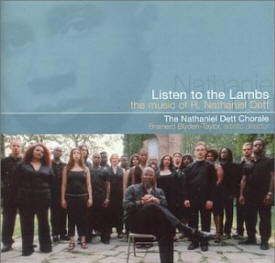
Listen to the Lambs: The Music of R. Nathaniel Dett
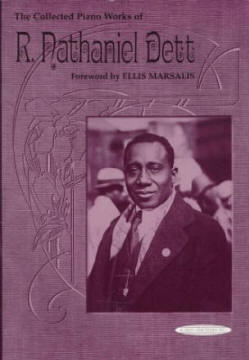
The Collected Piano Works of R.
Nathaniel Dett
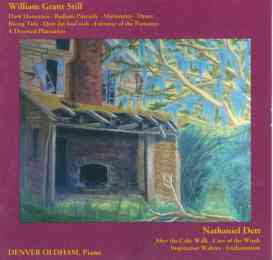
Dett / Still Piano Music
|
Accueil -> Compositeurs -> Dett, R. Nathaniel
Échantillons
audio :
3
Leçons de
piano
4 Education
21 Œuvres CD: William Brown, tenor; Ann Sears, piano. Albany TROY == (1999; Fi-yer!; A century of African-American song). Collections: Religious folk-songs of the Negro as sung at Hampton Institute, S. 67, for SATB with optional piano (1927). Hampton: Hampton Institute Press, 1927. xxvii, 236, ii, xiii p. A wheel in a wheel; Babylon’s falling’; Band ob Gideon; Bright sparkles in the churchyard; But he ain’t comin; here t;die no mo’; By and by; Children, we shall all be free; Come down, sinner; Daniel saw the stone; De church of God; De old sheep done know de road; De old ark a-moverin’ along; De winter’ll soon be ober; Deep river; Dere’s a little wheel a-turnin’ in my heart’; Did you hear how dey crucified my Lord?; Don’t be weary, traveler; Don’t ca;; de roll; Don’t get weary; Don’t leave me, Lord; Don’t you view dat ship a-come a-sailin’?; Down by the river; Dust an’ ashes; Ef you want to get to hebben; Ev’ry time I feel the spirit’Ezekiel saw de wheel; Fightin on; Git on board , little chidren; Go down, Moses; Go Mary and toll de bell; Go tell it on de mountain; Goin’ to shout all over God’s heav’n; Going to heaven; Good Lord, shall I ever be the one?; Good news, de chariot’s comin’; Grace before meat at Hampton; Gwine up’Hailt! Hail! Hail!; Hard trials; He is king of kings; Hear de anhels singin’; Hear de lambs a-cryin’; He’s the lily of the valley;I ain’t goin’t’study war no more; I am goin’ to join this army; I am seekin’ for a city; I couldn’t hear nobody pray; I don’t want to stay here no longer; I heard from heaven today; I heard the preaching of the elder; I know the Lord’s laid his hands on me; I’ll be there in the morning; I’m a-rolling; I’m a trav’ling to the grave; I’m gwine to jine de great ‘sociation; I’m so glad trouble don’t last always; I’m troubled in mind; If you love God, serve him; In bright mansions above; In dat great gittin’-o[ mornin’; In that beautiful world on high; In the kingdom; I’ve been a-list’ning all de night long; I’ve been toilin’ at de hill; I’ve got a mother in de heaven; I want to be ready; I would like to read; Jerusalem mornin’; John saw judgment; Keep a-inchin’ along’Keep me from sinkin’ down; King Manuel; Leanin’ on de Lord; L’envoi’Let de heaven light shine on me; Let us cheer the weary traveler; Let us praise him; Like a rough and a rolling sea; Listen to de lambs; Little David, play on your harp; Live humble; Look away; Lord, have mercy; Lord, I want to be a Christian; Lord, until I reach my home; Most done trabelling; Mother, is massa gwine to sell us?; My Lord delibered Daniel; My Lord, what a morning; My lord;’s a-riding all the time; My soul wants something that’s new; My way’s cloudy; No more auction block; Nobody knows de trouble I’ve seen; Oh, de downward road is croweded; Oh, de hebben is shinin’; Oh, freedom!; Oh, give way, Jordan; Oh, he raise-a poor Lazarus; Oh, Jerusalem!; Oh, religion is a fortune; Oh, sinner, you’d better get ready; Oh, stand the storm; Oh, the rocks and the mountains; Oh, wan’t date a wide ribber?; Oh, when I get t’ heaven; Oh, yes!; Oh yes, younder come my Lord; Ole-time religion; Peter on the sea; Pilgrim’s song; Pilgrim’s song; Prayer is de key of heaven; Put John on de islan’; Raslin’ Jacob; Reisgn, massa Jesus; Rise on, rise an’shine; Rise up shepher and foller; Roll de ole chariot along; Roll, Jordan, roll; Run, Mary, run; Run to Jesus; See fo’ and twenty elders; Seek and ye shall find; Slav’ry chain; Somebody’s knocking at your door; Sometimes I feel like a motherless child; Soon I will be done; Stars in the elements; Stay in de field; Steal away to Jesus; Sun, don’t set in de mornin’; Sweet Canaan; Sweet turtle dove; Swing low, chariot’Swing low, sweet chaiot[two settijngs]; Tell Jesus; Theer is a balm in Gilead; There were ten virgins; There’s a meeting here tonight; They look like men of war; ‘Tis me; ‘Tis the old ship of Zion; View de land; Walk togedder, children; Walk you in de light; Want to go to heaven when I die; We are almost home; We are building on a rock; We are climbing Jacob’s ladder; We are walking in de light; Were you there when they crucified my Lorrd?; What yo’ gwine t’ do when de lamp burn down?; When the general roll is called; Where shall I be when de firs’ trumpet sound?; Who’ll jine de union?; Why, he’s Lord of lords; Wonder where is good ole Daniel; You goin’ to reap jus’ what you sow; Zion, weep a-low. ----- New York: AMS Press, 1972, 1927. The collected piano works of R. Nathaniel Dett, with introductions by Dominique-René de Lerma and Vivian Flagg McBrier. Evanston: Summy-Birchard, 1973. xii, 195p. The Dett collection of Negro spirituals, S. 78, for SATB, some with piano, some with solo voices (1934). Chicago: Hall & McCreary, 1936. Vol. 1: Balm in Gilead; Daniel saw the stone; Deep river; Don’t call the roll, John; Give me your hand; Go down, Moses; Go tell it on the mountain; I hope my mother will be there; I know the Lord’s laid his hands on me; I’ve done what you told me to do; I want to be ready; Lord, I want to be a Christian; Many thousand gone; Mary and Martha; My brother, I do wonder; My way’s cloudy; Nobody knows the trouble I’ve seen; Oh, I got a light; Poor mourner’s got a home; Rise and shine; Room enough; Shine along; Somebody’s knocking at your door; Steal away; Swing low, sweet chariot; There’s a meeting here tonight. Vol. 2: Dust, dust, and ashes; I am seeking for a city; Let the heaven light shine on me; Murm’ring word; My Lord, what a morning!; The old ark’s a-movering along; Save me, Lord, save me; Stay in the field; ‘This the old ship of Zion; We are building on a rock; We are climbing Jacob’s ladder; What you gonna do when the lamp burns down?; The winter’ll soon be over; You’re going to reap just what you sow. Vol 3: Appolyon and the pilgrim; Better be ready; Calvary’s mountain; Certainly, Lord; Down in hell; Father Abraham; I ain’t going t’ study war no more; I belong to the union band; In that beautiful world on high; I’ve got shoes; Lord, until I reach my home; My way’s cloudy; Nobody knows the trouble I see, Lord; Poor pilgrim; Roll, Jordon, roll (c1860); Roll, Jordon, roll (Tidewater version); Run to Jesus; Steal away; We are trav’ling to the grave. Vol. 4: Baptism; By and by; Come to me; Communion; Ev’ry time I feel the spirit; Hew ‘round the tree; Ho, everyone that thirsts; If I had died when I was a babe; Is there anybody here?; Little David, play on your harp; O. holy savior; Pray on the way; Roll, Jordon, roll. Negro spirituals, S. 89, for SATB, some with solos. London: Blandford Press, 1959. Appolyon and the pilgrim; Baptism; Better be ready; Calvary’s mountain; Certainly, Lord; Come to me; Communion; Daniel saw the stone; Don’t call the roll, John; Down in hell; Father Abraham; Give me your hand; Go tell it on the mountain; Hew ‘round the tree; Ho, everyone that thirsts; I am seeking for a city; I belong to the union band; I know the Lord’s laid his hands on me; I’ve done what you told me to do; If I had died when I was a babe; In that beautiful world on high; Is there anybody here?; Keep me from sinking down; Let the heaven light shine on me; Lord, until I reach my home; Many thousand gone; Mary and Martha; Murm’ring word; My brother, I do wonder; My way’s cloudy; My way’s cloudy; O. holy savior; Oh, I got a light; Poor mourner’s got a home; Poor pilgrim; Pray on the way;Rise and shine; Room enough; Run to Jesus; Save me, Lord, save me; Shine along; Stay in the field; ‘Sweetest sound I ever heard; The old ark’s a-movering along; The winter’ll soon be over; There’s a meeting here tonight; This the old ship of Zion; We are climbing Jacob’s ladder; We are trav’ling to the grave; What you gonna do when the lamp burns down?; You’re going to reap just what you sow. Individual titles: CD: Oral Moses, bass-baritone; George Morrison Bailey, piano. Albany TROY == (2001; Amen!; African-American composers of the 20th century). Dett, R. Nathaniel. “I’m Goin’ To Thank God.” Glen Rock, NJ: J. Fischer & Bro., 1940. & Bro., 1940. Collections: The collected piano works of R. Nathaniel Dett The Dett collection of Negro spirituals, S. 78, for SATB & piano (varies) (1936). New York: J. Fischer & Bro., 1936. 4 vols. Religious folk-songs of the Negro as sung at Hampton Institute, S. 67, for SATB with piano reduction. Hampton: Hampton Institute Press, 1927. xxvii, 236p. 1. A wheel in a wheel; 2. Babylon's fallin'.; 3. Band ob Gideon; 4. Bright sparkles in de churchyard;5. But he ain’t comin' here t'die no mo'; 6. By and by; 7. Children,. we all shall be free; 8. De church of God; 9. Come down, sinner; 10. Daniel saw the stone; 11. Deep river; 12. Dere's a little wheel a-turnin' in my heart; 13. Did you hear how dey crucified my Lord?; 14. Don't be weary, traveler; 15. Don't call de roll; 16. Don't get weary; 17. Don't leave me, Lord; 18. Don't you view dat ship a-come a-sailin'?; 19. Down by the river; 20. Dust an' ashes; 21. Ef you want to get to hebben; 22. Ev'ry time I feel the spirit; 23. Ezekiel saw de wheel; 24. Fighting on; 25. Git on board, little children;26. Go down, Moses; 27. Go, Mary, an' toll de bell; 28. Go tell it on de mountain; 29. Goin' to shout all over God's heav'n; 30. Going to heaven; 31. Good Lord, shall I ever be de one?; 32. Good news, de chariot's comin'; 33. Grace before meat at Hampton’; 34. Gwine up; 35. Hail! hail! hail!; 36. Hard trials; 37. He is king of kings; 38. Hear de angels singin'; 39. He's the lily of the valley; 40. I ain't goint' study war no more; 41. I am goin' to join this army; 42. I am seekin' for a city; 43. I couldn't hear nobody pray; 44. I don't want to stay here no longer; 45. I heard from heaven today; 46. I heard the preaching on the elder; 47. I know the Lord's laid his hands on me; 48. I'll be there in the morning; 49. I'm a-rolling; 50. I'm a travl'in to the grave; 51. I'm gwine to jine de great 'sociation; 52. I'm so glad trouble don't last always; 53. I'm troubled in mind; 54. If you love God, serve him; 55. In bright mansions above; 56. In dat great gittin'-up mornin'; 57. I that beautiful kingdom on high; 58. In the kingdom; 59. I've been a-list'ning all de night long; 60. I've been toilin'at de hill; 61. I've got a mother in de heaven; 62. I want to be ready; 63. I would like to read==; 64. Jerusalem morning; 65. John saw judgment; 66. Keep a-inchin' along; 67. Keep me from sinkin' down; 68. King Manuel; 69. Leanin'on de Lord; 70. L'envoi; 71. Let de heaven light shine on me; 72. Let us cheer thje weary traveler; 73. Let us praise him; 74. Like a rough and a rolling sea; 75. Listen to de lambs; 76. Little David, play on your harp; 77. Live humble; 78. Look away; 79. Lord, have mercy; 80. Lord, I want to be a Christian; 81. Lord, until I reach my home; 82. Most done trabelling; 83. Mother, is massa swine to sell us?; 84. My Lord delibered Daniel; 85. My Lord, what a morning!; 86. My Lord's a-riding all the time; 87. My soul wants something that's new; 88. My way's cloudy; 89. No more auction block; 90. Nobody knows de trouble I've seen; 91. Oh, de downward roadis crowded; 92. Oh, de hebben is shinin'; 93. Oh, freedom!; 94. Oh, give way, Jordan; 95. Oh, he raise-a poor Lazarus; 96. Oh, Jerusalem!; 97. Oh, religion is a fortune; 98. Oh, sinner, you'd better get ready; 99. Oh, stand the storm; 100. Oh,. the rocks and the mountains;101. Oh, wasn't dat a wide ribber?; 102. Oh, when I get t' heaven; 103. Oh, yes!; 104. Oh, yes, yonder comes my Lord; 105. De old sheep know de road; 106. De ole ark a-moverin' along; 107. Ole-time religion; 108. Peter on the sea; 109. Pilgrim's song; 110. Poor pilgrim; 111. Prayer is de key of heaven; 112. Put John on de islan'; 113. 'Raslin' Jacob; 114. Reign, Massa Jesus; 115. Ride on rise an' shine====OK?; 116. Rise up, shepherd, an' foller; 117. Roll de ole chariot along; 118. Roll, Jordan, roll; 119. Run, Mary, run; 120. See fo'and twenty elders; 121. Seek and ye shall find; 122. Slav'ry chain; 123. Somebody's knocking at your door; 124. Sometimes I feel like a motherless child; 125. Soon I will be done; 126. Stars in the elements; 127. Stay in de field; 128. Steal away to Jesus; 129. Sun don't set in de mornin'; 130. Sweet Canaan; 131. Sweet turtle dove; 132-133. Swing low, sweet chariot (2 versions); 134. Tell Jesus; 135. There is a balm in Gilead; 136. There were ten virgins; 137. There's a meeting here tonight; 138. They look like men of war; 139. 'Tis me; 140. 'Tis the old ship of Zion; 141. View de land; 142. Walk togedder, childron; 143. Walk you in de light; 144. Want to go to heaven when I die; 145. We are almost home; 146. We are building on a rock; 147. We are climbing Jacob's ladder; 148. We are walking in de light; 149. Were you there when they crucified my Lord?; 150. What you gwine t' do when de lamp burn down?; 151. When the general roll is called; 152. Where shall I be when de firs' trumpet sound'?; 153. Who'll jine de union?; 154. Why, he's the Lord of Lord; 155. De winter'll soon be ober; 156. Wonder where is good ole Daniel; 157. You goin' to reap jus' what you sow; 158. Zion, weep a-low. Library: Library of Congress (27-10635). ----- New York: AMS Press, 1972, 1927. xxvii, 236, ii, xiii p. Library: Library of Congress (LC 72-1595) Spirituals for voice and piano. New York: Mills Music, 1942. 19p. Dedication: Dorothy Maynor. The contents of this anthology are individually cited in this listing. The collected piano works of R. Nathaniel Dett, with introductions by Dominique-René de Lerma and Vivian Flagg McBrier. Evanston: Summy-Birchard, 1973. xii, 195p.: 1. Magnolia; 2. In the bottoms; 3. Enchantment; 4. Cinnamon grove; 5. Tropic winter; 6. Eight Bible vignettes. The contents of these suites are cited in this listing. Library: Library of Congress (72-12872). Individual titles: 8 Bible vignettes, S. 15, for piano (1941). New York: Mills Music, 1941. -----1. Father Abraham. 6p. Duration: 4:32. Première: 1942/03/17, Niagara Falls NY, 50th anniversary of the Chamber of Commerce, R. Nathaniel Dett. ----- 2. Desert interlude. 3p. Duration: 3:23. ----- 3. As his own soul. 4p Duration: 3:25. Dedication: To the memory of Carl. ----- 4. Barcarolle of tears. 4p. Duration: 3:46. ------5. I am the true vine. 3p. Duration: 3:33. ----- 6. Martha complained. 5p. Duration: 5:30. ----- 7. Madrigal divine. 3p. Duration: 3:52. ----- Evanston: Summy-Birchard, 1973 (The collected piano works of R. Nathaniel Dett). A man goin' roun' takin' names, S. 30, for low voice & piano (1924). New York: John Church, 1924. 4p. Duration: 2:00. Dedication: Jerome Swinford. A song, for orchestra. After the cakewalk, S. 1, for piano (1900). Williamsport PA: Vander Sloot Music Company, 1900. America the beautiful, S. 51, for SATB & piano (1918). New York: J. Fischer & Bro., 1918. 1p. Duration: 2:30. Text: Katherine Lee Bates. Première: XI/11/1918. American sampler, S. 13, for orchestra (1937). After Philip Morin Freneau. Duration: 20:00. Première: 1937/10/02, CBS broadcast.==dates As by the streams of Babylon, S. 74, for soprano & SATB (1933). New York: G. Schirmer, 1933. 11p. Duration: 3:08. As children walk ye in God's love, S. 69, for SATB (1928 [1930 in Simpson]). New York: G. Schirmer, 1930. Première: 1928/04/15, New York, Carnegie Hall, Hampton Choir. Ave Maria, S. 68, for baritone & SATB (1930). New York: G. Schirmer, 1930. 6p. Duration: 2:40. Text: Frederick H. Martens. Première: 1930, European tour, Hampton Choir. Ave Maria, S. 68. Chapel Hill: Hinshaw Music, 1978. Cave of the winds march, S. 2, for piano (1902). Niagara Falls NY: S. C. Fragard, 1902. 5p. Chariot jubilee, S. 54, for tenor, SATB & piano, or organ, or orchestra (1919). New York: John Church, 1919. 30p. Duration: 20:00. Dedication: Syracuse University Chorus. Première: 1920/04/22, St. Cecilia Society of Boston. Churning song, S. 16, for medium voice & piano. Première: Sillian M. Thompson. Duration: 2:30. Dedication: Flora Pierce-Dennis. Cinnamon grove, S. 12, for piano (1928). New York: John Church, 1928. Duration: 11:00. ----- 1. Moderato molto grazioso. 6p. After John Donne. ----- 2 Adagio cantabile. 10p. After Rabindranath Tagore. ----- 3. Ritmo moderato e con sentimento, quasi gavotte. 8p. After Henry W. Longfellow. ----- 4. Allegretto. 8 p. ----- Evanston: Summy-Birchard, 1973 (The collected piano works of R. Nathaniel Dett). Cotton needs picking, S. 10, for piano (1924). Première: 1924/10/24, St. Paul MN, People's Church. Done paid my vow to the Lord, S. 55, for medium voice & SSA (1919). New York: John Church, 1919. 7p. Duration: 2:00. Don't be weary traveler, S. 60, for SSATBB (1921). New York: John Church, 1921. 15p. Duration: 4:00. Dedication: George Foster Peabody. Don't you weep no more, Mary, S. 66, for SATB (1926). New York: G. Schirmer, 1926. 8p. Duration: 3:00. Drink to me only with thine eyes, S. 72, for SATB (1933). New York: J. Fischer & Bro., 1933. 10p. Text: Ben Jonson. Première: 1993, Rochester, WHAM broadcast, American Choir. Enchantment, S. 7, for piano (1922). New York: John Church Company, 1923. Duration: 12:00. Dedication: Percy Grainger. ----- 1. Incantation. 8p. ----- 2. Song of the shrine. 4 p. ----- 3. Dance of desire. 10p. ----- 4. Beyond the dream. 8 p. ----- Evanston: Summy-Birchard, 1973 (The collected piano works of R. Nathaniel Dett). Fair weather, S. 11, for piano (1924). Bryn Mawr: Theodore Presser, 1926. Follow me, S. 19, for medium voice & piano (1919). New York: John Church, 1919. 8p. Duration: 3:00. Gently Lord, o gently lead us, S. 61, for soprano & SATB (1924). New York: John Church, 1924. 15p. Duration: 3:30. Text: Thomas Hastings, after Bahama folksong. Première: Oberlin,. Douglass Memorial Chorus. Go not far from me, o God, S. 73, for baritone & SATB (1933). New York: J. Fischer & Bro., 1933. 10p. Duration: 3:00. Dedication: George Whitefiled Andrews. Go on, brother!, S. 40, for high voice & piano (1942). New York: Mills Music, 1942. 2p. Duration: 1:00. Dedication: Dorothy Maynor. Go on, mule, S. 17, for medium voice & piano (1918). New York: J. Fischer & Bro.,1918. 3p. Duration: 2:30. Dedication: Fletcher Bryant. God understands, S. 32, for medium voice & piano (1926). New York: John Church, 1926. Dedication: Katrina Trask. Hampton, my home by the sea, S. 47, for SATB with piano reduction (1914). Hampton VA: Hampton Institute Press, 1914. 2p. Duration: 2:00. Text: R. Nathaniel Dett. Dedication: To all lovers of Hampton. Hymn to Parnassus, S. 42, for medium voice & piano (1942). New York: Mills Music, 1942. Text: R. Nathaniel Dett & anonymous source. Duration: 2:00. Première: 1942/04/02, North Carolina broadcast, Lottie McCoy. I'll never turn back no more, S. 52, for high voice & SATB (1918). New York: J. Fischer & Bros., 1918. 8p. Duration: 3:30. Dedication: Hampton Choral Union and Hampton Choir. I'm a-goin' to see my friends again, S. 31, for medium voice & piano (1924). New York: John Church, 1924. 4p. Duration: 1:30. Dedication: Roland Hayes. I'm a-trav'ling to the grave, S. 43, for high voice & piano (1943). New York: Mills Music, 1943. 3p. Dedication: Dorothy Maynor. I'm goin' to thank God, S. 39, for high voice & piano (1940). New York: J. Fischer & Bro., 1940. Duration: 3:06. Première: 1940/12/10, Library of Congress, Dorothy Maynor. I'm so glad trouble don't last alway, S. 20, for medium voice & piano (1919). New York: John Church, 1919. Duration: 2:50. I'm so glad trouble don't last alway, S. 56, for SSA & piano. New York: John Church, 1919. 4p. Duration: 1:15. In that morning, S. 46, for high voice & piano (1943). New York: Mills Music, 1943. 2p. Duration: 1:10. Dedication: Dorothy Maynor. In the bottoms, S. 6, for piano (1913). Chicago: Clayton F. Summy, 1913. Dedication: Mr. & Mrs. Fred Goff. Première: 1913, Chicago, Fanny B. Zeisler. ----- 1. Prelude; Night. 5p. Duration: 3:48. ----- 2. His song. 3 p. Duration: 2:16. ----- for organ, arr. by Gordon Balch Nevin. ----- 3. Honey. 2p. Duration: 1:00. After the poem by Paul Laurence Dunbar. -----4. Barcarolle. 10p. Duration: 4:55. -----5. Juba; Dance. 5p. Duration: 2:10. Dedication: Percy Grainger. ----- for SATB & piano, S. 76 (1934). Chicago: Clayton F. Summy, 1934. 16p. Duration: 2:45. Première: 1934, Rochester, Inter-Hi Chorus; R. Nathaniel Dett, conductor. ----- Evanston: Summy-Birchard, 1973 (The collected piano works of R. Nathaniel Dett). Inspiration waltzes, S. 3, for piano (1903). London: Richard A. Saalfield, 1903. Dedication: Mrs. Charlotte Dett. Iorana, S. 37, for medium voice & piano (1935). Chicago: Clayton F. Summy, 1935. Text: Henry Quine. Duration: 3:00. Dedication: Robert Gibbings. Lead gently, Lord, and slow, S. 33, for low voice & piano (1929). New York: John Church, 1929. 4p. Text: Paul Laurence Dunbar. Duration: 2:00. Lead gently, Lord, and slow, S. 33, for medium voice & piano (1929). New York: John Church, 1929. 4p. Let us cheer the weary traveler, S. 64, for SATB (1926). New York: John Church, 1926. 9p. Duration: 3:00. Listen to the lambs, S. 48, for soprano & SSAATTBB. New York: G. Schirmer, 1914. 8p. Duration: 5:00. Listen to the lambs, S. 48. New York: G. Schirmer, 1923. Magic moon of molten gold, S. 21, for high voice & piano (1919). New York: John Church, 1919. 15p. Duration: 3:40. Dedication: Frederick H. Martens. Magnolia S. 5, for piano (1912). Chicago: Clayton F. Summy, 1912. ----- 1. Magnolias. 5p. Duration: 3:38. ----- 2. The deserted cabin. 2p. Duration: 2:17. ----- for organ, arr. by Gordon Balch Nevin. Chicago: Summy, 1918. ----- 3. My lady love. 6p. Duration: 2:56. ----- 4. Mammy. 3p.. Duration: 3:19. ----- for organ, arr. by Gordon Balch Nevin. Chicago: Summy, 1921. ----- 5. The place where the rainbow ends. 12p. Duration: 5:19. ----- Evanston: Summy-Birchard, 1973 (The collected piano works of R. Nathaniel Dett). Music in the mine, S. 50, for tenor & SATB (1916). New York: G. Schirmer, 1916. 15p. Duration: 6:30. Première: 1922/02/21, New York, Carnegie Hall, New York Oratorio Society. My Agnes from Niagara, S. 4, for piano (1909). Niagara Falls NY: S. C. Fragard, 1909. My day, S. 34, for low voice & piano (1929). New York: John Church, 1929. 4p. Duration: 2:00. Text: Daniel S. Twohig. Nepenthe and the muse. S. 8, for piano (1922). New York: John Church Co., 1922. Duration: 2:00. Dedication: Arthur Foote. Now we take this feeble body, S. 45, for high voice & piano (1943). New York: Mills Music, 1943. 3p. Duration: 1:30. Dedication: Dorothy Maynor. O hear the lambs a-crying, S. 65, for soprano & SATTBB. New York: John Church, 1926. 10p. Duration: 3:30. Première: Oratorio Society of New York. O holy Lord, S. 49, for SSAATTB (1916). New York: G. Schirmer, 1916. 8p. Duration: 4:30. Première: 1916/10/05, Hamilton ONT, Elgar Choir. O Lord, the hard-won miles, S. 36, for low voice & piano (1934). New York: G. Schirmer, 1934. 4p. Text: Paul Laurence Dunbar. Duration: 2:00. O Lord, the hard-won miles, S. 36, for medium voice & piano (1934). New York: G. Schirmer, 1934. 4p. O, the land I'm bound for, S. 24 , for medium voice & piano (1923). Bryn Mawr: Theodore Presser, 1923. Première: 1923, Oberlin, Douglass Memorial Chorus. 2:00. Dedication: Lloyd Hickman. On that Sabbath morn, for SATB. Minneapolis[?]: Schmitt. (#1553). Open yo' eyes, S. 26, for high voice & piano (1923). Philadelphia: Theodore Presser, 1923. 7p. (#19031) Text: The album of a heart, by R. Nathaniel Dett. Duration: 2:00. Library: Library of Congress (1924 imprint, #19496); Spingarn. Parade of the years, incidental music for orchestra. Text: for a play by Edward Hungerford. Pathways of progress, incidental music for orchestra. Text: for a play by Edward Hungerford. Peter on the sea, for SATB. New York: AMS Press, 1972, 1927 (Religious folk-songs of the Negro as sung at Hampton Institute, p68). Pilgrim's song, for SATB. New York: AMS Press, 1972, 1927 (Religious folk-songs of the Negro as sung at Hampton Institute, p191). Poor me, S. 23, for medium voice & piano (1923). New York: John Church, 1923. 5p. (#18656) Dedication: Marian Anderson. Melody taken from Folk songs of the American Negro, by the Work brothers. Library: Spingarn. ----- for SATB. New York: John Church, 1919. Library: Spingarn. ----- for SATB with piano reduction, arr. by Ruth Gillum. Bryn Mawr: John Church, 1949. (#332-40003) Library: Library of Congress. Poor pilgrim, for SATB. New York: AMS Press, 1972, 1927 (Religious folk-songs of the Negro as sung at Hampton Institute, p169). Prayer is de key of heaven, for SATB. New York: AMS Press, 1972, 1927 (Religious folk-songs of the Negro as sung at Hampton Institute, p171) Put John on de islan', for SATB. New York: AMS Press, 1972, 1927 (Religious folk-songs of the Negro as sung at Hampton Institute, p160). Ramah, S. 9, for violin & piano (1923). Boston: Boston Music Co., 1923. 7p. & part. (#6941) Duration: 3:00. Library: Library of Congress. 'Raslin' Jacob, for SATB. New York: AMS Press, 1972, 1927 (Religious folk-songs of the Negro as sung at Hampton Institute, p70) Reign, massa Jesus, for SATB. New York: AMS Press, 1972, 1927 (Religious folk-songs of the Negro as sung at Hampton Institute, p49) Ride on, for SATB. New York: AMS Press, 1972, 1927 (Religious folk-songs of the Negro as sung at Hampton Institute, p194) Ride on, Jesus, S. 38, for high voice & piano (1940). New York: J. Fischer & Bro., 1940. 4p. (#J.F.&B. 7695) "Setting requested and made especially for Miss Dorothy Maynor" Duration: 1:38. Première: 1940/12/10, Library of Congress, Dorothy Maynor. Library: Spingarn. ----- for SATB. New York: AMS Press, 1972, 1927 (Religious folk-songs of the Negro as sung at Hampton Institute, p148) ----- for SATTB, arr. by George Lynn. New York: J. Fischer & Bro., 1950. 8p. (Fischer edition, 8505) Library: Library of Congress. Rise an' shine, for SATB. New York: AMS Press, 1972, 1927 (Religious folk-songs of the Negro as sung at Hampton Institute, p198). Rise up shepherd an' foller, for SATB. New York: AMS Press, 1972, 1927 (Religious folk-songs of the Negro as sung at Hampton Institute, appendix iv, p79). ----- for solo, SATB & organ. Glen Rock: J. Fischer & Bro., 1964, 1936. 7p. (#7218) Library: Library of Congress (1936 imprint), Spingarn (1936 imprint). Ride up, shepherd and follow, S. 77, for tenor, TTBB & piano (1936). Glen Rock: J. Fischer & Bro., 1936. 7p. (#7219-6) Duration: 1:45. Library: Library of Congress. 78rpm: Victor M-879 (Dorothy Maynor, soprano, with male chorus). ----- for SATB, arr. by Louise Grant. New York: Belwin. (#1708) ----- for SSA, arr. by Louise Grant. New York: Belwin. (#1699) ----- for SSAA, arr. by Hugh Ross. New York: J. Fischer & Bro., 1945. 7p. (#8183). Rise up shepherd and follow, S. 71, for SATB & piano. New York: J. Fischer & Bro., 1932. 7p. Roll, Jordan, roll, for SATB. New York: AMS Press, 1972, 1927. (Religious folk-songs of the Negro as sung at Hampton Institute, appendix i, p52). Roll de ole chariot along, for SATB. New York: AMS Press, 1972, 1927. (Religious folk-songs of the Negro as sung at Hampton Institute, p192). Run, Mary, run, for SATB. (Religious folk-songs of the Negro as sung at Hampton Institute, p18). Run to Jesus, for SATB. (Religious folk-songs of the Negro as sung at Hampton Institute, p15). Seek and ye shall find, for SATB. (Religious folk-songs of the Negro as sung at Hampton Institute, p20). Seek fo' and twenty elders, for SATB. (Religious folk-songs of the Negro as sung at Hampton Institute, p71). Sit down servant, S. 35, for medium voice & piano (1932). New York: G. Schirmer, 1932. (#35805) Duration: 2:00. Library: Library of Congress, Spingarn. ----- for solo & SATB. New York: G. Schirmer, 1936. (G. Schirmer octavo, 7931; #36912) Library: Library of Congress. Slav'ry chain, for SATB. New York: AMS Press, 1972, 1927. (Religious folk-songs of the Negro as sung at Hampton Institute, p112) Slow movement on an old Negro spiritual, for string quartet (1915). Mentioned in a letter of this year to Natalie Curtis Burlin. So we'll go no more a' rovin', for SSAA. Glen Rock: J. Fischer & Bro., 1940. Somebody's knocking at your door, S. 22, for medium voice & piano (1919). New York: John Church, 1919. 9p. (#18210) Duration: 2:40. Library: Spingarn. ----- for SATB & piano (1919). Cincinnati: John Church, 1919. 16p. ----- New York: John Church, 1921. Somebody's knocking at your door, S. 57. Philadelphia: Theodore Presser, 1932. 15p. (Theodore Presser Co. part songs for mixed voices, 35197; #35197-14) Library: Library of Congress. Somebody's knocking at your door, S. 57. New York: AMS Press, 1972, 1927. (Religious folk-songs of the Negro as sung at Hampton Institute, p144). ----- for SSAA. Cincinnati: John Church, 1919. ----- for tenor & SSA (1932). Bryn Mawr: Theodore Presser, 1932. Sometimes I feel like a motherless child, for SATB. New York: AMS Press, 1972, 1927 (Religious folk-songs of the Negro as sung at Hampton Institute, p172). Son of Mary, S. 63, for SATB (1926). Cincinnati: John Church, 1926. Dedication: Oberlin Musical Union and George W. Andrews. Sonata, piano, no. 1, F minor (by 1924). Sonata, piano, no. 2, E minor (by 1925). Soon I will be done, for SATB. New York: AMS Press, 1972, 1927 (Religious folk-songs of the Negro as sung at Hampton Institute, p234) The soul of America defend, S. 41, for medium voice & piano (1942). New York: Mills Music, 1942. 3p. Text: R. Nathaniel Dett. Library: Spingarn. Stars in the elements, for SATB. New York: AMS Press, 1972, 1927. (Religious folk-songs of the Negro as sung at Hampton Institute, p162) Stay in de field, for SATB. New York: AMS Press, 1972, 1927. (Religious folk-songs of the Negro as sung at Hampton Institute, p22) Steal away to Jesus, for SATB. New York: AMS Press, 1972, 1927. (Religious folk-songs of the Negro as sung at Hampton Institute, appendix vii, p111) 78rpm: Victor M-879 (Dorothy Maynor, soprano, with male chorus). Story of the Jubilee Singers; O holy Lord, for SATB. New York: G. Schirmer, 1944, 1916. 8p. (#6579). Sun don't set in de mornin', for SATB. New York: AMS Press, 1972, 1927 (Religious folk-songs of the Negro as sung at Hampton Institute, p23). Sweet Canaan, for SATB. New York: AMS Press, 1972, 1927 (Religious folk-songs of the Negro as sung at Hampton Institute, p188). Sweet turtle dove, for SATB. New York: AMS Press, 1972, 1927 (Religious folk-songs of the Negro as sung at Hampton Institute, p164). Swing low, chariot, for SATB. New York: AMS Press, 1972, 1927 (Religious folk-songs of the Negro as sung at Hampton Institute, p100). Swing low, sweet chariot, for SATB. New York: AMS Press, 1972, 1927 (Religious folk-songs of the Negro as sung at Hampton Institute, p101, appendix p. v). Symphonic suite, piano, E minor. Duration: 23:00. Symphony, E minor. Tell Jesus, for SATB. New York: AMS Press, 1972, 1927 (Religious folk-songs of the Negro as sung at Hampton Institute, p77) The ordering of Moses; biblical folk scene (1932). Text: Bible and folklore. Duration: 60:00. Instrumentation: SATB soli, SSAATTBB, 2222 p, 4321, timp, harp, organ, strings. Dedication: George Foster Peabody. Première: 1939/V/7; Cincinnati Festival; Eugene Goossens, conductor. Original title, as M.M. thesis, Eastman School of Music, 1932: Sacred cantata for soli, chorus and orchestra. Library: Schomburg. LP: U.S. State Department. LP: Silver Crest TAL-42868-S (Jeannette Walters, soprano; Carol Brice, contralto; John Miles, tenor; John Work IV, baritone; The Talladega College Choir; Mobile Symphony Orchestra; William L. Dawson, conductor). Library: Lerma. ------ piano-vocal score. Melville: J. Fischer & Bro., 1965, 1939. 123p. (Fischer ed. 7230) Library: Lerma, Library of Congress (1937 imprint), Schomberg, Spingarn, Yale (1937 imprint). ----- Lords, sing together. Detroit: Board of Education, City of Detroit, 1971 (Afro-America sings). The song of Miriam, for soprano & SSA. New York: Belwin-Mills. (#FEC 9978). There is a balm in Gilead, for SATB. New York: Church Hymnal Corporation, 1981 (Lift every voice and sing, ed. by Irene J. Brown, n14) LP: Period SPL-580 (Inez Matthews, mezzo-soprano; Jonathan Brice, piano). ----- New York: AMS Press, 1972, 1927 (Religious folk-songs of the Negro as sung at Hampton Institute, p88). There were ten virgins, for SATB. New York: AMS Press, 1972, 1927 (Religious folk-songs of the Negro as sung at Hampton Institute, p72). There's a star in the east, S. 62, for SSA. New York: John Church, 1926. There's a man goin' 'round takin' names, for solo & SATB. Cincinnati: John Church, 1924. There's a meeting here tonight, , for SATB. New York: AMS Press, 1972, 1927 (Religious folk-songs of the Negro as sung at Hampton Institute, p182). There's a meeting here tonight, S. 59, for SSA & piano (1921). Cincinnati: John Church, 1921. 10p. Duration: 2:30. Première: St. Cecilia Society of Boston. They led my Lord away, for SATB. New York: G. Schirmer, 1947. They look like men of war, for SATB. New York: AMS Press, 1972, 1927 (Religious folk-songs of the Negro as sung at Hampton Institute, p180). A thousand years ago or more, S. 18, for high voice & piano (1918). New York: John Church, 1919. 9p. (#18212) Text: Frederick H. Martens. Duration: 3:00. Library: Spingarn. 'Tis me, for SATB. New York: AMS Press, 1972, 1927 (Religious folk-songs of the Negro as sung at Hampton Institute, p183, appendix p. ix). 'Tis the ole ship of Zion, for SATB. New York: AMS Press, 1972, 1927 (Religious folk-songs of the Negro as sung at Hampton Institute, p81). Travelin' to the grave, for medium voice & piano. Tropic winter, S. 14, for piano (1938). Chicago: Summy, 1938. (#C.F.S.Co. 3063a to 3963b) Duration: 15:00. ----- 1. The daybreak charioteer. 4p. ----- 2. A bayou garden. 2p. ----- 3. Pompons and fans. 6p. ----- 4. Legend of the atoll. 3p. ----- 5. To a closed casement. 3p. ----- 6. Noon siesta. 1p. ----- 7. Parade of the jasmine banners. 8p. -----Evanston: Summy-Birchard, 1973 (The collected piano works of R. Nathaniel Dett, p119). ----- for orchestra. View de land, for SATB. New York: AMS Press, 1972, 1927 (Religious folk-songs of the Negro as sung at Hampton Institute, p138). The voice of the sea, for low voice & piano. New York: John Church, 1924. 5p. (#18819-4) Text: from The album of a heart, by R. Nathaniel Dett. Dedication: Kathryn Meisle. Library: Library of Congress, Spingarn. Walk together, children, for SATB. New York: AMS Press, 1972, 1927 (Religious folk-songs of the Negro as sung at Hampton Institute, p26). Walk you in de light, for SATB. New York: AMS Press, 1972, 1927 (Religious folk-songs of the Negro as sung at Hampton Institute, p24). Want to go to heaven when I die, for SATB. (New York: AMS Press, 1972, 1927 (Religious folk-songs of the Negro as sung at Hampton Institute, appendix ii, p53). Wasn't that a mighty day?, for SATBB. New York: G. Schirmer, 1933. 9p. (G. Schirmer octavo choruses, 7712; #36042) Library: Library of Congress, Spingarn. We are almost home, for SATB. New York: AMS Press, 1972, 1927 (Religious folk-songs of the Negro as sung at Hampton Institute, p89). We are buidling a rock, for SATB. New York: AMS Press, 1972, 1927 (Religious folk-songs of the Negro as sung at Hampton Institute, p115). We are climbing Jacob's ladder, for SATB. New York: AMS Press, 1972, 1927 (Religious folk-songs of the Negro as sung at Hampton Institute, p118). We are walking in de light, for SATB. New York: AMS Press, 1972, 1927 (Religious folk-songs of the Negro as sung at Hampton Institute, p116). Weeping Mary, S. 53, for soprano & STAB with piano reduction. New York: J. Fischer & Bro., 1918. 8p. (#FEC 4434) Duration: 4:00. Dedication: Bruce Carey. Library: Spingarn. Were thou the moon, S. 28, for low voice & piano (1924). Cincinnati: John Church, 1924. 5p. (#18818) Text: Album of a heart, by R. Nathaniel Dett. Dedication: Stanley Hoban. Library: Library of Congress, Spingarn. Were you there when they crucified my Lord?, for SATB. New York: AMS Press, 1972, 1927 (Religious folk-songs of the Negro as sung at Hampton Institute, appendix vi, p106). LP: Victor M-879 (Dorothy Maynor, soprano, with male chorus). What kind of shoes you gonna wear?, S. 44, for medium voice & piano (1943). New York: Mills Music, 1943. 5p. Duration: 1:30. Dedication: Dorothy Maynor. Library: Spingarn. ----- New York: Mills Music, 1942 (Spirituals for voice and piano). What yo' gwine t' do when de lamp burn down?, for SATB. New York: AMS Press, 1972, 1927 (Religious folk-songs of the Negro as sung at Hampton Institute, p140). When I survey the wondrous cross, for SSAA. New York: Mills Music, 1941. When the general roll is called, for SATB. New York: AMS Press, 1972, 1927 (Religious folk-songs of the Negro as sung at Hampton Institute, p166). Where shall I be when de firs' trumpet soun'?, for SATB. New York: AMS Press, 1972, 1927 (Religious folk-songs of the Negro as sung at Hampton Institute, p173). Who'll jine de union?, for SATB. New York: AMS Press, 1972, 1927 (Religious folk-songs of the Negro as sung at Hampton Institute, p142). Why he's the Lord of lords, for SATB. New York: AMS Press, 1972, 1927 (Religious folk-songs of the Negro as sung at Hampton Institute, p151). The winding road, S. 25, for low voice & piano (1923). Philadelphia: Theodore Presser, 1923. 7p. (#19030) Text: Tertius van Dyke. Duration: 2:00. Library: Library of Congress, Spingarn. Wonder where is good ole Daniel, for SATB. New York: AMS Press, 1972, 1927 (Religious folk-songs of the Negro as sung at Hampton Institute, p73). You goin' to reap jus' what you sow, for SATB. New York: AMS Press, 1972, 1927 (Religious folk-songs of the Negro as sung at Hampton Institute, p28) Zion, hallelujah, S. 27, for medium voice & piano (1923). New York: John Church, 1923. 5p. (#18657) Duration: 1:45. Dedication: Reinald Werrenrath. "As sung by Miss Baytop" Library: Spingarn. Zion, weep a-low, for SATB. New York: AMS Press, 1972, 1927 (Religious folk-songs of the Negro as sung at Hampton Institute, p196). On that Sabbath morn, for SATB. Minneapolis?: Schmitt. (#1553) Open yo' eyes, for high voice & piano. Philadelphia: Theodore Presser, 1923. 7p. (#19031) Text: The album of a heart, by R. Nathaniel Dett. Library: Library of Congress (1924 imprint, #19496) Spingarn. The ordering of Moses (1932); biblical folk scene. Text: Bible and folklore. Duration: 60:00. Instrumentation: SATB soli, SSAATTBB, 2222 p, 4321, timp, harp, organ, strings. Dedication: George Foster Peabody. Première: 7 May 1939; Cincinnati Festival; Eugene Goossens, conductor. Original title, as M.M. thesis, Eastman School of Music, 1932: Sacred cantata for soli, chorus and orchestra. Library: Schomburg. Recorded: (1) U.S. State Department; (2) Silver Crest TAL-42868-S (Jeannette Walters, soprano; Carol Brice, contralto; John Miles, tenor; John Work IV, baritone; The Talladega College Choir; Mobile Symphony Orchestra; William L. Dawson, conductor). ----- piano-vocal score. Melville: J. Fischer & Bro., 1965, 1939. 123p. (Fischer ed. 7230) Library: Lerma, Library of Congress (1937 imprint), Schomberg, Spingarn, Yale (1937 imprint). ----- Lords, sing together. Detroit: Board of Education, City of Detroit, 1971 (Afro-America sings) Parade of the years, incidental music, for orchestra. Text: for a play by Edward Hungerford. Pathways of progress, incidental music, for orchestra. Text: for a play by Edward Hungerford. Peter on the sea, for SATB. New York: AMS Press, 1972, 1927 (Religious folk-songs of the Negro as sung at Hampton Institute, p68) Pilgrim's song, for SATB. New York: AMS Press, 1972, 1927 (Religious folk-songs of the Negro as sung at Hampton Institute, p191) Poor me, for medium voice & piano. New York: John Church, 1923. 5p. (#18656) Dedication: Marian Anderson. Melody taken from Folk songs of the American Negro, by the Work brothers. Library: Spingarn. ----- for SATB. New York: John Church, 1919. Library: Spingarn. ----- arranged for SATB with piano reduction by Ruth Gillum. Bryn Mawr: John Church, 1949. (#332-40003) Library: Library of Congress. Poor pilgrim, for SATB. New York: AMS Press, 1972, 1927 (Religious folk-songs of the Negro as sung at Hampton Institute, p169) Prayer is de key of heaven, for SATB. New York: AMS Press, 1972, 1927 (Religious folk-songs of the Negro as sung at Hampton Institute, p171) Put John on de islan', for SATB. New York: AMS Press, 1972, 1927 (Religious folk-songs of the Negro as sung at Hampton Institute, p160) Ramah, for violin & piano. Boston: Boston Music Co., 1923. 7p. & part. (#6941) Library: Library of Congress. 'Raslin' Jacob, for SATB. New York: AMS Press, 1972, 1927 (Religious folk-songs of the Negro as sung at Hampton Institute, p70) Reign, massa Jesus, for SATB. New York: AMS Press, 1972, 1927 (Religious folk-songs of the Negro as sung at Hampton Institute, p49) Religious folk-songs of the Negro as sung at Hampton Institute, for SATB. Hampton: Hampton Institute Press, 1927. xxvii, 236p. Library: Library of Congress (27-10635). New York: AMS Press, 1972, 1927. xxvii, 236, ii, xiii p. Contents of this anthology are entered by title in this listing. Library: Library of Congress (LC 72-1595) Ride on, for SATB. New York: AMS Press, 1972, 1927 (Religious folk-songs of the Negro as sung at Hampton Institute, p194) Ride on, Jesus, for high voice & piano. New York: J. Fischer & Bro., 1940. 4p. (#J.F.&B. 7695) "Setting requested and made especially for Miss Dorothy Maynor" Library: Spingarn. ----- for SATB. New York: AMS Press, 1972, 1927 (Religious folk-songs of the Negro as sung at Hampton Institute, p148) ----- arranged for SATTB by George Lynn. New York: J. Fischer & Bro., 1950. 8p. (Fischer edition, 8505) Library: Library of Congress. Rise an' shine, for SATB. New York: AMS Press, 1972, 1927 (Religious folk-songs of the Negro as sung at Hampton Institute, p198) Rise up shepherd an' foller, for SATB. New York: AMS Press, 1972, 1927 (Religious folk-songs of the Negro as sung at Hampton Institute, appendix iv, p79) ----- for solo, SATB & organ. Glen Rock: J. Fischer & Bro., 1964, 1936. 7p. (#7218) Library: Library of Congress (1936 imprint), Spingarn (1936 imprint). ----- for tenor, TTBB & piano. Glen Rock: J. Fischer & Bro., 1936. 7p. (#7219-6) Library: Library of Congress. Recorded: Victor M-879 (Dorothy Maynor, soprano, with male chorus) ----- arranged by Louise Grant, for SATB. New York: Belwin. (#1708) ----- arranged by Hugh Ross, for SSAA. New York: J. Fischer & Bro., 1945. 7p. (#8183) ----- arranged by Louise Grant, for SSA. New York: Belwin. (#1699) Roll, Jordan, roll, for SATB. New York: AMS Press, 1972, 1927. (Religious folk-songs of the Negro as sung at Hampton Institute, appendix i, p52) Roll de ole chariot along, for SATB. New York: AMS Press, 1972, 1927. (Religious folk-songs of the Negro as sung at Hampton Institute, p192) Run, Mary, run, for SATB. (Religious folk-songs of the Negro as sung at Hampton Institute, p18) Run to Jesus, for SATB. (Religious folk-songs of the Negro as sung at Hampton Institute, p15) Seek and ye shall find, for SATB. (Religious folk-songs of the Negro as sung at Hampton Institute, p20) Seek fo' and twenty elders, for SATB. (Religious folk-songs of the Negro as sung at Hampton Institute, p71) Sit down servant, for medium voice & piano. New York: G. Schirmer, 1932. (#35805) Library: Library of Congress, Spingarn. ----- for solo & SATB. New York: G. Schirmer, 1936. (G. Schirmer octavo, 7931; #36912) Library: Library of Congress. Slav'ry chain, for SATB. New York: AMS Press, 1972, 1927. (Religious folk-songs of the Negro as sung at Hampton Institute, p112) Slow movement on an old Negro spiritual, for string quartet (1915). Mentioned in a letter of this year to Natalie Curtis Burlin. So we'll go no more a' rovin', for SSAA. Glen Rock: J. Fischer & Bro., 1940. Somebody's knocking at your door, for medium voice & piano. New York: John Church, 1919. 9p. (#18210) Library: Spingarn. ----- for SATB. Cincinnati: John Church, 1919. Philadelphia: Theodore Presser, 1932. 15p. (Theodore Presser Co. part songs for mixed voices, 35197; #35197-14) Library: Library of Congress. New York: AMS Press, 1972, 1927. (Religious folk-songs of the Negro as sung at Hampton Institute, p144) ----- for SSAA. Cincinnati: John Church, 1919. Sometimes I feel like a motherless child, for SATB. New York: AMS Press, 1972, 1927 (Religious folk-songs of the Negro as sung at Hampton Institute, p172) Son of Mary, for SATB. Cincinnati: John Church, 1910. Sonata, piano, no. 1, F minor (by 1924) Sonata, piano, no. 2, E minor (by 1925) A song, for orchestra. The song of Miriam, for soprano & SSA. New York: Belwin-Mills. (#FEC 9978) Soon I will be done, for SATB. New York: AMS Press, 1972, 1927 (Religious folk-songs of the Negro as sung at Hampton Institute, p234) The soul of America defend, for medium voice & piano. New York: Mills Music, 1942. 3p. Library: Spingarn. Spirituals for voice and piano. New York: Mills Music, 1942. 19p. Dedication: Dorothy Maynor. The contents of this anthology are individually cited in this listing. Stars in the elements, for SATB. New York: AMS Press, 1972, 1927. (Religious folk-songs of the Negro as sung at Hampton Institute, p162) Stay in de field, for SATB. New York: AMS Press, 1972, 1927. (Religious folk-songs of the Negro as sung at Hampton Institute, p22) Steal away to Jesus, for SATB. New York: AMS Press, 1972, 1927. (Religious folk-songs of the Negro as sung at Hampton Institute, appendix vii, p111) Recorded: Victor M-879 (Dorothy Maynor, soprano, with male chorus) Story of the Jubilee Singers; O holy Lord, for SATB. New York: G. Schirmer, 1944, 1916. 8p. (#6579) [Suites, piano] The collected piano works of R. Nathaniel Dett, with introductions by Dominique-Ren‚ de Lerma and Vivian Flagg McBrier. Evanston: Summy-Birchard, 1973. xii, 195p. Contents: (1) Magnolia; (2) In the bottoms; (3) Enchantment; (4) Cinnamon grove; (5) Tropic winter; (6) Eight Bible vignettes. The contents of these suites are cited in this listing. Library: Library of Congress (72-12872) Sun don't set in de mornin', for SATB. New York: AMS Press, 1972, 1927 (Religious folk-songs of the Negro as sung at Hampton Institute, p23) Sweet Canaan, for SATB. New York: AMS Press, 1972, 1927 (Religious folk-songs of the Negro as sung at Hampton Institute, p188) Sweet turtle dove, for SATB. New York: AMS Press, 1972, 1927 (Religious folk-songs of the Negro as sung at Hampton Institute, p164) Swing low, chariot, for SATB. New York: AMS Press, 1972, 1927 (Religious folk-songs of the Negro as sung at Hampton Institute, p100) Swing low, sweet chariot, for SATB. New York: AMS Press, 1972, 1927 (Religious folk-songs of the Negro as sung at Hampton Institute, p101, appendix p. v) Symphonic suite, piano, E minor. Duration: 23:00. Symphony, E minor. Tell Jesus, for SATB. New York: AMS Press, 1972, 1927 (Religious folk-songs of the Negro as sung at Hampton Institute, p77) There is a balm in Gilead, for SATB. New York: Church Hymnal Corporation, 1981 (Lift every voice and sing, ed. by Irene J. Brown, n14) Recorded: Period SPL-580 (Inez Matthews, mezzo-soprano; Jonathan Brice, piano) New York: AMS Press, 1972, 1927 (Religious folk-songs of the Negro as sung at Hampton Institute, p88) There were ten virgins, for SATB. New York: AMS Press, 1972, 1927 (Religious folk-songs of the Negro as sung at Hampton Institute, p72) There's a man goin' 'round takin' names, for solo & SATB. Cincinnati: John Church, 1924. There's a meeting here tonight, for SATB. New York: AMS Press, 1972, 1927 (Religious folk-songs of the Negro as sung at Hampton Institute, p182) ----- for SSA. Cincinnati: John Church, 1921. They led my Lord away, for SATB. New York: G. Schirmer, 1947. They look like men of war, for SATB. New York: AMS Press, 1972, 1927 (Religious folk-songs of the Negro as sung at Hampton Institute, p180) A thousand years ago or more, for high voice & piano. New York: John Church, 1919. 9p. (#18212) Text: Frederick H. Martens. Library: Spingarn. 'Tis me, for SATB. New York: AMS Press, 1972, 1927 (Religious folk-songs of the Negro as sung at Hampton Institute, p183, appendix p. ix) 'Tis the ole ship of Zion, for SATB. New York: AMS Press, 1972, 1927 (Religious folk-songs of the Negro as sung at Hampton Institute, p81) Travelin' to the grave, for medium voice & piano. Tropic winter suite, for piano. Chicago: Summy, 1938. (#C.F.S.Co. 3063a to 3963b) Contents: (1) The daybreak charioteer; (2) A bayou garden; (3) Pompons and fans; (4) Legend of the atoll; (5) To a closed casement; (6) Noon siesta; (7) Parade of the jasmine banners. Duration: 15:00. Evanston: Summy-Birchard, 1973 (The collected piano works of R. Nathaniel Dett, p119) ----- for orchestra. View de land, for SATB. New York: AMS Press, 1972, 1927 (Religious folk-songs of the Negro as sung at Hampton Institute, p138) The voice of the sea, for low voice & piano. New York: John Church, 1924. 5p. (#18819-4) Text: from The album of a heart, by R. Nathaniel Dett. Library: Library of Congress, Spingarn. Walk together, children, for SATB. New York: AMS Press, 1972, 1927 (Religious folk-songs of the Negro as sung at Hampton Institute, p26) Walk you in de light, for SATB. New York: AMS Press, 1972, 1927 (Religious folk-songs of the Negro as sung at Hampton Institute, p24) Want to go to heaven when I die, for SATB. (New York: AMS Press, 1972, 1927 (Religious folk-songs of the Negro as sung at Hampton Institute, appendix ii, p53) Wasn't that a mighty day?, for SATBB. New York: G. Schirmer, 1933. 9p. (G. Schirmer octavo choruses, 7712; #36042) Library: Library of Congress, Spingarn. We are almost home, for SATB. New York: AMS Press, 1972, 1927 (Religious folk-songs of the Negro as sung at Hampton Institute, p89) We are buidling a rock, for SATB. New York: AMS Press, 1972, 1927 (Religious folk-songs of the Negro as sung at Hampton Institute, p115) We are climbing Jacob's ladder, for SATB. New York: AMS Press, 1972, 1927 (Religious folk-songs of the Negro as sung at Hampton Institute, p118) We are walking in de light, for SATB. New York: AMS Press, 1972, 1927 (Religious folk-songs of the Negro as sung at Hampton Institute, p116) Weeping Mary, for soprano & STAB with piano reduction. New York: J. Fischer & Bro., 1918. 8p. (#FEC 4434) Library: Spingarn. Were thou the moon, for low voice & piano. Cincinnati: John Church, 1924. 5p. (#18818) Text: Album of a heart, by R. Nathaniel Dett. Library: Library of Congress, Spingarn. Were you there when they crucified my Lord?, for SATB. New York: AMS Press, 1972, 1927 (Religious folk-songs of the Negro as sung at Hampton Institute, appendix vi, p106) Recorded: Victor M-879 (Dorothy Maynor, soprano, with male chorus) What kind of shoes you gonna wear?, for medium voice & piano. New York: Mills Music, 1943. 5p. Dedication: Dorothy Maynor. Library: Spingarn. New York: Mills Music, 1942 (Spirituals for voice and piano) What yo' gwine t' do when de lamp burn down?, for SATB. New York: AMS Press, 1972, 1927 (Religious folk-songs of the Negro as sung at Hampton Institute, p140) When I survey the wondrous cross, for SSAA. New York: Mills Music, 1941. When the general roll is called, for SATB. New York: AMS Press, 1972, 1927 (Religious folk-songs of the Negro as sung at Hampton Institute, p166) Where shall I be when de firs' trumpet soun'?, for SATB. New York: AMS Press, 1972, 1927 (Religious folk-songs of the Negro as sung at Hampton Institute, p173) Who'll jine de union?, for SATB. New York: AMS Press, 1972, 1927 (Religious folk-songs of the Negro as sung at Hampton Institute, p142) Why he's the Lord of lords, for SATB. New York: AMS Press, 1972, 1927 (Religious folk-songs of the Negro as sung at Hampton Institute, p151) The winding road, for low voice & piano. Philadelphia: Theodore Presser, 1923. 7p. (#19030) Text: Tertius van Dyke. Library: Library of Congress, Spingarn. Wonder where is good ole Daniel, for SATB. New York: AMS Press, 1972, 1927 (Religious folk-songs of the Negro as sung at Hampton Institute, p73) You goin' to reap jus' what you sow, for SATB. New York: AMS Press, 1972, 1927 (Religious folk-songs of the Negro as sung at Hampton Institute, p28) Zion, hallelujah, for medium voice & piano. New York: John Church, 1923. 5p. (#18657) "As sung by Miss Baytop" Library: Spingarn. Zion, weep a-low, for SATB. New York: AMS Press, 1972, 1927 (Religious folk-songs of the Negro as sung at Hampton Institute, p196)
A man goin’ round takin’ names, S. 20, for voice & piano (1924). New York: John Church, 1924. Dedication: Jerome Swinford. A thousand years ago or more, S. 18, for voice & piano (1919). Text: Frederick H. Martens. Duration: 3:00. After the cakewalk; March-cakewalk, S. 1, for piano (1900), ed. by Lee Orean Smith. Williamsport PA: Vandersloot Music, 1900. CD: Denver Oldham, piano (1988). Altarus AIR 9013 (1996). America the beautiful, S. 51, for SATB & piano (1918). New York: J. Fischer & Bro., 1918. Text: Katherine Lee Bates. Première: 1918/Thanksgiving; National Victory Sing. American sampler, S 13, for orchestra (1937). Première: 1937/X/02; CBS radio. After a text by Philip Morin Freneau. As by the streams of Babylon, S. 74, for soprano & SATB (1933), by Thomas Campion, arr. by R. Nathaniel Dett. New York: G. Schirmer, 1933. 4p. Duration: 1:20. LP: Hampton Institute Choir. Nelson Cornell Custom Records. As children walk ye in God’s love, S. 69, for SATB (1930). New York: G. Schirmer, 1930. Première: 1928/IV/16; ; New York, Carnegie Hall; Hampton Choir; R. Nathaniel Dett, conductor. Ave Maria; Guide me and lead me, S. 68, for baritone & SATB (1930). New York: G. Schirmer, 1930. Text: Liturgical with an English version by Frederick H. Martens. Première: 1930; Hampton Choir on European tour. Duration: 3:31. ----- Chapel Hill: Hinshaw Music, 1978 (The music of Black Americans, HMC-333, ed. by Evelyn D. White). 7p. CD: Ryan French, baritone; VocalEssence Ensemble Singers; Phillip Brunelle, conductor. Clarion CLR 907 CD (2004; The witness collection; Got the Saint Louis blues). Liner notes: Dominique-René de Lerma. Balm in Gilead, S.67, (1919). Chicago: Hall & McCreary, 1927; New York: AMS Press, 1972, 1927 (Religious folk-songs of the Negro as sung at Hampton Institute). LP: Inez Matthews, mezzo-soprano; Jonathan Brice, piano. Period SPL-580 (1950?). 8 Bible vignettes, S.15, for piano (1941). New York: Mills Music, 1941-1943. 1. Father Abraham; Molto maestoso; 2. Desert interlude; Larghetto patetico; 3. As his own soul; Moderato semplice qusi Volklied [Dedication: To the memory of Carl]; 4. Barcarolle of tears; Andante; 5. I am the true vine; Con moto mas espressivo; 6. Martha complained; Larghetto; 7. Other sheep; 8. Madrigal divine; Moderato molto tranquillon. ----- Evanston: Summy-Birchard, 1973. (The collected piano works of R. Nathaniel Dett), with introductions by Dominique-René de Lerma and Vivian Flagg McBrier. xii, 195p. CD: Denver Oldham, piano. New World Records NW-80367-2 (1988, R. Nathaniel Dett piano works). Liner notes: Dominique-René de Lerma. LP: Denver Oldham, piano. New World Records NW-367-2 (1988). Cave of the winds, S.2 (1902), for piano. Niagara Falls, S. C. Fragard, 1902. Première: 1903/III/10; Lockport NY, Halstead Conservatory; R. Nathaniel Dett, piano. CD: Denver Oldham, piano (1988). Altarus AIR 9013 (1996). Churning song, S. 16, for voice & piano (1903). Tex: Gilliam M. Thompson. Dedication: Flora Pierce-Dennis. Première: 1903/III/10; Lockport NY, Halstead Conservatory; singer not identified; R. Nathaniel Dett, piano. Duration: 2:30. Cinnamon grove, S. 12, for piano (1928). New York: John Church Co., 1928. 1/ Moderato molto grazioso ma con moto[after John Donne]; 2. Adagio cantabile [after Rabindranath Tagore]; 3. Ritmo moderato con sentimento, quasi gavotte [after Henry Wadsworth Longfellow]; 4. Allegretto. Duration: 11:00. ----- Evanston: Summy-Birchard, 1973. (The collected piano works of R. Nathaniel Dett), with introductions by Dominique-René de Lerma and Vivian Flagg McBrier. xii, 195p. Confessional, for violin & piano (by 1908). Dedication: Donald Morrison. Première: 1908/VI/06; Oberlin; Donald Morrison, violin; R. Nathaniel Dett, piano. Cotton needs pisckin’, S. 10, for piano (1924). Première: 1924/X/18; St. Paul, People’s Church. Dinah kneeding dough, for voice & piano (by 1908). Text: Paul Laurence Dunbar. Première: 1908/VI/06; Oberlin; Florence Jenny, soprano; R. Nathaniel Dett, piano. Don’t be weary, traveler, S. 60, for SSATBB (c1920). New York: John Church, 1921. 15p. Duration: 4:00. Dedication: George Foster Peabody. Award: Francis Boott Prize at Harvard (1920) Don’t you weep no more, Mary, S. 66, for SATB (1926). New York: G. Schirmer, 1926. 8p. Duration: 3:00. Done paid my vow to the Lord, S. 55, for contralto or baritone, SSA & piano (1919). Bryn Mawr: Theodore Presser, 1919. 8p. (#35007-7; 322-35007). Duration: 2:00. LP: Phyllis Bell, contralto; Virginia Union University Choir; Odell Hobbs, conductor. Richmond Sound Stages RSSWO-626. Drink to me only with thine eyes, S. 72, for SATB. New York: J. Fischer & Bro., 193. 110p. Text: Ben Johnson. Première: 1933; Rochester; WHAM American Choir Broadcast; American Choir; R. Nathaniel Dett, conductor., Duration: 2:45. Enchantment, S. 7, for piano (1922). New York: John Church, 1923. 1. Incantation; Un poco agitato ma moderato;2. Song of the shrine; Lento con molto espressione; 3. Dance of desire; Con moto; 4. Beyond the dream; Andante patetico quasi notturno. Dedication: Percy Grainger. Duration: 12:00. ----- Evanston: Summy-Birchard, 1973. (The collected piano works of R. Nathaniel Dett), with introductions by Dominique-René de Lerma and Vivian Flagg McBrier. xii, 195p. CD: Denver Oldham, piano. Altarus AIR 9013 (1996). Etude, piano, A-flat (by 1903). Première: 1903/III/10; Lockport NY, Halstead Conservatory; R. Nathaniel Dett, piano. Ev'ry time I feel the spirit, S. 67. Chicago: Hall & McCreary, 1927; New York: AMS Press, 1972, 1927 (Religious folk-songs of the Negro as sung at Hampton Institute). CD: Dorothy Maynor, soprano; Arpad Sandor, piano (1940). Library of Congress LCM-2141 (1990, 1940). Fair weather, S. 11, for piano (1926). Bryn Mawr: Theodore Presser, 1926. Follow me, S. 19, for voice & piano (1919). New York: John Church, 1919. From the collection of spirituals of Catherine Fields-Gay. Duration: 3:00. 78rpm: Reinald Werrenrath, baritone; == LP: Dorothy Maynor, soprano, with male chorus. RCA Camden CAL-344 (1957). Freda, for piano (by 1908). Première: 1908/VI/06; Oberlin; R. Nathaniel Dett, piano. Gently Lord, o gently Lord, S. 61, for soprano & SATB (1924). New York: John Church, 1924. 15p. Based on a folksong from the Bahamas. Text: Thomas Hastings. Dedication: Douglass Memorial Chorus of Oberlin. Première: 1925/IV/23; Oberlin, Warner Hall; Aubrey Pankey, soprano; Douglass Memorial Chorus; R. Nathaniel Dett or Don Morrison, conductor. Go not far from me, O God, S. 73, for baritone & SATB (1933). New York: J. Fischer & Bro., 1933. 10p. Dedication: George Whitefield Andrews. Go on, brother, S. 40, for voice & piano (1942). New York: Mills Music, 1942. Dedication; Dorothy Maynor. Duration: 1:00. Go on, mule, S. 17, for voice & piano (1918). New York: J. Fischer & Bro., 1918. Text: J. Fletcher Bryant. Go tell it on the mountain, S. 67 (1919). Chicago: Hall & McCreary, 1927; New York: AMS Press, 1972, 1927 (Religious folk-songs of the Negro as sung at Hampton Institute). LP: Dorothy Maynor, soprano, with male chorus. RCA Camden CAL-344 (195?). God understands, S. 32, for voice & piano (1926). New York: John Church, 1926. Text: Katrina Trask. Gratitudes and inspirations, for SATB (c1908). Not legible. Hampton, my home by the sea, S. 47, for SATB with optional piano (1914). Hampton: Hampton Onstitute Press, 1914. Dedication: To all lovers of Hampton. Duration: 2:00. Heavenly union, == CD: Martha Boone, alto; Theodore Jones, baritone; The Brazeal Dennard Chorale; Brazeal Dennard, conductor. BDC 4444 (1999, Remembering, discovering, preserving). Hymn to Parnassus, S. 42, for voice & piano (1942). New York: Mills Music, 1942. Text: anonymous and R. Nathaniel Dett. Première: 1942/IV/02; North Carolina Network; Lottie McCoy, soprano. I couldn't hear nobody pray, S. 67 (1927). Chicago: Hall & McCreary; Hampton: Hampton Institute Press, 1927; New York: AMS Press, 1972, 1927 (Religious folk-songs of the Negro as sung at Hampton Institute). LP: Dorothy Maynor, soprano, with male chorus. RCA Camden CAL-344 (195?). I couldn't hear nobody pray, 1927 (Religious folk-songs of the Negro as sung at Hampton Institute) ----- New York: AMS Press, 1972. LP: Dorothy Maynor, soprano, with male chorus. RCA Camden CAL-344, 195?. I’ll never turn back no more, S. 52, for high voice & SATB (1918). New York: J. Fischer & Bro., 1918. Dedication: Hampton Choral Union and Hampton Choir. Duration: 3:30. I’m a-goin’ to see my friends again, S. 31, for voice & piano (1924). New York: John Church, 1924. Dedication: Toland Hayes. I’m so glad trouble done last always, S. 20, for voice & piano (1919). New York; John Church, 1919. Il peneroso, for piano (by 1908) After John Milton.. Dedication: George Hastings. Première: 1908/VI/06; Oberlin; R. Nathaniel Dett, piano. I’m a-trav’ling to the grave, S. 43, for voice & piano (1943). New York: Mills Music, 1942 (Spirituals for voice & piano). Dedication: Dorothy Maynor. Duration: 1:30. LP: Ellabelle Davis, soprano; Hubert Greenslade, piano. London LPS-182 (1950). LP: Isador Oglesby, tenor; John Miller, piano. Praise 658 (1979). I'm a-travelling to the grave, S. 67, for == (1927). Chicago: Hall & McCreary, 1927. ----- New York: AMS Press, 1972, 1927 (Religious folk-songs of the Negro as sung at Hampton Institute); I'm goin' to tell God all of my troubles.== CD: Dorothy Maynor, soprano; Arpad Sandor, piano (1940). Library of Congress LCM-2141 (1990, 1940). I’m goin’ to thank God, S. 39, for voice & piano (1940). New York: J. Fischer & Bro., 1940. Dedication: Dorothy Maynor. Duration: 3:06. 78rpm: Dorothy Maynor, soprano; Arpad Sandor, piano (1940). I'm so glad trouble don't last alway, S. 20, for SSA & piano. New York: John Church, 1919 (Negro spirituals). Duration: 2:50. CD: Roland Hayes, tenor; Reginald Boardman, piano. Smithsonian RD-041 (c1990) In that morning, S. 46, for voice & piano (1943). New York: Mills Music, 1943. Dedication: Dorothy Maynor. In the bottoms, S. 6, for piano (1913). Chicago: Clayton F. Summy, 1913. 26p. (Summy edition, 61; #1465). .1. Prelude; night;Adagio sostenuto; 2. His song; Andante non troppo ma più patetico [after the poem by Paul Laurence Dunbar]; 3. Honey; Allegretto [after A Negro love song, by Paul Laurence Dunbar]; 4. Barcarolle; Moderato molto grazioso;5. Juba; Non troppo allegro. Duration: 20:23. Ddication: Mr. & Mrs. Frederic H. Goff. Première: 1913; Chicago, Music Hall; Fanny Bloomfield-Zeisler, piano. ----- Evanston: Summy-Birchard, 1973. (The collected piano works of R. Nathaniel Dett), with introductions by Dominique-René de Lerma and Vivian Flagg McBrier. xii, 195p. CD: William Chapman Nyaho, piano. Musicians Showcase MS-1091 (2003, Senku; Piano music by composers of African descent). Liner notes: Maya Amgelou, William Chapman Nyaho. CD: C. Jackson, piano. Direct-to-Tape 9807 (American journey). CD: Clipper Erickson, piano. Direct-to-Tape Recordings Co. DTR 9807 (1998; American journey). CD: Denver Oldham, piano. New World Records NW-80367-2 (1988, R. Nathaniel Dett piano works). Liner notes: Dominique-René de Lerma. CD: Monica Gaylord, piano. Music & Arts CD-737 (1992, Black piano; A treasury of works for solo piano by Black composers). Liner notes: Monica Gaylord. CD: Monica Gaylord, piano. Music & Arts CD 737 (1998, Piano music of Black composers). CD: Natalie Hinderas, piano. CRI CD 629 (1992; Piano music by African American composers). composers). Liner notes: Dominique-René de Lerma, 19p. LP: Clive Lythgoe, piano. Philips 9500 096 (1976). LP: Denver Oldham, piano. New World Records NW-367-2 (1988). LP: Natalie Hinderas, piano. Desto DC-7102/3 (1971). ----- 2. His song, for organ; arr. by Gordon Bloch Nevin. ---- 3. Barcarolle. CD: Roger Rundle, piano. Lronarda LE 344 (Souvenirs). ----- 5. Juba. 78rpm: Percy Grainger, piano (c1920). ----- for SATB & piano S. 76, (1934). Chicago: Clayton F. Summy, 1934. 15p. Text: R. Nathaniel Dett. Première: 1934; Rochester; Inter-Hi Chorus; R, Nathaniel Dett, conductor. Duration: 2:45. ----- for orchestra. Detroit: Luck;s Music Library. ----- for 2 pianos, arr. by Edouard Hesselberg. Chicago: Clayton F. Summy, 1926. Duration: 2:21. LP: David Dubal, Stanley Waldorff, pianos. Musical Heritage Society MHS-3808K (1978). Inspiration waltzes, S. 3, for piano (1903). Dedication: To his mother. Première: 1903/III/10; Lockport NY, Halstead Conservatory; R. Nathaniel Dett, piano. CD: Denver Oldham, piano. Altarus AIR 9013 (1996). CD: Denver Oldham, piano. New World Records NW-3672 (1988). LP: Denver Oldham, piano. New World Records NW-367 (1988). Iorana, S. 37, for voice & piano (1935). Chicago: Clayton F. Summy, 1935. Text: J. Henry Quine. Dedication: Robert Gibbings. Duration: 3:00. L'envoi, S. 67. Chicago: Hall & McCreary, 1927; New York: AMS Press, 1972, 1927 (Religious folk-songs of the Negro as sung at Hampton Institute). LP: Bethel Seventh-Day Adventist Youth Choir [Canton NC]; Calvin Carter, conductor. RSR-523. LP: Isador Oglesby, tenor; John Miller, piano. Praise 658 (1979). Lead gently, Lord, and slow, S. 33, for voice & piano (1929). New York: John Church, 1929. Text: Paul Laurence Dunbar. Let us cheer the weary traveler, S. 64, for SATB (1926). New York: John Church, 1926. 9p. Duration: 3:00. Listen to the lambs, S. 48, for soprano & SSAATTBB with piano reduction (1914, rev. 1936). New York: G. Schirmer, 1941, 1914 (G. Schirmer’s secular chrouses for mixed voices, no. 5956; 25010c). 8p. Duration: 4:37. Première: 1916/X/05; Hamilton ONT; Elgar Choir. ----- ==: John Church, 1926. 8p. (#5956). ----- New York: Oxford University Press, 2002 (The Oxford book of spirituals, ed. by Moses Hogan, p3-11). CD: Karolyn Huey, soprano; The Brazeal Dennard Chorale; Brazeal Dennard, conductor. BDC 4444 (1999, Remembering, discovering, preserving). CD: Nathaniel Dett Chorale; Brainerd Blyden-Taylor Chorale; conductor. Marquis Classics CDC 81293-2. CD: Steve Burger, baritone; VocalEssence Ensemble Singers; Phillip Brunelle, conductor. Clarion CLR 907 CD (2004; The witness collection; Got the Saint Louis blues). Liner notes: Dominique-René de Lerma. LP: Mormon Tabernacle Choir; J. Spencer Corwall, conductor. Columbia ML-5048 (1954). LP: Mormon Tabernacle Choir; J. Spencer Corwall, conductor. Philips NBL-5012 LP: Mormon Tabernacle Choir; Richard P. Condie, conductor. Columbia ML-6235 (1965). LP: Mormon Tabernacle Choir; Richard P. Condie, conductor. MS-06835 ----- for SATB. New York: G. Schirmer. (8010). ----- for TTBB, arr. by Leonard DePaur. LP: DePaur Infantry Chorus; Leonard DePaur, conductor. Columbia ML-2119 (1950). Magic moon of molten gold, S. 21, for voice & piano (1919). New York: John Church, 1919. Text: Fredeick H. Martens. Duration: 3:40. Magnolia, S. 5, for piano (1911). Chicago: Clayton F. Summy, 1912. 1. Magnolias; Moderato molto cantabile; 2. The deserted cabin; Largo con tristezza; 3. My lady love; Allegretto grazioso; 4. Mammy; Lento con tenereza; 5. The place where the rainbow ends; Allegro. Première: 1914; Chicago, Samuel Coleridge-Taylor Club; R. Nathaniel Dett, piano. ----- Evanston: Summy-Birchard, 1973. (The collected piano works of R. Nathaniel Dett), with introductions by Dominique-René de Lerma and Vivian Flagg McBrier. xii, 195p. CD: Denver Oldham, piano. New World Records NW-80367-2 (1988, R. Nathaniel Dett piano works). Liner notes: Dominique-René de Lerma. LP: Denver Oldham, piano. New World Records NW-367-2 (1988). CD: Gail Davis Barnes, piano (2002; Magnolias). ----- 2. The deserted cabin, for organ; arr. by Gordon Blach Nevin. ----- 3. My lady love, for organ; arr. by Gordon Blach Nevin. Music in the mine, S. 50, for tenor SATB & orchestra (1916). New York: G. Schirmer, 1916. 15p. Première: 1922/II/21; New York, Carnegie Hall; New York Oratorio Society. My Agnes from Niagara, S. 4, for piano [?]. Niagara Falls NY: S. C. Fragard, 1909. My day, S. 34, for voice & piano (1929). New York: John Church, 1929. Text: Daniel S. Twohig. Duration: 2:00. LP: Dorothy Maynor, soprano; Arpad Sándor, piano (1940/12/18). Library of Congress LCM-2141 (1990, 1940). My song, for violin & piano (by 1908). Dedication: George Andrews. Première: 1908/VI/06; Oberlin; Donald Morrison, violin; R. Nathaniel Dett, piano. Nepenthe and the muse, S. 8, for piano (1922). Cincinnati: John C. Church, 1922. Dedication: Arthur Foote. Now rest beneath night’s shadows, S. 80, for SSAA (1938). New York: J. Fischer & Bro., 1938. 8p. Text: Paul Gerhardt. Duration: 2:45. Now we take this feeble body, S. 45, for voice & piano (1943). New York: Mills Music, 1943. Dedication: Dorothy Maynor. Duration: 1:30. O hear the lambs a-crying, S. 65, for soprano & SATTB (1926). New York: John Church, 1926. 10p. Dedication: Pratorio Society of New York O holy Lord, the hard-won miles, S. 36, for voice & piano (1934). New York: G. Schirmer, 1934. Text: Paul Laurence Dunbar. Duration: 2:00. CD: The Brazeal Dennard Chorale; Brazeal Dennard, conductor. BDC 4444 (1999, Remembering, discovering, preserving). O Mary, don’t you weep, S. 68, for SATB (1919). Boston: C. Birchard, 1919. Oh! the land I’m bound for, S. 24, for voice & piano (1923). New York: John Church, 1923. Dedication: Lloyd Hickman. Première: 1923; Oberlin; Lloyd Hickman, tenor. Ole-time religion. Hampton: Hampton Institute Press, 1927 (Religious folk-songs of the Negro as sung at Hampton Institute) LP: Dorothy Maynor, soprano, with male chorus. Camden CAL-344 (195?). Oh whisp’ring tree, for voice & piano (by 1908). Dedication: Mrs. Frederic H. Goff. Première: 1908/VI/06; Oberlin; Florence Jenny, soprano; R. Nathaniel Dett, piano. Open yo’ eyes, S. 25, for voice & piano (1923). Bryn Mawr: Theodore Presser, 1923. Text: R. Nathaniel Dett. Duration: 2:00. Poor me, S. 23, for voice & piano (1923). New York: John Church, 1923. Dedication: Marian Anderson. 7p. Consulted 2003/X/7. 78rpm: Marian Anderson, contralto; Franz Rupp, piano (1945/IV/12). Victor 10-1278-B. CD: Marian Anderson, contralto; Franz Rupp, piano (1945/IV/12). Eklipse EKR CD 26. CD: Marian Anderson, contralto; Franz Rupp, piano (1945/IV/12). RCA 09026-63306-2. Prelude, piano (c1908). Dedication: Arthur E. Heacox. Not legible. Prelude, adagio ma non troppo, and finale, for piano (by 1908). Dedication: Frederic H. Goff. Première: 1908/VI/06; Oberlin; Upton, piano. Quartet, strings. New York: Southern Music Publishing Co., c1974. Rama, S. 9, for violin & piano (1923). Boston: Boston Music Co., 1923. Duration: 3:00. Ride on Jesus== (1940). Written for Dorothy Maynor. CD: Inetta Harris, soprano; Scott Lippoldt, piano. My Heritage Sings, n.d. CD: Randye Jones, soprano; Francis Conlon, piano. Ahhjay Records Ahhj-0001 (Come down angels). Ride on, Jesus, S. 38, for voice & piano (1940). New York: J. Fischer & Bro., 1940. Duration: 1:21. CD: Dorothy Maynor, soprano; Arpad Sandor, piano (1940/12/18). Library of Congress LP: Veronica Tyler, soprano; Charles Lloyd, piano. BRC Productions (1980). Rise up shepherd and follow, S. 71, for SATB & piano (1932). New York: J. Fischer & Bro., 1932. 7p. Rise up, shepherd, an' foller, S. 77, for TTBB & piano (1936). New York: J. Fischer & Bro., 1936. 6p. Duration: 1:45. Sit down, servant, S. 35, for voice & piano (1932). New York: G. Schirmer, 1932. Duratio: 2:00. Somebody’s knocking at your door, S. 22, for voice & piano (1919). New York: John Church, 1919. ----- S. 57, for SATB & piano. New York: Jojhn Church, 1919, 1939. 16p. ----- S. 57 bis, for tenor & SSA. New York: John Church, 1921. ----- S. 70, for tenor & SSA (1932). Bryn Mawr: Theodore Presser, 1932. Son of Mary, S. 63, for SATB (1926). New York: John Church, 1926. Dedication: Oberlin Musical Union and George W. Andrews. Steal away to Jesus. Were you there? Hampton: Hampton Institute Press, 1927 (Religious folk-songs of the Negro as sung at Hampton Institute).== Steal away to Jesus, S. 67 (1927). Chicago: Hall & McCreary, 1927. ----- New York: AMS Press, 1972, 1927 (Religious folk-songs of the Negro as sung at Hampton Institute). LP: Dorothy Maynor, soprano, with male chorus. RCA Camden CAL-344 (1957). The chariot jubilee, S. 54, for tenor, SATB & organ or piano (1919). New York: John Church, 1919 (#18124). 31p. Commission: Howard Lyman and the Syracuse University Chorus. Première: 1920/IV/22; Saint Cecilia Society of Boston. Duration: 20:00. LP: James Nathan Jones, tenor; Morgan State University Choir; William Partridge, organ; Nathan Carter, conductor. Audio House AHS-30F75 (1975). ----- for tenor, SATB & orchestra, orchestrated by Hale Smith (1998). New York: Halsco Music Publishers, 1998. 58p. Commission: Philip Brunelle. The original performance materials are not extant. Duration: 11:43. CD: Michael Forest, tenor; VocalEssence Ensemble Singers and Orchestra; Phillip Brunelle, conductor. Clarion CLR 907 CD (2004; The witness collection; Got the Saint Louis blues). Liner notes: Dominique-René de Lerma. The ordering of Moses; Biblical folk scene, S. 79, for soprano, conralto, tenor, bass, SATB & orchestra (1932). Text: Bible and folklore. Graduate paper (M.M.) Eastman School of Music, 1932 (as Sacred cantata for soli, chorus, and orchestra). Duration: 60:00. Première [formal]: 1937/V/07; Cincinnati; Agatha Lewis, soprano (Miriam); Elisabeth Wyner, mezzo-soprano (Voice of Israel); Frederick Jägel, bass (Moses); Cincinnati May Festival Orchestra & Chorus; Eugène Goossens, conductor ----- New York: J. Fischer & Bro., 1937 (7230).. LP: Jeannette Walters, soprano; Carol Brice, contralto; John Miles, tenor; John Work IV, baritone; The Talladega College Choir; Mobile Symphony Orchestra; William L. Dawson, conductor. Silver Crest TAL-42868-S (1968). LP: Agatha Lewis, soprano (Miriam); Elisabeth Wyner, mezzo-soprano (Voice of Israel); Frederick Jägel, bass (Moses); Cincinnati May Festival Orchestra & Chorus; Eugène Goossens, conductor (formal première [?]; 1937/05/07). Unique Opera Records UORC 113 (1972). LP: Eastman Singers; David Fetler, conductor. Eastman Festival of American Music (1960). ----- for soprano, contralto, tenor, bass, SATB and organ or piano. Melville: J. Fischer & Bro., 1965, 1939 (piano-vocal score ; Fischer ed. 7230). 123p. The soul of America defend!, S. 41, for voice & piano (1942). New York : Mills Music, 1942. Text: R. Nathaniel Dett. Duration: 2:00. The voice of the sea, S. 29, for voice & piano (1924). New York: John Church, 1924. Dext: R. Nathaniel Dett. Dedication: Kathryn Meisle. The winding road, S. 25, for voice & piano (1923). Bryn Mawr: Theodore Presser, 1923. Text: Tertius van Dyck. There is a balm in Gilead, for SATB. New York: Church Hymnal Corporation, 1981 (Lift every voice and sing, ed. by Irene J. Brown, n14). LP: Inez Matthews, mezzo-soprano; Jonathan Brice, piano. Period SPL-580. There’s a meeting here tonight, S. 59, for SSA & piano (1921). New York: John Church, 1921. 15p. Première: Saint Cecilia ociety of Boston. Duration: 2:30. There’s a star in the east, S. 62, for SSA (1926). New York: John Church, 1926. To mother, for voice (?) & piano (1904). Première: 1904/X/11; Niagara Falls NY, Cataract Hotel; R. Nathaniel Dett, piano. To the sea, for voice & piano (by 1908). Dedication: Mrs. Frederic H. Goff. Première: 1908/VI/06; Oberlin; Florence Jenny, soprano; R. Nathaniel Dett, piano. Tropic winter, for piano (1938). Chicago: Clayton F. Summy, 1938. 1. The daybreak charioteer; Pomposo marziale moderato; 2. A bayou garden; Adagio molto sostenuto; 3. Pompons and fans; Grazioso; 4. Legend of the atoll; Lento, recit. Un poco dolente; 5. To a closed casement; Andante espressivo; 6. Noon siesta; Lento quasi berceuse; 7. Parade of the jasmine banners; Allegretto grazioso. Duration: 18:00. ----- Evanston: Summy-Birchard, 1973. (The collected piano works of R. Nathaniel Dett), with introductions by Dominique-René de Lerma and Vivian Flagg McBrier. xii, 195p. Ywilight, or voice & piano (by 1908). Première: 1908/VI/06; Oberlin; Florence Jenny, soprano; R. Nathaniel Dett, piano. Walk together, children CD: Chicago A Cappella. Air Wave CAC 2004 (2000; Go down, Moses). Wasn’t that a mighty day?, S. 75, for medium voice & SATB. New York: G. Schirmer, 1933 Duration: 3:08. Weeping Mary, S. 53, for SATB. New York: J. Fischer & Bro., 1918. Dedication: Bruce Carey. Duration: 4:00. Were thou the moon, S. 26, for voice & piano (1924). New York: John Church, 1924. Text: R. Nathaniel Dett. Dedication: John Stanley Hoban. Were you there?, S. 67 (1927). Chicago: Hall & McCreary, 1928; New York: AMS Press, 1972, 1927; Hampton: Hampton Institute Press, 1927 (Religious folk-songs of the Negro as sung at Hampton Institute) LP: Dorothy Maynor, soprano, with male chorus). RCA Camden CAL-344 (195?.). What kind of shoes you going to wear?, S. 44, for voice & piano (1943). New York: Mills Music, 1943. Dedication: Dorothy Maynor. Duration: 1:20.
Zion hallelujah, S. 27,
for voice & piano (1923). New York: John Church, 1923.
Dedication: Reinald Werrenrath.
22 Bibliographie “Composer Dett” in Time (1938/X/17) p45. “Dett, Nathaniel” in Crisis, v12 (1916/IX) p190. “Dett, Nathaniel” in Opportunity, v15 (1937/XII) p382. “Dr. Dett not to return to Hampton” in Afro-American (1931/X/31). “Dr. Dett’s artistry removes color line in world music” in Norfolk journal and guide (1930/XI/01). “Music by Dett” in Philadelphia tribune (1931/XI/05). “Musical successes of R. Nathaniel Dett” in Southeern workman, v51n4 (1922/IV) p220. “Obituary” in Journal of Negro history, v28 (1943/X) p507-509. “R. Nathaniel Dett” in A salute to historic Blacks in the arts. Chicago: Empack Publishing Co., 1996, p18-19. ”R. Nathaniel Dett” in Negro history bulletin (1939/II) p36. Abdul-Rahim, Raoul. “Recordings: Black piano music” in Blacks in classical music. New York: Dodd, Mead. 1977, p61-62. Adams, Russell L. Great Negroes, past and present. Chicago: Afro-Am Publishing Co., 1969, p177. American music, v3n1, p111; v4n2, p196. American musician, v2n1, p17; v2n2, p28. Anderson, Alice. “R. Nathaniel Dett” in Tones and overtones (1954/spring) p33-36. Bacon, Alice Mabel. "Work and methods of the Hampton Folklore Society” in Black perspective in music, v4n2 (1976/VII) p151-155. Ballou, Leonard R. “Dett” by Leonard R Ballou, John Duncan, Laurence Hayes, Bernice Nichols, and Edythe Plater, in Tones and overtones, v1n4 (1954/spring) p33-36. Black music research bulletin v12n2, p14, 16 Black music research journal, 1980, p85, 91, 92; 1981-1982, p72, 74, 140; 1987, p85, 102; v8n2, p225; v10n1, p143 Black perspective in music, v1, p101; v2, p119; v3n1, p20; v3n2, p138, 179, 207; v3n3, p347; v4n1, p103, 124; v5n1, p129; v5n2, 239, 242; v6n1, p21; v6n2, p175; v7n1, p67; v7n2, p204; v8n1, p81, 103; v9n1, p61, 112; v9n2, p125, 231, 239; v10n2, p207, 235 (Nathanial); v11n1, p67; v11n2, p220, 237; v12n2, p257; v14n1, p9, 15, 76; v15n2, p201; v17, p173; v15n2, p201; v18, p133, 184 Braithwaite, Coleridge Alexander. A survey of the lives and creative activities of some Negro composers; A report of a Type C project. Graduate paper (Ed.D.) Columbia University, Teachers College, 1952. 185p. Brower, Grover. “Afro-American composers” in Modern music and musicians for vocalists, ed. by Louis C. Elson. New York: University Society, 1918, v6, pt2 “The great composers,” p512-514. Brown, George W., ed. Dictionary of Canadian biography. Toronto: University of Toronto Press, 1966. Center for Black Music Research. Digest, v2n2, p4, 10; v3n3, p1 Chase 1987, p356 Cooke, Anna L. Lane College; Its heritage and outreach, 1882-1982. Jackson TN: Lane College, 1987. Cureau 1987, p213 Current, Gloster B., “National Association of Negro Musicians, Inc. salutes R. Nathaniel Dett’s 100tth birthday” in Crisis (1983/II) p18-20. Current biography 1943 (1881-) D., C. P. “R. Nathaniel Dett” in Musical standard (1920/I/31) p38. Dett, R. Nataniel. “Musical standards” in Etude, v15, n323 (1920). Dett, R. Nathaniel. [Religious folksongs of the Negro as sung at Hampton Institute. Foreword] in The social implications of early Negro music in the United States, ed. by Bernard Katz. New York; Arno Press and the New York Times, 1969, pxxxix-xlii. Originially issued in 1927. Dett, R. Nathaniel. “As the Negro sings” in Southern workman, v56 (1927/VII) p304. Dett, R. Nathaniel. “Book of American Negro spirituals” in Southern workman, v54 (1925) p563-565. Dett, R. Nathaniel. “Ethnologist aids composer to draw inspiration from heart of people” in Musical America, v30 (1919/VI/31). Dett, R. Nathaniel. “From bell stand to throne room: a remarkable autobiographical interview with the eminently successful American Negro composer” in Etude, v52 (1934/II) p79-70. Dett, R. Nathaniel. “From bell stand to throne room: a remarkable autobiographical interview with the eminently successful American Negro composer” in Black perspective in music, v1n1 (1973/spring) p73-81. RILM 73/908. Dett, R. Nathaniel. “The emancipation of Negro music” in The southern workman, v47 (1918/IV) p172-176. Won: Bowdoin Prize. Dett, R. Nathaniel. Album of a heart. Jackson TN: Mocowat-Mercer, 1911. 69p. [poems] Downes, Olin. “Estimates of Dett’s The ordering of Moses” in Southern workman, v66 (1937) p304-310. Evans, Arthur Lee. The development of the Negro spiritual as choral art music by Afro-American composers, with an annotated guide to the performance of selected spirituals. Graduate paper (Ph.D., music) University of Miami, 1972. 264p. LC 73-5837; RILM 76/13629. Fisher, Walter “Dett, Robert Nathaniel” in Dictionary of American biography. New York: Scribners, 1973, supplement 3, 1941-1945, p224-226. Fisk 1980, p89 Floyd 1990, p175, 189 Floyd, Samuel A., Jr. Black music biography; an annotated bibliography, by Samuel A. Floyd, Jr., and Marsha Reisser. White Plains: Kraus International Publications, 1986., p98-99, 143 Gray, Arlene E. Listen to the lambs; a source book of the R. Nathaniel Det materials in the Niagara Falls Public Library, Niagara Falls, N.Y. Ridgeway, Ontario: Smeith Davison, 1984. Handy, D. Antoinette. Black music; Opinions and reviews. Ettrick VA: BM&M, 1974., p86. Hare == p249, 262, 336-339. Harris, Carl Gordon, Jr. “Three schools of Black choral composers and arrangers, 1900-1970” in School music news, v34n4 (1974/XII) p33-39. Harris, Carl Gordon, Jr. “Three schools of Black choral composers and arrangers, 1900-1970” in Choral journal, v14n8 (1974/IV) p11-15, 17-18. Harris, Carl Gordon, Jr. A study of characteristic stylistic trends found in the choral works of a selected group of Afro-American composers and arrangers. Graduate paper ( D.M.A., performance) University of Missouri-Kansas City, 1972. viii, 178 p. facs., mus. exs., append. DDM Code: 71voHarC; DA no.: 33/07:3696; RILM no.: UM no.: 72-29,463. Horne, Aaron. String music by Black American composers. Westport: Greenwood Press, 1991 (Music reference collection, no. 33). xx, 327p. Foreword by Dominique-René de Lerma. ISBN 0-313-27938-1. + Jablonski, Edward. The encyclopedia of American music. Garden City: Doubleday & Co., 1981, p126 Jackson 1985a, p247 Jackson, Rayond T. The piano music of twentieth-century Black Americans as illustrated mainly in the works of three composers. Graduate paper (D.M.A. piano)The Juilliard School, 1973. 75p. Journal of Black sacred music, v2n1, p65 Kallman 1981, p91, 92 LaBrew, Arthur Randolph. “Biographical notices to the Harmon Foundation Awards (1926-1939)” in Afro-American music review, v2 (1982/I-VI), p210-211. Lerma, Dominique-René de. “Dett and Engel: a question of cultural pride” in Your musical cue, v7n2 (1970/11) p3-5. RILM 70/3713. Lerma, Dominique-René de. “Dett and Engel: a question of cultural pride” in Black perspective in music, v1n1 (1973/spring) p70-72, 81. RILM 73/938. Lerma, Dominique-René de. “Dett, Robert Nathaniel” in Die Musik in Geschichte und Gegenwart. Kassel: Bärenreiter, 1973, v15, c1775-1777. Lerma, Dominique-René de. “From plantation to concert hall: Dett and the spiritual” in The Morgan State University Choir at the Lyric. Baltimore: Morgan State University, 1981/V/03, 2p. Lerma, Dominique-René de. “Introduction” by Dominique-René de Lerma and Vivian McBrier, in The collected piano works of R. Nathaniel Dett. Evanston: Summy-Birchard, 1973. Lerma, Dominique-René de. “Martin, David Irwin, (Sr.)” in The Grove new dictionary of American music, ed. by H. Wiley Hitchcock and Stanley Sadie. London: Macmillan, 1986, v3, p178-179. Lerma, Dominique-René de. Black concert and recital music; Provisional list. Bloomington IN: AAMAO Press, 1975. Lerma, Dominique-René de. Black music in our culture; curricular ideas on the subjects, materials, and problems. Kent: Kent State University Press, 1970., p173, 196, 210, 216 Lerma, Dominique-René de. Reflections on Afro-American music. Kent: Kent State University Press, 1972. Lovinggood, Penman. Famous modern Negro musicians, with a new introduction by Eileen Southern. New York: Da Capo Press, 1978, 1921. viii, 68p. (Da Capo music reprint series). ISBN 0-306-77523-0; LC 77-22215. Original imprint: New York: Press Forum, 1921. Low, W,. Augustus. Encyclopedia of Black America, ed. by W. Augustus Low and Virgil A. Clift. New York: McGraw-Hill, 1981. Martens, Frederick H. “The Chariot Jubilee and other compositions of R. N. Dett” in The southern workman, v48 (1919) p662-665. May, Stanley. “R. N. Dett of Hampton Institute helping to lay foundation for Negro music of future” in Musical America, v6 (1918/VII) p17. Reprinted in Black perspective in music, v1n1 (1973/spring) p65-69. RILM 73/941. Maynor, Dorothy. “Honoring the memory of R. Nathaniel Dett” in National Music Council bulletin, v36 (1977) p7-8. Maynor, Dorothy. “Remarks” in National Music Council bulletin, v36n2 (1977) p7-8. McBrier, Vivian Flagg. “Dett, R(obert) Nathaniel” in Dictionary of American Negro biography, ed. by Rayford W. Logan and Michael R. Winston. New York: W. W. Norton, 1982, p175-176. McBrier, Vivian Flagg. R. Nathaniel Dett; His life and works, 1888-1943. Washington: Associated Publishers, 1977. 152p. (Sigma Pi Phi series). McBrier, Vivian Flagg. The life and works of Robert Nathaniel Dett. Graduate paper (Ph.D., musicology) Catholic University of America) 1967. iv, 211 p. mus. exs., works lst., append., bibliog. DDM Code: 71woMcbV; DA no.: 28/08:3212; RILM no.: 69/1742dd; UM no.: 67-17,142. McCray, Norma. “Teaching materials on Afro-American composers” in Development of materials for a one-year course in African music, ed. by Vada Easter Butcher. Washington: Department of Health, and Education, and Welfare, 1970, p123-198. Miles, Debra A. An analysis of Robert Nataniel Dett’s In the bottoms. Graduate paper (M.M.) North Texas State University, 1975. P., D. C. “R. Nathaniel Dett” in Musical standard (1920/I/31) p38. Pope, Marguerite. “A brief biography of Dr. Robert Nathaniel Dett” in Hampton bulletin, v42 (1935/X). Pope, Marguerite. A brief biography of Dr. Robert Nathaniel Dett. Hampton: Hampton Institute Press, 1945. 5p. Reis, Claire. Composers in America; biographical sketches of contemporary composers with a record of their works. New York:L Macmillan, 1947. p98. Robinson, Wilhelmena S. Historical Afro-American biographies. Washington: Associiated Publishers, 1976, p182-183. (International library of Afro-American life and history). Rogers 1947, p559 Rosenberg, Donald. “Concert celebrates individuality, too” in Plain dealer (Cleveland) (1944/III/20). [Ave Maria] Rosicrucian Fellowship. The musical scale and the scheme of evolution. Oceanside CA: Rosicrucian Fellowship, 1949. 96p. Ryder, Georgia Atkins. Melodic and rhythmic elements of American Negro folksongs as employed in cantatas by selected American composers between 1832 and 1967. Graduate paper (Ph.D.) University School of Education. Ryder, Georgia Atkins. Melodic and rhythmic elements of American Negro folksongs as employed in cantatas by selected American composers between 1932 and 1967. Graduate paper (Ph.D., music education) New York University, 1970. 264p. LC 70-21149; RILM 74/737. Ryder, Georgia Atkins. “Harlem Renaissance ideals in the music of R. Nathaniel Dett” in Black music in the Harlem Renaissance, ed. by Samuel A. Floyd, Jr. Westport: Greenwood Press, 1990. Ryder, Geoirgia Atkins. “Dett, R(obert) Nathaniel” in International dictionary of Black composers, ed. by Samuel A. Floyd, Jr. Chicago: Fitzroy Dearborn, 1999, v1, p365-372. Simpson, Anne Key. Follow me; The life and music of R. Nathaniel Dett. Lanham: Scarecrow Press, 1993 (Composers of North America, 10). 700p. ISBN 0-8108-2627-5. Slonimsky, Nicolas. “Dett, R. (Robert) Nathaniel” in Baker’s biographical dictionary of musicians. 6th ed. New York: Schirmer Books, 1978, p409. Smith, Joseph. “What you learn when you edit” in Piano and keyboard (1998/VII-VIII) p16. Sonneck Society bulletin v16n2, p74 Guide to manuscript and archival collections in the Beulah M. Davis Collections Room. Baltimore: Morgan State University, Soper Library, 1978., p3 Southern, Eileen. African-American traditions in song, sermon, tale, and dance, 1600s-1920: An annotated bibliography of literature, collections, and artworks, by Eileen Southern and Josephine Wright. New York: Greenwood Press, 1990., p245, 257 Southern, Eileen. “Dett, R(obert) Nathaniel” in The new Grove dictionary of music and musicians, ed. by Stanley Sadie. London: Macmillan, 1980, p610-611. Southern, Eileen. “Dett, R(obert) Nathaniel” in The new Grove dictionary of American music, ed. by H. Wiley Hitchcock and Stanley Sadie. London: Macmillan, 1986, v1, p610-611. Southern, Eileen. “Dett, R[obert] Nathaniel” in Biographical dictionary of Afro-American and African musicians. Westport: Greenwood Press, 1982, p104-105. (The Greenwood encyclopedia of Black music). Spencer, Jon Michael. “R. Nathaniel Dett’s views on the preservation of Black music” in Black perspective in music, v10n2 (1982/fall) p132-148. Spencer, Jon Michael. The R. Nathaniel Dett reader: essays on Black sacred music, with preface, introduction, bibliography, and index, foreword by Dominique-René de Lerma. Durham: Duke University Press, 1991/fall (Black sacred musiC: A journal of theoomusicology, v5n2). Spencer, Jon Michael. The writings of R. Nathaniel Dett and William Grant Still on Black music. Graduate paper (Ph.D., music composition) Washington University, 1982. Stanley, May. “R. N. Dett of Hampton Institute helping to lay foundation for Negro music of future” in Musical America, v6 (1918/VII) p17. Stanley, May. “R. N. Dett of Hampton Institute helping to lay foundation for Negro music of future” in Black perspective in music, v1n1 (1973/spring) p65-69. Still, William Grant. “Fifty years of progress in music” in Pittsbugh courier (1950/11/II) p15. Thomas 1989, p1, 6, 66 Trice, Patricia Johnson. Choral arrangements of the African-American spirituals; Historical overview and annotated listings. Westport: Greenwood Press, 1998 (Music reference collection). Turner, Patricia. Dictionary of Afro-American performers: 78rpm and cylinder recordings of opera, choral music, and song, c1900-1949. New York: Garland Publishing, 1990., p16, 46, 144, 253, 262, 268, 298 Westlake, Neda M. Marian Anderson; a catalog of the collection at the University of Pennsylvania Library, ed. by Neda M. Westlake and Ott E. Albrecht. Philadelphia: University of Pennsylavania Press, 1981. Whispers of love; a history of the Nathaniel Dett Club of Music and Allied Arts, 1922-1987. Chicago: The Club, 1987. White, Evelyn Davidson. Choral music by Afro-American composers; A selected, annotated bibliography. 2nd ed. Metuchen: Scarecrow Press, 1996. viii, 126p. ISBN 0-8108-3037-X. First edition issued by Scarecrow in 1981: Wilson, J. Harrison. A study and performance of the Ordering of Moses by Robert Nathaniel Dett. Graduate paper (D.M.A.) University of Southern California, 1970. 112p. LC 72-584. Winks, Robin W. The Blacks in Canada. 3rd ed. Montréal: McGill-Queen’s University Prss, 1971.
Yeiser, F. “Dr. Dett’s outstaniding contribution
for 1937: his oratorio The ordering of Moses” by F.
Yeiser, D. L. Bicknell, and G. Downes, in Southern
workman, v66 (1937/X) p303-310. Cette page a été mise à jour le 01/01/16 |
||||||